




Freezewize | Industrial Cooling Systems & Custom Cold Room Solutions

Keeping Throughput Moving Under Track

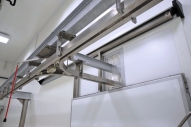
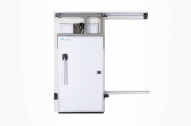
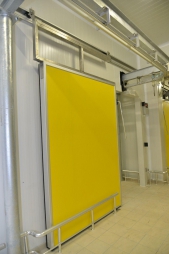
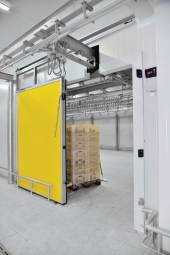
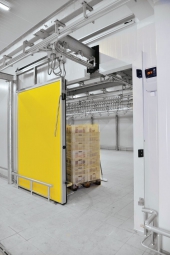
Monorail Sliding Cooler Door for Throughput Under Track

Keep throughput moving under track with a monorail sliding cooler door that supports overhead product flow, cleaner passage, and lower daily access friction.

Keeping Throughput Moving Under Track

A monorail sliding cooler door is the right solution when overhead track systems pass through a refrigerated opening and daily throughput depends on smooth, uninterrupted movement. In this type of application, the opening is not just a door location. It is part of the operating path, and the wrong access choice can slow flow, increase wear, and create avoidable sanitation pressure.

That is why facilities planning for under-track movement need to think beyond basic door operation. The goal is not simply to close the room. The goal is to protect temperature control while keeping product flow, labor movement, and cleaning routines practical under real production conditions.

Throughput Problems Usually Start at the Opening

In many refrigerated operations, throughput is measured by how consistently product moves without delay. That sounds like a line issue, but in rail-based environments, the cooler opening often becomes the real choke point.

Once an overhead track crosses the room entry, the door opening has to handle more than access. It has to support suspended movement, daily staff activity, surrounding sanitation work, and repeated use without becoming a hesitation zone. If the doorway is not planned around that condition, teams start adapting to the opening instead of moving naturally through it.

That is when productivity begins to slip in subtle ways. Suspended loads slow at the threshold. Operators become more cautious near the track crossing. Cleaning around the opening takes longer than it should. Small delays repeat across shifts, and an area that looked acceptable during installation starts feeling like an operational compromise.

Why Under-Track Movement Changes the Door Decision

A standard cooler entry is typically selected for floor-based traffic. People walk through it. Carts move through it. Pallet jacks or racks pass at ground level. That selection logic breaks down when the opening is part of an overhead transport route.

Under-track movement introduces a different set of demands. The opening now needs to respect suspended clearance, support repeatable passage, and maintain the insulated envelope around a more specialized use case. The question is no longer whether the door opens and closes properly. The question is whether the opening can support throughput continuity without creating friction at one of the most sensitive points in the room.

That is why conventional door choices often disappoint in these environments. They may still function mechanically, but they are not solving the real operating problem.

The Risk of Choosing a Door That Only Works on Paper

One of the most common mistakes in rail-based cooler design is choosing a door that technically performs but does not truly fit the throughput condition.

The first risk is daily slowdown. If suspended product movement has to pause, angle differently, or move more cautiously at the opening, the line loses speed where it should feel most predictable.

The second risk is maintenance burden. A doorway that does not match the traffic pattern tends to collect stress around seals, hardware, adjoining panels, and high-contact areas. The result may not be immediate failure, but it creates more service attention than the opening should require.

The third risk is sanitation pressure. In food and refrigerated handling environments, awkward openings are harder to clean consistently. Tight transitions and poorly resolved access points can turn a routine cleaning task into an ongoing burden.

The fourth risk is early replacement pressure. Even when the door remains operational, the opening may still start looking and feeling underplanned. That usually leads to the same conclusion: the door may have worked, but it was not the right long-term choice for the application.

Where Standard Doors Disrupt Throughput

Standard doors usually disrupt under-track throughput for one simple reason: they are designed around general access, not around suspended flow.

That distinction matters. In a high-use refrigerated environment, the opening should not force a compromise between product movement and room performance. Yet that is exactly what happens when the door is chosen without full respect for the track path and the way the facility actually moves product.

The disruption may show up as slower pass-through speed, harder maneuvering near the opening, more wear at the transition zone, or a doorway that never feels fully aligned with the pace of the operation. Over time, these problems affect labor efficiency, room presentation, and confidence in the overall setup.

Comparison That Clarifies the Choice

For this type of application, the most useful comparison is not simply sliding versus hinged. The better comparison is whether the opening supports general entry or under-track throughput.

Door approachBest fitMain limitation under track
Standard hinged cooler doorLight staff entry and simple room accessSwing clearance can interfere with overhead movement logic
Standard sliding cooler doorGeneral wider openings without rail-specific demandsMay not fully resolve the track crossing condition
Monorail sliding cooler doorRefrigerated openings with overhead suspended flowBest results depend on proper opening integration

Door approach Best fit Main limitation under track

Standard hinged cooler door Light staff entry and simple room access Swing clearance can interfere with overhead movement logic

Standard sliding cooler door General wider openings without rail-specific demands May not fully resolve the track crossing condition

Monorail sliding cooler door Refrigerated openings with overhead suspended flow Best results depend on proper opening integration

This is the key decision point for buyers. A general cooler door may be appropriate in many parts of a facility. But when the opening is shaped by the track system, the access solution should be shaped by the same condition.

Why a Monorail Sliding Cooler Door Supports Better Throughput

A monorail sliding cooler door works better here because it is selected around the actual movement pattern. Instead of asking suspended product flow to adapt to a general door format, it allows the opening to be planned around the traffic condition itself.

That matters most in operations where overhead movement is routine, not occasional. In these spaces, the opening has to preserve temperature control while also supporting consistent passage, easier cleaning, and lower daily disruption. A monorail sliding configuration is better suited to that combination because it aligns the doorway with how the room is used, not just how it is enclosed.

A stronger opening also depends on more than the door leaf. Surrounding cold room panels, sealing details, hardware protection, visibility needs, service access, and traffic exposure all influence whether throughput stays smooth over time. This is why the best results usually come from treating the doorway as part of the process route rather than as a standalone component.

That is also where application experience matters. The Freezewize Cooling System approaches under-track openings as operating conditions that affect movement, maintenance, and sanitation together, not as isolated product placements.

Quick Decision Guide

A monorail sliding cooler door is usually the right choice when the opening has to keep throughput moving under track without creating daily interruption.

It makes the most sense when:

suspended products pass through the opening throughout the day

the doorway is part of a production or transfer sequence

opening delays directly affect labor efficiency

sanitation routines need a cleaner, more manageable passage point

the facility cannot tolerate excessive wear at the entry

long-term ownership value matters more than choosing a generic door type

A standard access solution may still be acceptable when the opening mainly serves personnel traffic and the overhead condition does not define room movement. But when the track shapes the workflow, the door should be selected accordingly.

Related Solutions

Facilities planning under-track throughput often benefit from evaluating the full opening zone, not just the door itself. Related solutions that fit naturally with this application include:

cooler sliding door systems for adjacent non-monorail openings

insulated cold room panels for full envelope continuity

freezer and cooler door hardware for high-cycle access points

impact protection for refrigerated traffic areas

custom cold storage entry configurations for process-driven layouts

These related solutions help create a more consistent operating standard across the room instead of leaving one critical opening to absorb all the strain.

FAQ

What is the main benefit of a monorail sliding cooler door in a rail-based room?

The main benefit is smoother throughput. It helps the opening support overhead product movement without adding unnecessary delay, interference, or cleaning difficulty.

Why do standard cooler doors often slow under-track movement?

Because they are usually selected for general access conditions, not for openings where suspended flow shapes how the room actually operates.

Is this type of door only useful in large industrial facilities?

No. The deciding factor is not building size. It is whether the opening serves repeated overhead movement that affects daily throughput.

Does this decision affect sanitation and inspection readiness?

Yes. A better-resolved opening is usually easier to clean, easier to keep presentable, and easier to manage in inspection-sensitive environments.

What should contractors and facility teams review before specifying one?

They should review track alignment, opening size, throughput frequency, surrounding panel layout, sanitation expectations, and maintenance access together.

Can a standard sliding cooler door still work in some under-track applications?

Sometimes, but only in lighter conditions. When the track crossing is central to the operation, a dedicated monorail sliding solution is usually the better long-term fit.

Conclusion

Keeping throughput moving under track requires more than a door that closes the room. It requires an opening that supports the actual pace and pattern of the operation.

If throughput depends on the track path, the door should be planned around the track path from the start.

A monorail sliding cooler door is often the more suitable choice when overhead movement, temperature retention, sanitation, and daily reliability all need to work together. For facilities evaluating a new opening or correcting a slow one, the smartest next step is to review the full traffic condition and match the solution to how product truly moves through the room.


Fill the Form!

Write your needs and fill the form to contact us.

Freezewize | Industrial Cooling Systems & Custom Cold Room Solutions
Merhaba, Size yardımcı olabilir miyiz ?
Whatsapp Destek