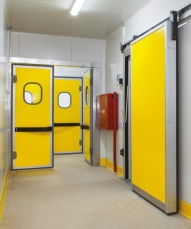





Monorail Access for Overhead Load Paths
Monorail Sliding Cooler Door for Overhead Load Paths | Access Guide
Support cleaner overhead movement through cooler openings with a monorail sliding cooler door designed to reduce workflow friction, damage risk, and access mismatch.
Monorail Access for Overhead Load Paths
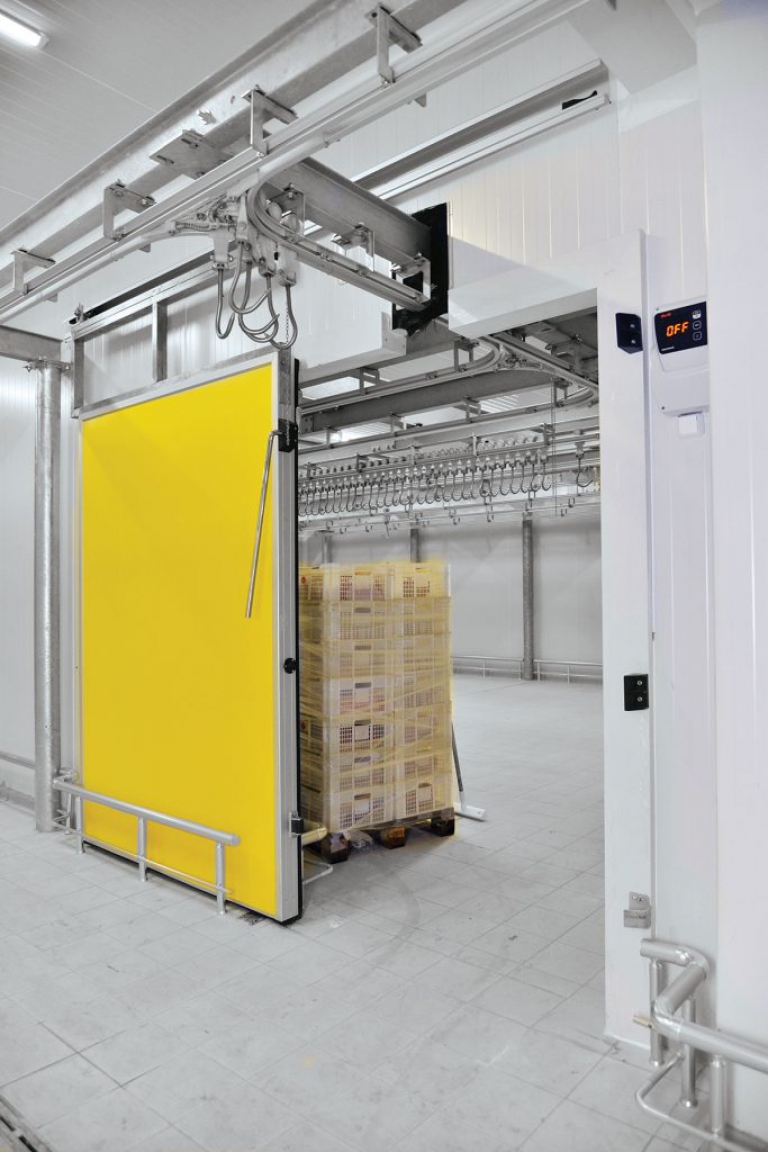
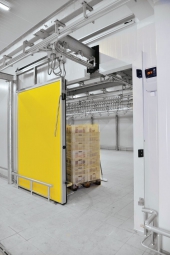
When an overhead load path passes through a cooler opening, a standard access setup often becomes the weak point in the room. A monorail sliding cooler door is built for that condition. It helps protect temperature control while giving suspended loads, rails, and daily movement a cleaner path through the opening.
This matters because overhead movement changes how the doorway performs. The issue is not only whether the door opens and closes. It is whether the opening can handle suspended product flow, reduce contact points, and stay practical under real production pressure.
Where Overhead Load Paths Create Access Problems
In many facilities, the cooler entrance is expected to do more than separate temperatures. It also has to support movement. Once an overhead rail, track, or suspended load path is involved, the opening becomes part of the production line.
That changes the problem immediately. A doorway that works well for carts, staff traffic, or occasional access may feel wrong once overhead loads begin passing through it all day. Clearances become tighter. The opening becomes more sensitive to alignment. The chance of contact around the track area increases. Cleaning becomes more deliberate. Maintenance access can become less convenient. What looked acceptable on paper starts creating friction in daily use.
This is especially true in operations where hanging products, overhead carriers, or suspended transport systems move between conditioned spaces. In those environments, the door cannot be treated like a generic cold room component. It has to match the movement logic of the room.
Why the Wrong Door Choice Creates Hidden Risk
A cooler door can technically function and still be the wrong choice for an overhead load path. That is where many access problems begin. The door may open. The room may hold temperature. But the opening may still create avoidable operational strain.
The first risk is interrupted flow. If staff must slow movement, adjust loads, or work around a door design that does not respect the overhead path, labor efficiency drops. Small delays repeated across shifts become a real cost.
The second risk is premature wear. When access conditions are mismatched, impact points tend to appear around hardware, track interfaces, surrounding panels, thresholds, or protective components. That does not always fail immediately, but it often creates the feeling that the entrance was underplanned from the start.
The third risk is sanitation and inspection pressure. In food facilities and controlled environments, awkward access design can make cleaning routines harder to maintain consistently. Tight interfaces, poorly resolved transitions, or hard-to-reach areas around the opening increase routine burden.
The fourth risk is replacement timing. A door chosen without full regard for overhead movement may still serve in the short term, but it often ages faster in the eyes of the operator. Once an entrance begins to feel like a recurring source of friction, replacement pressure starts earlier than expected.
Why Standard Access Logic Often Fails Here
Openings built for conventional traffic are usually designed around floor-based movement. Staff walk through. Carts roll through. Pallet jacks pass at ground level. That is a different use case from an opening that must coordinate with an overhead monorail or suspended load path.
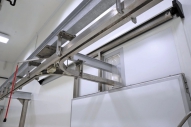
With overhead movement, the access decision becomes more specialized. Clearance above the opening matters more. Door travel matters more. Seal design matters more. The relationship between the door leaf, the track zone, and the surrounding insulated envelope matters more. Even visibility and control around the opening become more important when suspended product is moving through a chilled space.
That is why standard door selection logic often leads to poor results. It solves for basic entry, not for integrated movement.
Access Comparison at a Glance
For openings with overhead load paths, the most useful comparison is not simply sliding versus hinged. The better question is which access type creates the least friction for the specific movement pattern.
| Access approach | Best fit | Common limitation |
|---|---|---|
| Standard hinged cooler door | Light personnel access, low-frequency entry | Interferes with movement path and needs swing clearance |
| Conventional sliding cooler door | Larger openings without overhead coordination demands | May not resolve the track interface cleanly for suspended loads |
| Monorail sliding cooler door | Openings with overhead rail movement through the cooler | Requires proper integration with the load path and surrounding construction |
Access approach Best fit Common limitation
Standard hinged cooler door Light personnel access, low-frequency entry Interferes with movement path and needs swing clearance
Conventional sliding cooler door Larger openings without overhead coordination demands May not resolve the track interface cleanly for suspended loads
Monorail sliding cooler door Openings with overhead rail movement through the cooler Requires proper integration with the load path and surrounding construction
The decision is not about choosing the most advanced-looking option. It is about choosing the access type that respects how the opening is actually used.
Where a Monorail Sliding Cooler Door Makes Sense
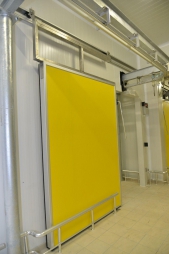
A monorail sliding cooler door is the right fit when the opening must work with an overhead transport path rather than fight against it. In that environment, the goal is to preserve controlled access while allowing suspended movement to pass through the room with less interruption.
That makes it especially suitable for food processing areas, meat handling spaces, cold storage zones connected to production lines, and other facilities where loads move above the floor instead of on it. In those settings, the opening has to do several things at once:
- maintain thermal separation
- support repeatable traffic patterns
- reduce interference around suspended movement
- stay practical for cleaning and inspection
- hold up under frequent operational use
A properly planned monorail sliding cooler door helps bring those demands into one coordinated access point instead of forcing the operation to work around a compromise.
What Good Overhead Access Design Should Solve
The strongest solution is not just a door leaf with a rail cut-through. The full access area should be designed as a working system. That means looking beyond the panel itself and considering how the opening performs day after day.
A better setup usually accounts for door movement, monorail passage, seal continuity, hardware durability, impact exposure, and service access around the opening. It also considers the surrounding cold room panels, frame details, protective hardware, vision needs, thresholds, and adjacent traffic.
This is where application experience matters. The Freezewize Cooling System approaches these openings as operational access problems, not just product supply requests. That difference matters because overhead load paths create a more specific set of demands than standard cooler entries.
Quick Decision Guide
Choose a monorail sliding cooler door when the opening serves an overhead suspended load path and daily movement would be slowed, interrupted, or made less sanitary by a standard access format.
It is usually the stronger decision when:
- loads move through the opening overhead on a repeated basis
- swing clearance would interfere with workflow
- the opening is part of a production or processing sequence
- hygiene and cleanability are important at the access point
- long-term durability matters more than lowest upfront simplification
A more conventional access setup may still be enough when the opening is used mostly for personnel entry, occasional cart passage, or light traffic without overhead coordination. But once the doorway becomes part of the load path itself, specialized access logic becomes much more sensible.
Related Solutions Worth Considering
A monorail opening is rarely an isolated decision. Buyers usually get better long-term results when they evaluate the full access zone rather than treating the door as a standalone item.
Related solutions that often belong in the same planning discussion include:
- insulated cooler wall panels for consistent envelope performance
- freezer or cooler sliding doors for adjacent non-monorail openings
- impact protection hardware for high-contact processing zones
- vision panels and access hardware for safer movement control
- cold room sealing and frame details that support cleaning and temperature retention
That broader view helps prevent a good door from being installed into a weak overall opening design.
FAQ
Monorail sliding cooler doors are necessary only in large facilities?
No. The deciding factor is not facility size. It is whether the opening must support an overhead load path in a practical, repeatable way.
Can a standard sliding cooler door work for an overhead rail opening?
Sometimes, but it often creates compromise. If the opening must coordinate closely with suspended movement, a dedicated monorail access solution is usually more reliable.
What is the main benefit of monorail access in a cooler room?
The main benefit is smoother integration between controlled-temperature space and overhead product movement, with less workflow friction around the opening.
Does this type of door help with sanitation planning?
Yes. When properly designed, it can reduce awkward interfaces and support more manageable cleaning routines around the access point.
Is this only relevant for meat or processing operations?
No. It is relevant anywhere suspended overhead loads pass through a cooler opening, including several production, storage, and specialized handling environments.
What should buyers review before specifying one?
They should review opening size, overhead path alignment, daily traffic frequency, hygiene expectations, surrounding panel design, and long-term maintenance tolerance.
Conclusion
When an overhead load path runs through a cooler opening, the access decision should be built around movement, not around generic door assumptions.
If the opening is part of the load path, the door must be part of the solution.
A monorail sliding cooler door is often the more durable and operationally correct answer when standard access would introduce friction, wear, or daily compromise. For facilities planning a cleaner and more reliable overhead access point, the best next step is to evaluate the full opening condition and match the door to the way the room actually works.