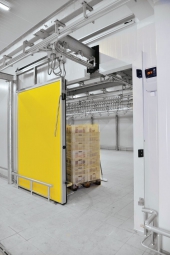





Where Standard Doors Disrupt Overhead Movement
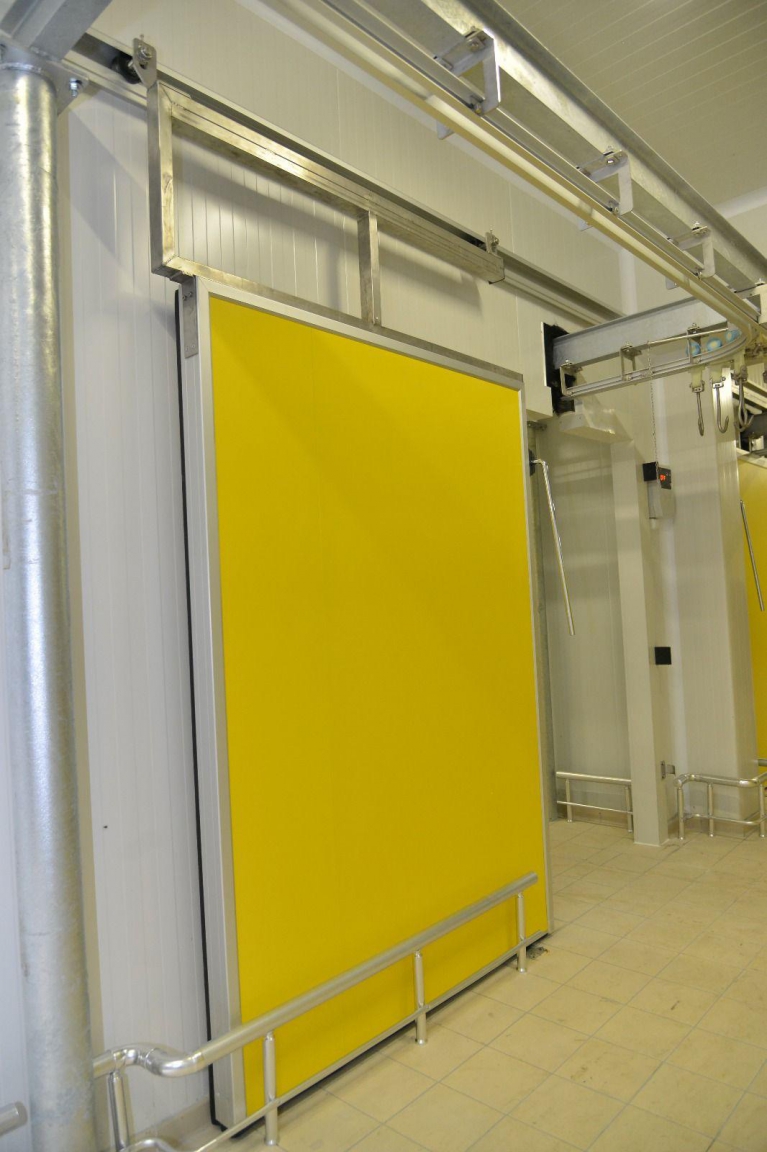
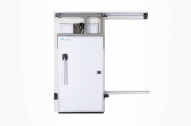
Monorail Sliding Cooler Door for Overhead Movement Control
Standard doors can interrupt overhead product flow. A monorail sliding cooler door helps protect access, reduce friction, and support cleaner workflow.
Where Standard Doors Disrupt Overhead Movement
A monorail sliding cooler door is the right solution when overhead product movement crosses a cooler opening and a standard door starts creating interference. In these environments, the problem is not just access. It is whether the opening can support suspended movement, protect the refrigerated space, and stay practical under daily production pressure.
That distinction matters because overhead movement changes the job of the doorway. Once the opening becomes part of the workflow, the wrong door can slow product transfer, increase wear, complicate cleaning, and create a constant sense that the access point was never fully matched to the operation.
The Problem Starts When the Doorway Stops Acting Like a Doorway
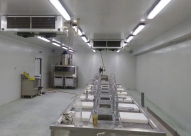
In many cold rooms, the opening is designed around people, carts, racks, or pallet jacks. That works well when traffic stays at floor level and the room only needs dependable entry and exit. But once a monorail or overhead carrier crosses the opening, the doorway is no longer just an access point. It becomes part of a movement system.
That shift is where standard doors often begin to fail the operation. A door that seems acceptable during design review may start causing hesitation once real traffic begins. Loads do not pass as smoothly as expected. Staff slow down near the opening. Cleaning teams lose time around awkward interfaces. Maintenance teams start watching hardware, seals, and surrounding surfaces more closely than they should have to.
In facilities where overhead product flow is part of the day-to-day routine, these are not minor annoyances. They are early signs that the opening was designed for basic entry, not for actual production movement.
Why the Wrong Door Creates More Than an Access Issue
A standard door can still function and still be the wrong choice. That is the mistake many buyers only notice after installation. The room may stay cold. The door may open and close. Yet the opening itself may still be creating unnecessary operational drag.
The first problem is workflow interruption. When the doorway forces suspended loads to move more carefully, labor efficiency suffers. A few seconds lost at a repeated pass-through point can compound across shifts, especially in high-use refrigerated areas.
The second problem is wear concentration. Overhead movement changes how the opening is used, and that exposes weak assumptions quickly. Contact pressure builds around door edges, nearby panels, seals, hardware areas, and protective surfaces. Nothing may fail immediately, but the entry begins to age faster than the rest of the room.
The third problem is sanitation pressure. In food-related environments, entry design affects how easily the area can be cleaned and kept inspection-ready. Poorly resolved openings are harder to maintain, harder to keep visually consistent, and more likely to feel messy even when teams are doing the right work.
The fourth problem is long-term ownership cost. When an opening feels wrong in daily use, the replacement conversation starts earlier. Even a technically usable door can leave operators with the impression that the original selection solved the spec but not the operation.
Why Standard Doors Disrupt Overhead Movement
Standard doors are usually selected around general access logic. They are judged by opening size, insulation, daily foot traffic, and basic durability. But overhead movement creates a different design condition.
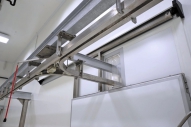
Now the opening must account for suspended travel paths, rail clearances, repeated overhead passage, surrounding envelope continuity, and safe movement near the opening. The room still needs temperature control, but the access point now also needs to work as part of a moving line.
That is where conventional assumptions break down. A door designed for normal personnel or floor-based equipment traffic may not interfere enough to be rejected on paper, but it can still disrupt how the space functions in reality. The opening starts demanding workarounds. Teams adapt to it. The operation becomes slightly less fluid every day.
That is exactly the kind of hidden friction professional buyers try to avoid.
Comparison That Clarifies the Decision
For this application, the real comparison is not simply one door style versus another. The better question is whether the opening is being selected for general room access or for overhead movement compatibility.
| Door approach | Best use case | Likely problem in overhead movement zones |
|---|---|---|
| Standard hinged cooler door | Light personnel access and routine entry | Swing path and clearance can interfere with suspended flow |
| Standard sliding cooler door | Wider openings without monorail coordination | May still leave the overhead crossing condition unresolved |
| Monorail sliding cooler door | Cooler openings with overhead transport paths | Best when integrated correctly with the rail and opening details |
Door approach Best use case Likely problem in overhead movement zones
Standard hinged cooler door Light personnel access and routine entry Swing path and clearance can interfere with suspended flow
Standard sliding cooler door Wider openings without monorail coordination May still leave the overhead crossing condition unresolved
Monorail sliding cooler door Cooler openings with overhead transport paths Best when integrated correctly with the rail and opening details
This is why standard doors often underperform in these settings. They are not always poor products. They are simply built around a different access logic.
Why a Monorail Sliding Cooler Door Solves the Right Problem
A monorail sliding cooler door makes sense because it is selected around the condition that actually defines the opening. Instead of forcing the operation to adapt to a general-purpose door, it allows the opening to be planned around suspended movement from the beginning.
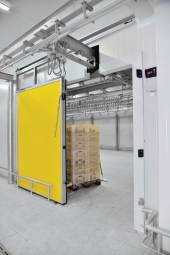
That matters in refrigerated areas where overhead traffic is not occasional, but structural to the workflow. In those spaces, the opening has to do several jobs at once. It has to support movement, protect the insulated envelope, reduce interruption at the pass-through point, and stay manageable for cleaning and service.
A better solution is not just about the door panel. It also depends on how the surrounding opening is treated. Seal continuity, adjacent cold room panels, hardware durability, impact exposure, visibility, threshold conditions, and maintenance access all influence whether the entry performs well over time.
This is where application understanding matters. The Freezewize Cooling System treats monorail openings as operating conditions, not just product placements. That approach helps buyers get a door solution that matches how the room is actually used instead of how it only appears on a drawing.
Quick Decision Guide
Choose a monorail sliding cooler door when the opening is expected to support repeated overhead movement without creating operational hesitation or access compromise.
It is usually the better choice when:
suspended products or carriers pass through the opening daily
the opening is part of a processing or transfer route
a standard swing condition would create interference
sanitation and cleaning access matter at the doorway
maintenance tolerance is low and uptime matters
the facility wants lower long-term friction, not just a door that technically works
A standard door may still be acceptable for general entry where overhead movement is minimal or unrelated to the opening. But when the overhead path defines how the space operates, the opening should be designed to match that reality.
Related Solutions
A monorail opening usually performs best when it is planned as part of the full refrigerated access zone. Related internal link opportunities that make sense around this topic include:
cooler sliding door systems for adjacent openings
insulated cold room panels for full envelope performance
freezer and cooler door hardware for heavy-use access points
impact protection options for traffic-exposed areas
custom cold storage door layouts for process-driven openings
These related solutions help create a more consistent standard across the facility instead of leaving one high-pressure opening to solve too many problems on its own.
FAQ
What makes standard doors a poor fit for overhead movement?
They are typically designed for normal entry traffic, not for openings where suspended movement repeatedly crosses the doorway and changes how the space functions.
Is a monorail sliding cooler door only needed in large processing facilities?
No. Facility size matters less than workflow type. If overhead movement defines the opening, the specialized door approach is often justified.
Can a standard sliding cooler door still work in some overhead applications?
Sometimes, but it depends on how the overhead path interacts with the opening. If the rail crossing is central to the operation, a monorail-specific solution is usually more suitable.
Does this type of opening affect sanitation routines?
Yes. Doorway design influences how easily the opening can be cleaned, maintained, and kept inspection-ready in daily use.
What should buyers review before specifying one?
They should review opening size, traffic frequency, overhead path alignment, surrounding panel design, cleaning routines, and long-term maintenance expectations.
Is this mainly a temperature-control decision?
No. Temperature control matters, but the bigger issue is operational compatibility. The door has to support how the room works, not just how it closes.
Conclusion
When standard doors disrupt overhead movement, the issue is not the presence of a door. It is the absence of the right access logic.
If the opening is part of the overhead workflow, the door should be designed for that workflow from the start.
A monorail sliding cooler door is often the more durable and operationally correct choice when suspended movement, sanitation, reliability, and daily efficiency all matter at the same time. For facilities planning a better refrigerated access point, the next smart step is to assess the full opening condition and match the solution to the real traffic pattern the room must support.