




Freezewize | Industrial Cooling Systems & Custom Cold Room Solutions

Sliding Access Built Around Rail Traffic

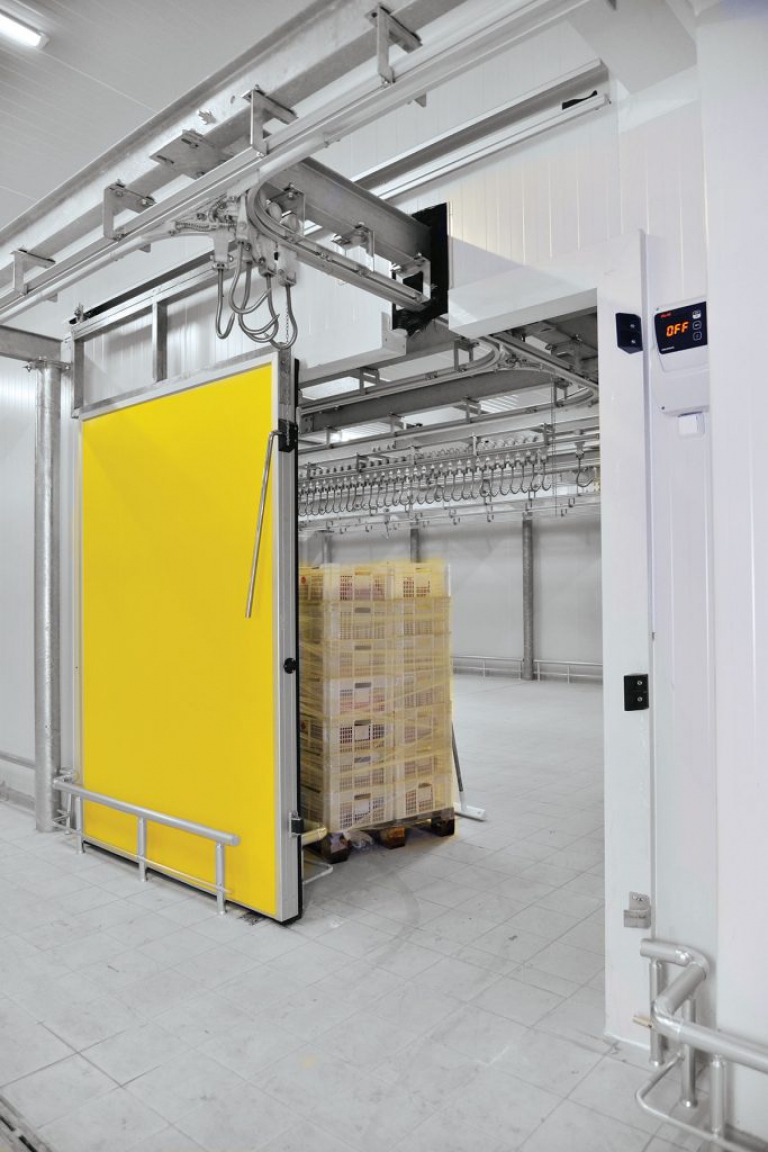
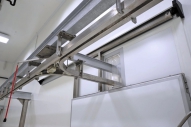
Single-track sliding door for designing cold room access based on rail traffic

Design cold room access from the outset with rail traffic in mind using a single-track sliding door that promotes smoother traffic flow, reduces interference, and offers better long-term adaptability.

Sliding Access Built Around Rail Traffic

A single-track sliding door for cold rooms is the ideal choice when rail traffic dictates the use of the cold room opening. Under these conditions, the opening must do more than simply separate temperatures. It must allow for the movement of suspended products, protect the workflow, and reduce interference at one of the busiest points in the room.

This is why a sliding access system designed for rail traffic offers better long-term performance than a standard entrance retrofitted after the fact. When the door is selected based on the traffic flow itself, the opening generally conveys a sense of greater cleanliness, better control, and easier management under the pressures of daily operations.

The issue is often mistakenly interpreted as a door problem

In many projects, the door is treated as a simple component choice. The room needs an opening, the opening needs a door, and the specifications move on to the next item. This logic works for general access points. It often fails when overhead rail traffic is part of the room’s daily operation.

As soon as overhead traffic passes through the opening, the entrance becomes part of the process. The flow of goods, staff movements, hygiene routines, and access control all converge in the same place. If the opening isn’t designed with this in mind, the door starts to create friction instead of facilitating operations.

This is where many facilities start to feel the strain. Flow slows down near the entrance. Staff adjust their timing around the opening. Cleaning becomes less effective. The surrounding area begins to show signs of wear sooner than expected. The problem may seem to be related to the door, but the real issue is that the access strategy was never designed for rail traffic from the start.

Why rail traffic changes the purchasing decision

A cold room opening used by people, carts, or pallet jacks is one thing. A cold room opening traversed by a flow of suspended products is quite another. Rail traffic changes the requirements, as the opening must now support overhead movement repeatedly and with low friction.

This means that the buyer no longer chooses solely based on insulation and basic access. The buyer chooses based on flow continuity, headroom, ease of maintenance, hygiene practicality, and long-term suitability. The door must integrate with the room’s operational workflow, not merely fill the opening.

This is important in food processing, transfer points in cold storage facilities, production-related cold rooms, and specialized cold rooms where overhead traffic is part of daily operations. In these environments, a door that merely functions is rarely sufficient. The entrance must operate naturally under pressure.

The risk of choosing an access solution not designed for rail traffic

A standard access solution may seem acceptable during installation but create long-term problems once the room is in operation. This is why this risk often goes unnoticed at first.

The first risk is slowing down the workflow. If the opening forces overhead loads to slow down, stop, or pass through in a less natural way, work efficiency decreases in a place where movement should be predictable.

The second risk is the maintenance burden. When the access point is poorly suited for rail traffic, the hardware, seals, adjacent panels, and protective surfaces tend to experience more stress than anticipated. The system continues to function, but not without requiring more attention.

The third risk is inadequate hygiene. In environments subject to inspections, impractical access areas are harder to clean and visually inspect. This adds pressure to routines that are already carried out under tight deadlines.

The fourth risk is premature dissatisfaction. Even if the door remains operational, users often realize that an opening was not truly designed for the room’s specific use. This typically leads to early discussions about modification or replacement.

Why standard entrances often result in inadequate access

Standard entrances are generally chosen based on general traffic flow within the room. They are not designed for overhead traffic. This is the main discrepancy.

When overhead traffic determines the opening, it must allow passage without creating unnecessary conflict between the overhead flow and the room’s isolated boundary. It must also remain practical for sanitation teams, maintenance crews, and daily operators working around the opening.

A conventional approach may still be useful in a strict sense, but it often forces operations to adapt to the entrance. The opening becomes a controlled barrier rather than a controlled flow point. Over time, this difference impacts ease of use, wear and tear, and the overall cost of ownership.

A comparison that helps the buyer decide more quickly

For this application, the real decision isn’t simply a choice between a sliding system and a hinged system. The better question is whether the access solution was chosen for general entry or for rail traffic conditions.

Access typeBest fitTypical limitation with rail traffic
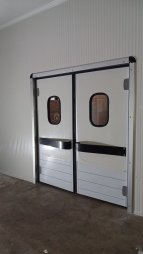
Standard hinged cooler doorLight staff entry and simple daily accessSwing path can create conflict around movement zones
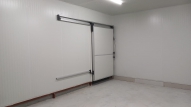
Standard sliding cooler doorWider openings without specialized overhead requirementsMay not fully resolve the rail crossing condition
Monorail sliding cooler doorOpenings shaped by suspended rail trafficBest results depend on full-opening coordination

Access Type Best Fit Typical Limitation with Rail Traffic

Standard hinged cold room door Infrequent staff entry and simple daily access The opening path may create conflicts around traffic areas

Standard hinged cold room door Wider openings without specific height requirements May not fully resolve the issue of rail traffic

Single-track sliding cold room door Openings adapted to overhead rail traffic Best results depend on perfect coordination of the opening

This is the key distinction. A general-purpose access door can still be a good product. But it simply isn’t always the right answer when the opening is defined by overhead movement.

What the right solution should actually address

An effective solution must minimize interference, allow for repeated passage, and maintain the room’s performance without forcing staff to work around the opening. This is where a monorail sliding cold room door truly comes into its own.

Its value lies not solely in the sliding mechanism. Its true advantage is that the opening can be designed according to the traffic flow that defines it. The access point can be considered part of the traffic route, rather than a standard room closure to which a rail was added later.

This is particularly important when the opening must accommodate:

the transfer of suspended products between refrigerated zones

active personnel traffic near that same entrance

regular cleaning and sanitation routines

long-term durability in a high-traffic process area

a cleaner and better-controlled standard in the back-of-house

The best results are generally achieved when the opening is evaluated as a complete system. This includes the surrounding insulation panels, seal continuity, hardware layout, impact exposure, visibility requirements, and access for maintenance. The Freezewize cooling system approaches these openings with this broader logic, as rail traffic affects more than just the door leaf.

Quick Decision Guide

Choose a single-track sliding cold room door when the opening is determined by daily rail traffic, rather than general access to the room.

This is generally the best choice when:

the movement of suspended products passes through the opening throughout the day

the entrance is part of a production or transfer sequence

staff and rail traffic share the same operating area

hygiene and inspection preparation is important

maintenance tolerance is low

long-term ownership value matters more than just initial suitability

A general access door may still suffice when the opening is used primarily for personnel entry and the condition of the rail is secondary. But when the rail path dictates the opening’s behavior, the access solution must be designed from the outset to accommodate this condition.

Related Solutions

A rail-guided opening works best when planned as part of the broader refrigerated access area. Related internal links that naturally fit this topic include:

sliding door systems for cold rooms

insulation panels for cold rooms

hardware for cold rooms and freezers

impact protection for refrigerated traffic areas

custom entryway designs for cold storage facilities

process-specific door solutions for food processing facilities

These related solutions help create consistency throughout the entire room rather than letting a single critical opening bear the entire operational load on its own.

FAQ

Why is a sliding access system preferable to a track-mounted system?

A sliding access system is preferable when the opening needs to accommodate airflow without creating unnecessary congestion at the entrance. It allows the opening to adapt to the flow of traffic rather than obstructing it.

Is a monorail-mounted cold room sliding door only necessary in large facilities?

No. The size of the facility is not the primary factor. The real question is whether overhead rail traffic dictates the daily operation of the opening.

Why is a standard cold room door often unsuitable?

Because while it may address basic access needs, it creates friction regarding product flow, cleaning routines, and long-term usability.

Does this type of access improve hygiene performance?

It can. A better-suited opening is generally easier to manage, easier to clean consistently, and easier to maintain in compliance with inspection requirements.

What should contractors consider before specifying one?

They should collectively consider rail alignment, opening width, daily traffic volume, hygiene requirements, the condition of adjacent panels, and access for maintenance.

Is this primarily a door choice or an opening strategy?

It is actually an opening strategy. The door is important, but the best results come from designing the entire access point based on traffic conditions.

Conclusion

The movement of the rails affects how a cold room opening operates; therefore, the access solution must be chosen with this reality in mind from the start.

If the movement of the rails defines the opening, the access must also be designed to accommodate this movement.

A single-track sliding door for a cold room is often the wisest long-term choice when overhead traffic, hygiene, ease of daily use, and room performance must work in synergy. For installations planning a new process opening or the correction of an underperforming opening, the best next step is to evaluate all traffic conditions and adapt the entrance to the actual operation of the room.


Fill the Form!

Write your needs and fill the form to contact us.

Freezewize | Industrial Cooling Systems & Custom Cold Room Solutions
Merhaba, Size yardımcı olabilir miyiz ?
Whatsapp Destek