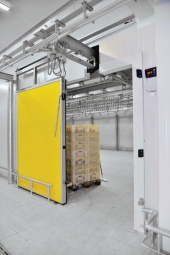





When Swing Doors Waste Cold
When Swing Doors Waste Cold Air: Why Sliding Freezer Doors Make More Sense
Swing doors can waste cold air by slowing traffic in high-traffic freezer rooms, remaining open longer, and causing preventable temperature loss. A sliding entrance helps control the flow.
When Swing Doors Waste Cold Air
A sliding freezer door is often a smarter choice when swing doors at the freezer entrance begin to cause temperature loss, traffic delays, and recurring disruptions. In high-volume operations, cold air is rarely lost due to poor room design. It is lost because the access point no longer aligns with how the room is actually used.
This mismatch is more significant than many facilities realize. When a door movement is obstructed, remains open longer than intended, or forces staff to struggle with opening it every day, the result is more than just inconvenience. It is a freezer entrance that silently wastes cold air, adds a burden to workflow, and creates long-term operational pressure.
The Problem Usually Starts with Daily Habits
Most freezer access issues don’t begin with a dramatic equipment failure. They start with small, repeated losses in the gap.
A staff member pauses to maneuver a cart through the swing path. A door takes longer to open than it should. Someone leaves the door open a few extra seconds because the path feels awkward. A busy team begins to view the door as an obstacle rather than a clear path. Over time, this leads to preventable temperature leaks and operational friction that recur with every shift.
This situation is particularly common in freezer rooms supporting fast-paced kitchen back-of-house operations, distribution tasks, food processing, or repetitive stock movements. In these environments, the issue isn’t simply whether the door closes or not. The issue is whether the door supports fast and controlled freezer access without wasting cold air every time it opens.
Why Do Swing Doors Waste More Than Just Floor Space?
A swing door can be entirely acceptable when used correctly. It may perform well in lighter-duty rooms with infrequent entry, limited wheeled traffic, and sufficient surrounding clearance. The problem begins when the same logic is applied to a more heavily used freezer.
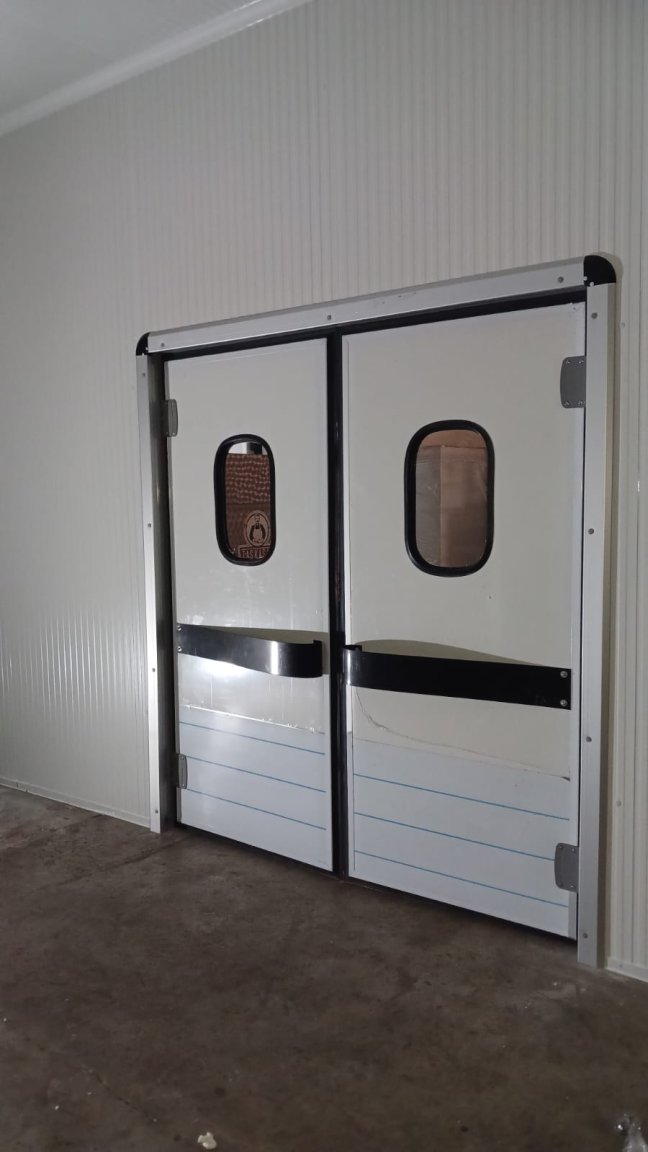
In a high-traffic freezer room, a swing door typically creates friction in various ways simultaneously. It requires space to open. It blocks the path of vehicles, shelves, or pallet jacks. It can slow down people’s movement at the threshold. It may lead to the door being used clumsily while personnel are moving quickly. This combination often results in the opening remaining open longer than necessary; this means more exposure to warm air and greater cold loss.
This is where the problem shifts from being theoretical to operational. A freezer door doesn’t have to be broken to cause waste. It simply needs to be ill-suited to the traffic flow.
The True Cost of Cold Air Waste at the Door
When a swing door wastes cold air, the loss isn’t limited to air exchange. The operational impact extends far beyond that.
The first cost is temperature imbalance at the access point. Repeated, unnecessary exposure to the outside air places additional strain on the freezer environment and can contribute to frost buildup near the threshold, seal stress, and less consistent thermal performance.
The second cost is labor inefficiency. If personnel must slow down, change direction, wait to pass through, or use the door more carefully than necessary, the entrance becomes a recurring source of time loss.
The third cost is maintenance burden. In a heavily used freezer, the opening is subjected to excessive wear. Hinges, gaskets, thresholds, frames, and door edges feel this strain. When the access style doesn’t match the workload, wear becomes visible sooner. The door may still function, but it begins to feel like a compromise.
The fourth cost is buyer’s remorse. This is the part buyers often realize later. The freezer room may technically be functioning, but the door continues to send the same message: the entrance was not designed with actual operations in mind.
The Point Where Swing-Style Access Begins to Damage the Room
Waste typically becomes apparent in common real-world scenarios:
- staff entering and exiting throughout the day
- vehicles requiring smooth and efficient passage
- narrow corridors around the opening
- rapid loading and unloading routines
- repeated cleaning and inspection activities
- operations with low tolerance for downtime or bottlenecks
In these environments, the door should assist in controlling the room. If it slows down movement or extends the time the door remains open, it begins to have the opposite effect.
Therefore, the best decisions regarding freezer doors rarely concern the door alone. These decisions relate to how the opening behaves within the entire work environment.
Comparison of Sliding Doors and Swing Doors for Freezer Access
The most useful comparison for this type of issue is simple: sliding freezer doors versus swing freezer doors.
A swing door may still be suitable for smaller rooms or less frequently used areas. However, in situations where entry is frequent and the opening is part of the daily workflow, sliding access typically offers a more suitable option because it eliminates the swing path of the door from the equation.
| Decision Factor | Sliding Freezer Door | Swing Freezer Door |
|---|---|---|
| Open-area efficiency | Keeps aisle clear | Uses floor clearance when opening |
| Traffic flow | Better for repeated passage | Can slow movement in busy use |
| Cart and rack handling | Supports straighter movement | Often creates handling interruption |
| Cold retention behavior | Can reduce unnecessary open-time friction | More likely to stay active longer in busy traffic |
| Wider freezer openings | More practical | Can become awkward as width increases |
| Long-term suitability | Better for high-use freezer routes | Better for lighter-duty access |
Decision Factor Sliding Freezer Door Swinging Freezer Door
Open space efficiency Keeps the aisle open Uses vertical clearance when opening
Traffic flow Better for repeated entries May slow down movement during heavy use
Cart and shelf usage Supports smoother movement Often causes interruptions during use
Cold retention behavior Can reduce unnecessary open time More likely to remain active for longer periods during heavy traffic
Wider freezer openings Are more practical Use may become more difficult as width increases
Long-term suitability Better for high-traffic freezer routes Better for less frequent access
This comparison is important because cold loss is generally linked to how long and under what conditions the opening remains open. A more suitable door type helps reduce this friction before it becomes a routine waste.
Why Do Sliding Freezer Doors Solve the Problem Better?
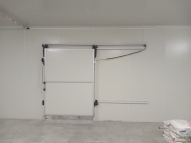
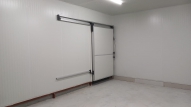
A sliding freezer door does more than just save space. In high-traffic freezer applications, it helps solve the core operational issue: unnecessary delays at the opening.
Because the door moves sideways rather than into the workspace, the surrounding traffic flow remains unobstructed. Staff can move more directly. Vehicle traffic is easier to manage. Movement feels more natural in a fast-paced environment. This typically means less hesitation, fewer conflicts at the threshold, and a shorter time the door remains in active use.
This difference becomes particularly valuable in warehouses, food processing rooms, supermarket back areas, commercial kitchens, and cold storage operations where the freezer entrance is not an occasionally used access point but part of a repeated route.
A properly designed sliding freezer door also allows the system to be planned according to the room’s actual operating pressure. This includes insulation performance, environmental sealing, track and hardware durability, threshold logic, impact protection, and visibility in areas where safer movement is critical. In other words, the solution is not just “a different door.” It is a better access strategy.
What a Better Freezer Access System Should Include
If the goal is to prevent cold loss at the entrance, the decision must be made at the system level.
A more robust freezer door solution typically includes the following:
- an insulated structure suitable for freezer temperatures
- reliable sealing around the opening
- hardware selected for repeated daily use
- threshold planning based on foot or wheeled traffic
- protection in areas with a high risk of impact
- frame details that support long-term durability and performance
- an optional viewing panel where visibility enhances safe passage
This is also where technical specification discipline is critical. The right question isn’t just which door can close the opening. The right question is which access system will continue to operate seamlessly after months of continuous use, cleaning demands, exposure to low temperatures, and repeated movements.
This is where better purchasing decisions are made.
The Right Solution Depends on the Workload
Not every freezer room requires the same door logic. A smaller room with occasional access may not need a more advanced traffic solution. However, if the freezer supports constant movement, repeated stock handling, or operational demands in the background, the cost of an inadequately specified opening becomes much more apparent.
If the room has the following characteristics, sliding access is generally a more suitable option:
- frequent daily entry
- wheeled traffic or hand truck movement
- limited clearance around the entrance
- a need for a wider opening
- constant pressure to reduce maintenance downtime
- a need for a more predictable traffic flow
In these cases, the better decision is not simply to choose a functional door. It is to choose a functional door without wasting cold air every day.
This is the type of application where the Freezewize Cooling System is most suitable: situations where the opening is treated not as a secondary hardware component, but as an integral part of the freezer’s performance.
Quick Decision Guide
If the opening is part of a high-traffic route and existing or planned swing-style access causes delays, opening conflicts, or repeated temperature loss, choose a sliding freezer door.
It is generally a better choice in the following situations:
- if personnel frequently pass through the freezer
- if vehicles or shelves require direct access
- if the opening is wide or heavily used
- if the hinged door’s opening obstructs nearby operations
- if the facility desires less access friction and better long-term suitability
- if reducing preventable cold loss is critical for daily performance
A swing door may still make sense for smaller, lighter-duty freezer rooms. However, when traffic becomes repetitive and entry begins to control the pace of work, sliding access is generally a stronger operational solution.
Related Solutions
Facilities reviewing freezer access performance often benefit from examining adjacent cold room elements at the same time. The most relevant solutions typically include:
- insulated freezer room panels
- heated frame and seal details
- cold room thresholds for wheeled traffic
- protective hardware around freezer openings
- freezer door sealing systems
- rear-side cold storage layout planning
These relevant solutions help transform door selection into a more comprehensive decision regarding freezer performance.
FAQ
Why do swing doors waste cold air in high-traffic freezer rooms?
Because they interrupt movement, require clearance, and slow down traffic flow, they typically remain open for longer periods. This creates more opportunities for warm air to enter.
Is a sliding freezer door better for high-traffic operations?
In most cases, yes. It generally supports faster and smoother movement and reduces access friction that causes preventable temperature loss.
Can door selection affect freezer maintenance costs?
Yes. A door that doesn’t match the traffic pattern can cause increased wear over time on seals, hardware, edges, and surrounding components.
Are sliding freezer doors better for vehicles and shelves?
They are generally more suitable because they eliminate obstacles in the swing path and facilitate direct passage through the opening.
When is a swing door still the right choice?
It may still be suitable in smaller freezer rooms where traffic is light, access needs are simple, and there is sufficient clearance around the door.
Does a better freezer door really improve workflow?
Yes. In high-traffic freezer areas, the opening affects how quickly people move, how smoothly goods pass through, and how much friction the operation faces every day.
Conclusion
When swing doors let the cold escape, the real issue isn’t just temperature loss. The real issue is the daily mismatch between the door opening and the workload it must handle.
In a heavily used freezer room, the right sliding door does more than just maintain the opening. It also maintains the rhythm of the operation.
For facilities planning a renovation or a new freezer room, evaluating the entrance in terms of traffic, clearance, temperature discipline, and long-term wear and tear—rather than treating the door as a simple hardware option—would be a more beneficial step.