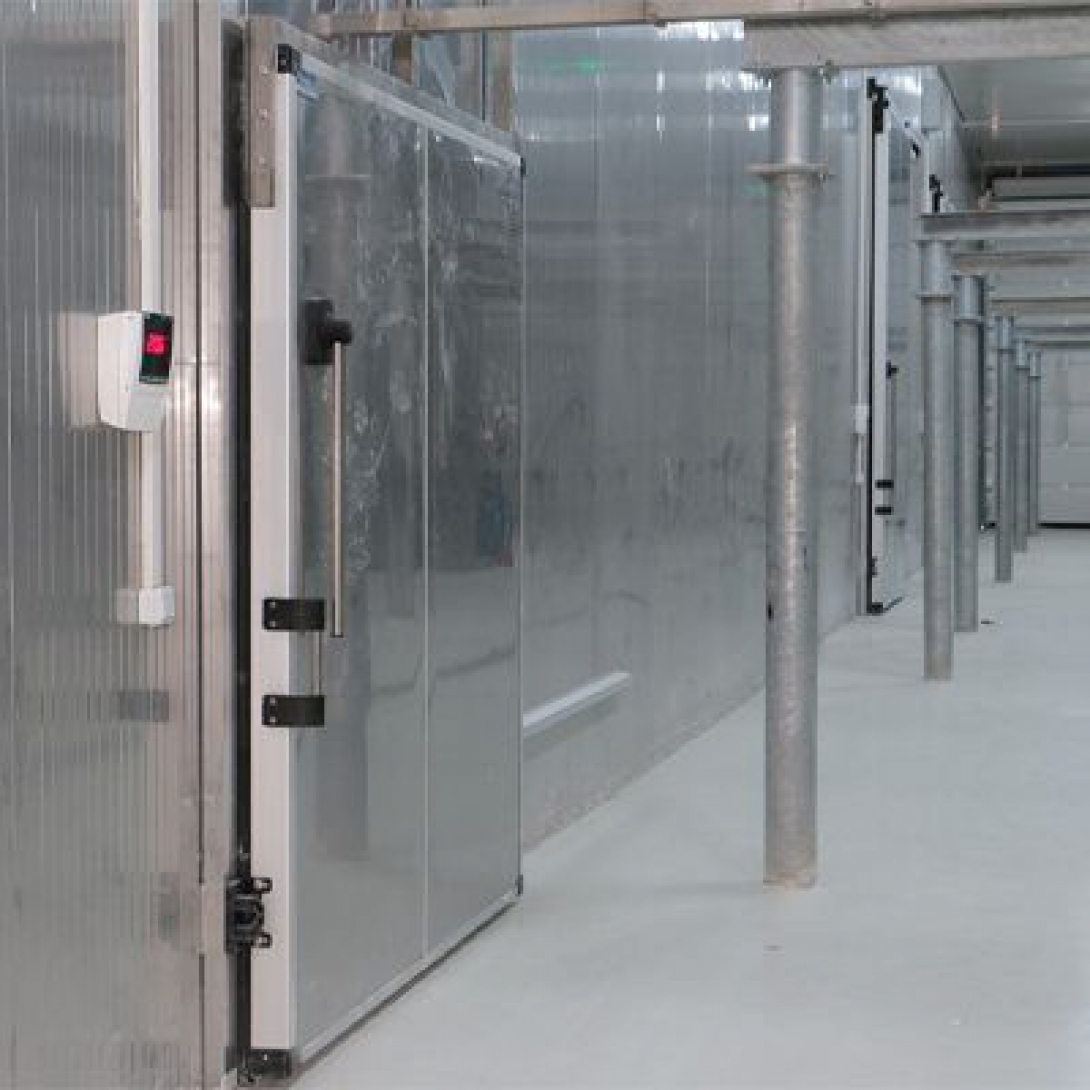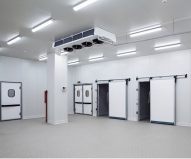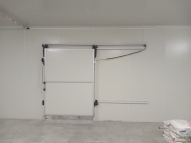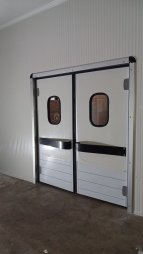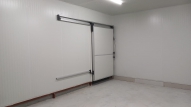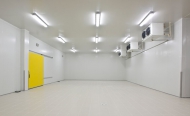





Sliding Doors for Hard-Working Freezers
Sliding Doors for Heavy-Duty Freezers | Improved Airflow, Reduced Strain
Sliding doors for high-use freezers reduce opening resistance, maintain temperature control, and minimize long-term wear in high-traffic commercial environments.
Sliding doors for high-use freezers
A sliding freezer door is often the best choice when a freezer opening must withstand constant movement, repeated entries, and daily operational pressure without slowing down the room’s operation. In high-traffic freezer environments, the door is not just a component of the enclosure. It shapes traffic flow, protects temperature stability, and influences the maintenance the opening will require over time.
This is important because most freezer access issues don’t start with major breakdowns. They begin with small daily inefficiencies: clumsy cart movement, entry delays, strain on the seals, wear on the hardware, avoidable impacts, and a growing sense that the door is making the job harder than it needs to be.
The pressure is felt at the entrance
In high-traffic cold rooms, the entrance experiences more stress than many buyers anticipate during the specification phase. The room may be well insulated. The refrigeration system may be properly sized. But if the access point cannot keep up with the pace of activity, the entire cold room begins to seem less efficient.
This is particularly true in facilities where staff are constantly coming and going throughout the day, where carts are constantly passing through the same opening, and where product handling depends on direct, predictable movement. Under these conditions, an unsuitable door does more than just cause inconvenience. It creates friction in the workflow that keeps repeating itself.
A freezer subjected to heavy use requires an access solution capable of keeping pace with actual usage. This includes frequent opening cycles, exposure to low temperatures, the risk of physical contact, cleaning routines, and the practical need to move people and goods through the opening without hesitation.
Why Standard Access Logic Is Often Insufficient
A freezer door can be technically functional yet operationally unsuitable. This is one of the most common issues in high-usage environments.
Many openings are deemed too narrow at the time of purchase. Teams focus on dimensions, insulation thickness, or secure door closure. These factors are important, but they do not constitute the entirety of decision-making criteria. A freezer’s entrance must also align with how the room is actually used.
Problems usually arise when the door system isn’t suited to the operation. The opening can obstruct passage in the aisles. The traffic path may conflict with pallet jacks or carts. The hardware may start showing signs of wear sooner than expected. Seals may wear out under repeated pressure. Cleaning may prove more complicated than anticipated. None of these issues seem dramatic at first glance, but together, they create a cold room entrance that seems increasingly difficult to manage as the months go by.
The risk of choosing the wrong type of door
A poor choice of door in a cold room has consequences that go beyond the opening itself. A door may open and close normally, yet still cause unnecessary operational delays.
The first risk is slower movement. In a heavily used freezer, even small delays add up. When staff have to alter their route, stop to clear the way, or handle the door with more care than they should, opening it becomes a repeated interruption.
The second risk is increased maintenance. Conditions in cold rooms are demanding by nature. Repeated use, low temperatures, potential frost buildup, and impacts all put pressure on the rails, casters, seals, frames, thresholds, and protective components. If the type of access door is not suited to this environment, the door begins to age faster than the rest of the room.
The third risk is the need for premature replacement. This is where many operators most clearly realize the mistake they made. The system may not completely break down, but it begins to look worn, operate erratically, and require more attention than expected. This usually leads to the same conclusion: the door was never perfectly suited to the workload.
Sliding or Swing Access
In high-traffic cold rooms, the most relevant comparison is generally between a sliding door and a swing door. The choice depends less on personal preference than on traffic flow, the space around the opening, and how frequently the cold room is used.
A sliding freezer door is generally preferable when there is frequent coming and going, when the opening is part of a workflow, and when the surrounding space must remain clear. A swing door may still be suitable for low-traffic areas or small cold rooms, but as soon as traffic becomes repetitive and equipment begins to pass through the opening regularly, the swing door’s path itself can become a problem.
| Decision Factor | Sliding freezer door | Swing freezer door |
|---|---|---|
| Frequency of use | Better suited for frequent access | Better suited for less frequent use |
| Passage width | Allows for clearance of the surrounding space | Requires maneuvering space |
| Movement of carts and shelving | Promotes a more linear flow | May obstruct passage |
| Wider openings | More practical | Less effective as width increases |
| Risk of daily impact | Easier to protect around the opening | The door leaf is often subjected to repeated contact |
| Long-term workflow | Better for high-pressure operations | Better for simpler configurations |
This is not to say that one type of door is universally superior. It is about adapting the freezer entrance to the operational reality. In a high-traffic area, the cost of a poor fit quickly becomes apparent.
Why are sliding freezer doors more effective in demanding conditions?
Sliding doors solve a whole range of practical problems associated with freezers in one fell swoop. That is why they are often preferred in operations that cannot afford repeated slowdowns at the entrance.
The main advantage is the elimination of interference caused by swinging doors. When the door slides open rather than swinging into the aisle or work area, movement becomes easier. Staff can pass through without hesitation. Carts can move more freely. The opening integrates more easily into the daily workflow.
This is important in commercial kitchens, food processing plants, distribution centers, supermarkets, and backroom cold storage areas, where the freezer entrance is not a door for occasional use but part of an active workflow. In these environments, the opening must facilitate movement without constantly requiring more space, more attention, or more time.
A well-designed freezer sliding door is also a better choice when the application requires a more robust access point. A solid seal, construction suitable for low temperatures, durable hardware, and application-specific frame details become especially important when the room is under constant load. The goal is not simply to close the opening. The goal is to ensure the reliability of the opening under daily pressure.
What the right system must include
In high-demand freezing applications, performance depends on the entire door system. The door panel is important, but the surrounding details that determine whether the entrance remains reliable over time are just as important.
A better solution generally takes the following into account:
- an insulated door construction suitable for freezing conditions
- rails and rollers designed for repeated use
- seals and gaskets suitable for low temperatures
- frame details that ensure a lasting fit and thermal reliability
- a threshold design suitable for foot traffic, carts, or pallet movement
- protective hardware in areas likely to be subject to repeated contact
- visibility features where traffic safety depends on sight lines
This is where a more experienced specification process makes all the difference. The decision should not be limited to “what fits the opening.” It must go further and ask the following question: “What will remain satisfactory after months of intensive use, cleaning, exposure to low temperatures, and daily handling?”
This shift generally translates to better value for the owner.
Better adaptation to all freezing operations
The most effective decisions regarding freezer access are tied to the type of operation, not just the product category. A food processing plant may prioritize ease of cleaning, readiness for inspections, and smooth workflow. A cold storage warehouse may prioritize direct access, wider aisles, and reduced congestion. A supermarket’s backroom may prioritize efficient staff movement and a consistent appearance in visible service areas.
That is why choosing the right sliding door depends on several specific conditions:
- the frequency of use of the opening
- whether traffic consists mainly of people, carts, or both
- the required passage width
- the risk of impact at the threshold
- the strictness of cleaning procedures
- the level of maintenance downtime the site can tolerate
- the expected lifespan of the system before a major replacement
A freezer door suited to these realities generally operates quietly and consistently. An unsuitable door is noticeable on a daily basis.
A solution that stands the test of time
For freezers subject to heavy use, the best solution is generally one that reduces repeated stress on the access point rather than simply tolerating it. This is why sliding systems tend to perform well in environments where access is an integral part of the work itself.
When freezer use is frequent, surrounding space is at a premium, and the opening must allow for smooth movement without becoming a point of conflict, a sliding freezer door is often the wisest choice in the long run. It offers better control over the opening, reduces interruptions to workflow, and is better suited to an environment where both work efficiency and reliable access are important.
When this solution is developed with the application’s specific needs in mind rather than a generic door design, the result is a freezer entrance that integrates more seamlessly into the room. This is also where experience in system planning comes into its own. The Freezewize cooling system is particularly useful when the project is approached as an operational environment, rather than simply as a door opening.
Quick Decision Guide
Choose a sliding freezer door when the freezer entrance is part of an active daily traffic flow and the opening must remain effective despite repeated use.
This is generally the best option when:
- traffic is frequent and predictable
- carts or shelving pass through the opening
- the space required for the door to open would interfere with nearby work
- the opening is wide enough that the movement of the hinges becomes a hindrance
- you want to reduce long-term friction at the access point
- The operation has limited tolerance for avoidable maintenance issues
A freezer with moderate, infrequent use can certainly function with a simpler access system. But when the room is subject to daily use, a sliding system generally offers a more stable operational solution.
Related Solutions
Projects evaluating sliding doors for freezers often benefit from simultaneously reviewing related cold room components. The most relevant adjacent solutions generally include:
- insulation panels for cold rooms
- heating frame and gasket details
- cold room threshold design
- airflow control around door openings
- freezer hardware and sealing components
- Design of access points to cold rooms and freezer rooms for back-of-house operations
These related solutions help buyers make a more informed decision regarding doors, as they connect the entrance to the entire work environment.
FAQ
Are sliding doors better suited for high-traffic commercial freezers?
In many high-traffic applications, yes. They generally allow for smoother movement, reduce space constraints, and facilitate the management of repeated access.
Can a freezer sliding door withstand the passage of carts and casters?
Yes, provided that the opening width, the condition of the threshold, and the surrounding protection are designed from the outset to accommodate this type of traffic.
Do sliding doors help reduce the workload associated with operating freezers?
This is often the case. In high-traffic freezers, they can reduce friction caused by repeated access, improve the smoothness of movement, and promote a more efficient flow through the opening.
What matters most for a freezer door subjected to intensive daily use?
Above all, it’s about the right fit. Insulation, sealing, the durability of the hardware, the quality of the frame, and compatibility with traffic flow must all work in harmony.
Is a sliding cold room door harder to maintain?
Not necessarily. In the right context, it can reduce the maintenance burden by better adapting to traffic flow and minimizing the strain caused by a less suitable type of access.
When is a swing door still acceptable in a cold room?
It may still be suitable for smaller rooms, low-traffic areas, or openings that are not subject to frequent movement or the passage of equipment.
Conclusion
In high-traffic freezers, the entrance should facilitate operations, not slow them down. A properly designed sliding door improves traffic flow, protects the room from daily wear and tear, and reduces repetitive stress that, over time, quietly drives up costs.
If the freezer operates at full capacity every day, the access system should be chosen as an operational asset, not merely as a finishing detail.
For teams planning to install a new cold room or upgrade an existing one, a specification analysis focused on traffic volume, operating conditions, and long-term access performance will yield better results.