




Freezewize | Industrial Cooling Systems & Custom Cold Room Solutions

Cleaner Passage Around Suspended Product Flow

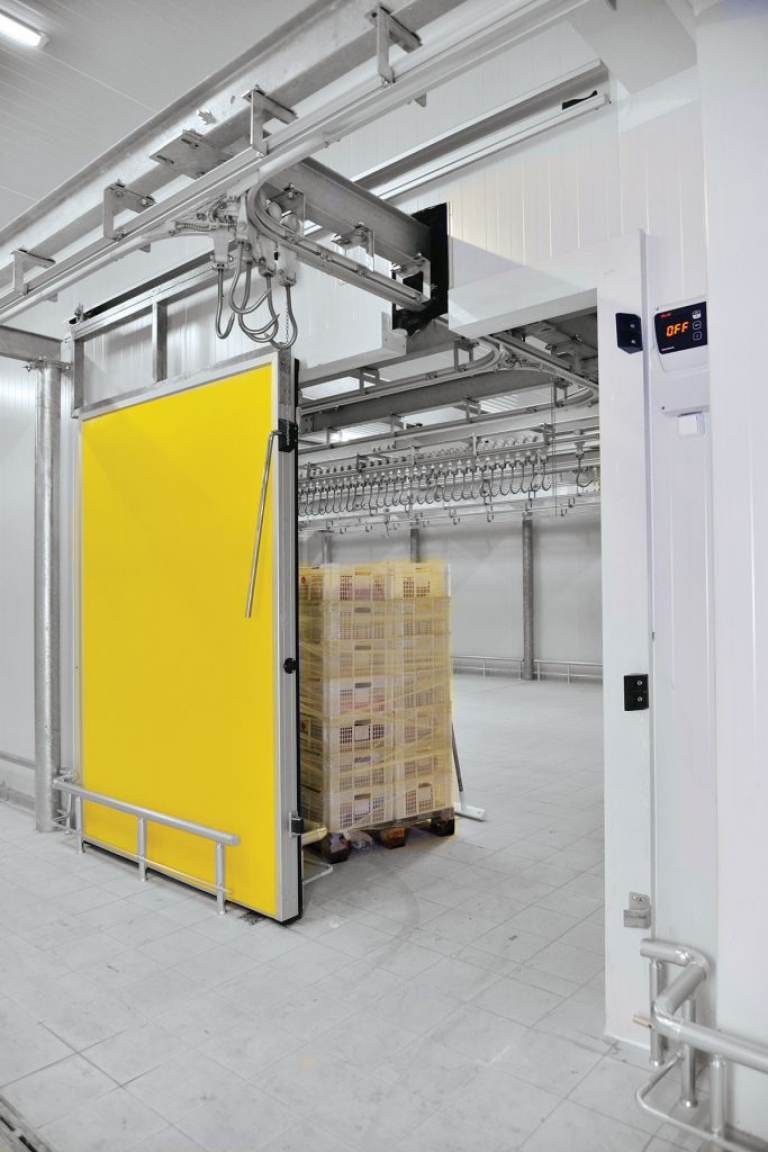
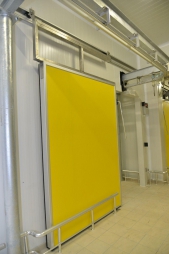
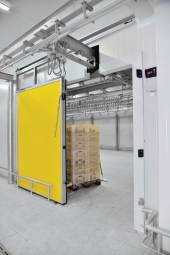
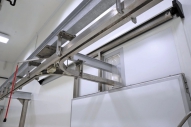
Monorail Sliding Cooler Door for Cleaner Suspended Product Flow

Improve hygiene, passage control, and overhead product movement with a monorail sliding cooler door built for cleaner access and lower workflow friction.

Cleaner Passage Around Suspended Product Flow

A monorail sliding cooler door is the right choice when suspended product flow passes through a refrigerated opening and the facility needs that passage to stay clean, controlled, and operationally smooth. In these conditions, the door is not only closing a room. It is shaping how product moves, how sanitation is maintained, and how reliably the opening performs under daily production pressure.

That is why cleaner passage matters so much around suspended product flow. If the opening is awkward, hard to clean, or poorly matched to overhead movement, the result is not just inconvenience. It becomes workflow drag, added maintenance burden, and a doorway that never feels fully right in a food-facing or inspection-sensitive environment.

The Real Problem Is Not the Door Alone

In many refrigerated operations, suspended product flow changes the function of the opening completely. The doorway is no longer just a barrier between temperature zones. It becomes part of the working route for product, staff, sanitation crews, and maintenance teams.

That is where problems begin. A standard access point may still appear functional, but once product starts moving overhead every day, the opening can become a pressure point. Passage may feel tighter than expected. Staff may slow movement near the entry. Cleaning routines may take longer because the transition zone is harder to manage. The area around the rail path may begin collecting more visual wear, more contact, and more operational attention than the rest of the room.

For facility managers and contractors, this is often the moment when a doorway stops being a specification item and starts becoming a daily operating issue.

Why Cleaner Passage Matters in Refrigerated Workflow

Cleaner passage is not just about appearance. In a cooler room tied to suspended product movement, it affects sanitation consistency, labor flow, and confidence in the opening itself.

When passage around the opening is cleaner, movement becomes more predictable. Teams do not have to hesitate around the doorway. Product transfer feels more natural. Sanitation crews can handle the area with less friction. The entry remains easier to keep aligned with food safety expectations and visible back-of-house standards.

When passage is not cleanly resolved, the opposite happens. The opening begins to interrupt the line instead of supporting it. Over time, even a technically usable door can create the impression that the entry was designed as a room closure, not as part of the process.

That distinction matters in refrigerated production spaces, processing rooms, specialty storage zones, and other facilities where suspended movement is routine rather than occasional.

Where the Risk Shows Up First

The biggest mistake in this kind of application is assuming that a door only needs to function mechanically. In reality, the wrong opening can stay technically operational while still creating the wrong conditions around suspended product flow.

One risk is workflow friction. If overhead product movement slows at the opening, the inefficiency repeats all day. The lost time may look minor on one pass, but it becomes expensive across shifts.

Another risk is sanitation pressure. A hard-to-manage opening often takes more effort to clean properly and keep inspection-ready. That adds burden to routines that are already time-sensitive.

A third risk is premature wear. Suspended movement concentrates attention around the opening. If the passage is not well resolved, hardware zones, seals, adjacent panels, and protective details tend to show strain earlier.

There is also a broader ownership risk. When a door works but never feels smooth, clean, or fully coordinated with the workflow, operators begin questioning the choice long before the system actually fails. That often leads to earlier upgrade or replacement conversations.

Why Standard Doors Struggle Around Suspended Product Flow

A standard cooler door is usually selected for general access. It is expected to support people, carts, occasional equipment movement, and temperature separation. That is a different use case from an opening that must handle repeated suspended product transfer.

Once the rail path crosses the opening, the design priority changes. The entry must now support overhead clearance, passage continuity, usable sealing, practical cleaning, and safe daily movement at the same time. That is more demanding than basic doorway performance.

Standard doors often struggle here because they were never chosen around the actual movement pattern. They may close the room, but they do not fully resolve the opening. As a result, the operation starts compensating for the access point instead of trusting it.

This is why buyers looking for cleaner passage should not think only in terms of door type. They should think in terms of opening suitability.

A Comparison That Helps Buyers Decide

The most useful comparison is not simply sliding versus non-sliding. It is whether the opening supports clean suspended product flow or works against it.

Opening approachBest fitCommon issue around suspended product flow
Standard hinged cooler doorLight personnel traffic and routine entrySwing path and access pattern can disrupt movement and cleaning
Standard sliding cooler doorGeneral wider openings without overhead coordination needsMay not fully resolve the rail-crossing condition
Monorail sliding cooler doorRefrigerated openings with suspended product flowBest when planned with the full opening and sanitation logic

Opening approach Best fit Common issue around suspended product flow

Standard hinged cooler door Light personnel traffic and routine entry Swing path and access pattern can disrupt movement and cleaning

Standard sliding cooler door General wider openings without overhead coordination needs May not fully resolve the rail-crossing condition

Monorail sliding cooler door Refrigerated openings with suspended product flow Best when planned with the full opening and sanitation logic

This comparison matters because a buyer can choose a door that looks correct in a catalog and still end up with an opening that performs poorly in daily use.

Why a Monorail Sliding Cooler Door Solves the Right Problem

A monorail sliding cooler door is better suited to this condition because it is selected around the real operating need: cleaner passage around an overhead product route inside a refrigerated environment.

The value is not limited to the sliding motion. The real benefit is that the opening can be organized around movement, clearance, and cleanability together. That leads to a doorway that supports the process instead of interrupting it.

This kind of solution is especially relevant when the opening serves:

suspended product transfer between cooler zones

processing areas with repeated overhead movement

operations with strict sanitation expectations

high-traffic production routes where interruptions affect labor efficiency

facilities that want lower long-term friction at the entry point

A good result also depends on more than the door panel. Surrounding insulated panels, hardware placement, sealing details, impact exposure, visibility needs, and service access all influence whether the opening stays clean and usable over time.

This is where application knowledge matters. The Freezewize Cooling System approaches monorail openings as refrigerated workflow points, not as isolated door placements. That approach helps align the door with how the room is truly used.

Quick Decision Guide

A monorail sliding cooler door is usually the stronger choice when the opening must support cleaner passage around suspended product flow without slowing the line or increasing sanitation burden.

It makes the most sense when:

suspended products cross the opening every day

hygiene and inspection readiness matter at the doorway

the opening is part of an active process route

general door formats create interference or hesitation

the facility wants better long-term ownership value, not just basic closure

visible wear and maintenance pressure need to be reduced

A more standard cooler opening may still be acceptable when the door mainly serves staff access and the overhead condition does not define how the opening works. But when suspended movement shapes the traffic pattern, the door should be chosen around that reality.

Related Solutions

This kind of opening usually performs best when it is planned as part of a broader refrigerated access strategy. Related internal link opportunities that fit this topic include:

cooler sliding door systems for nearby non-monorail openings

insulated cold room panels for opening continuity and thermal control

cold storage door hardware for heavy-use access points

impact protection solutions for traffic-prone process areas

custom refrigerated room entry details for sanitation-focused layouts

These related solutions help create a more consistent facility standard instead of leaving one critical opening to carry too much operational strain.

FAQ

What makes passage “cleaner” around suspended product flow?

Cleaner passage means the opening supports smoother movement, easier sanitation, and less interference around the overhead product route.

Is a monorail sliding cooler door mainly a hygiene decision?

Not only. It is also a workflow and ownership decision. Hygiene matters, but so do movement continuity, maintenance burden, and long-term fit.

Can a standard cooler door still work in some suspended product applications?

In lighter or less critical applications, yes. But when overhead flow is frequent and central to the operation, a standard door often creates unnecessary compromise.

Why does suspended product flow change the door decision so much?

Because the opening stops acting like a normal entry. It becomes part of the line, and that changes the demands on clearance, cleanability, and daily usability.

What should contractors and facility teams review before specifying one?

They should review overhead path alignment, traffic frequency, sanitation expectations, surrounding panel design, service access, and wear exposure around the opening.

Does this only apply to food processing plants?

No. It applies to any refrigerated environment where suspended overhead movement passes through the opening and affects how the space operates.

Conclusion

When suspended product flow passes through a cooler opening, the right decision is not just a door that closes the room, but an opening that stays cleaner, smoother, and more practical in daily use.

If the passage is part of the process, the door should be selected as part of the process too.

A monorail sliding cooler door is often the more suitable solution when overhead movement, sanitation, and long-term reliability all matter at the same time. For teams planning a cleaner refrigerated opening, the next smart step is to evaluate the full passage condition and match the access solution to the real workflow around it.


Fill the Form!

Write your needs and fill the form to contact us.

Freezewize | Industrial Cooling Systems & Custom Cold Room Solutions
Merhaba, Size yardımcı olabilir miyiz ?
Whatsapp Destek