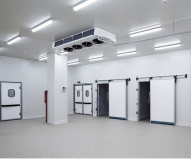





Better Door Control in Busy Coolers
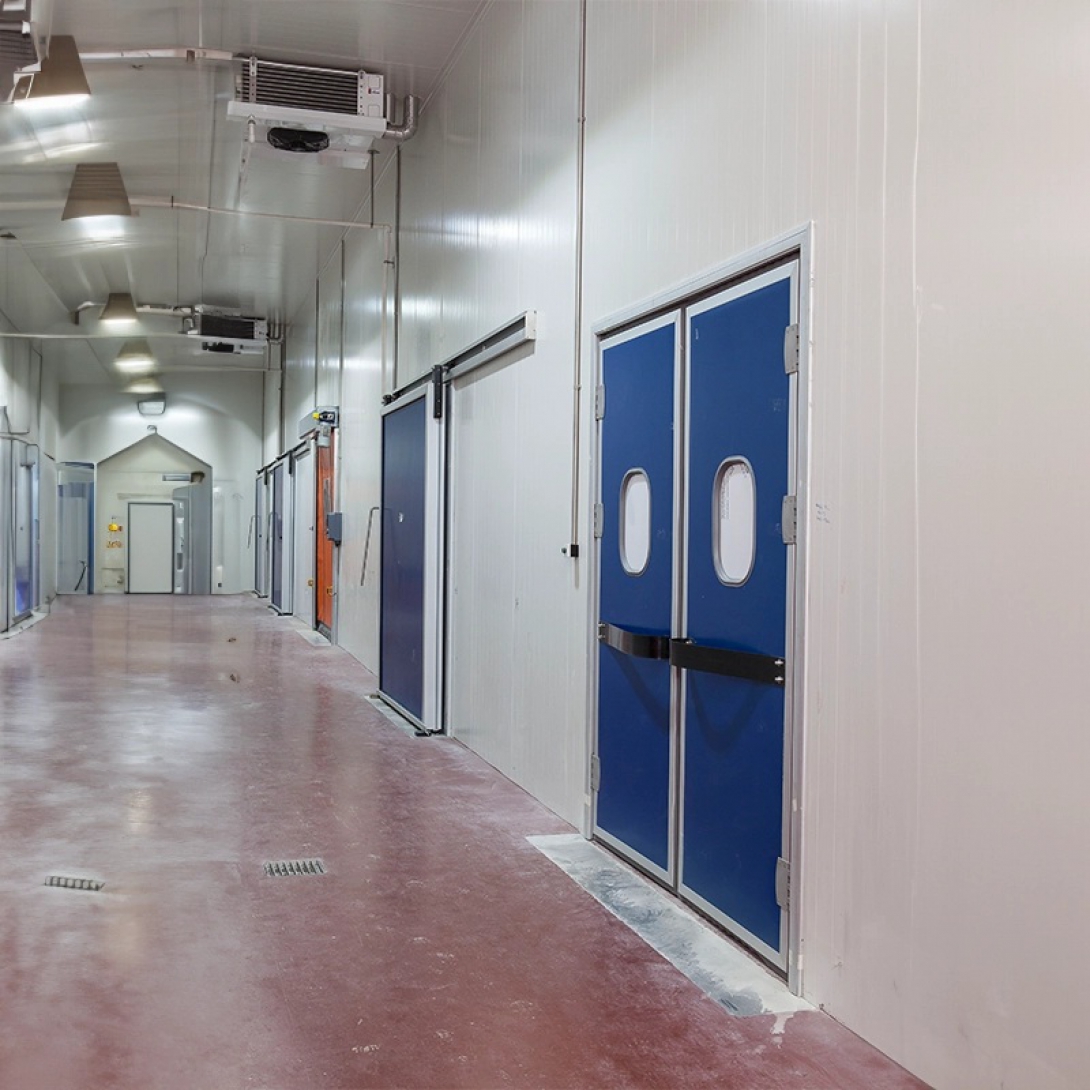
Traffic-Angle Refrigerator Door for Better Door Control in High-Traffic Refrigerators
Improve door control in high-traffic refrigerators with a traffic-angle refrigerator door that provides safer movement, cleaner airflow, and reduced maintenance.
Better Door Control in Busy Coolers
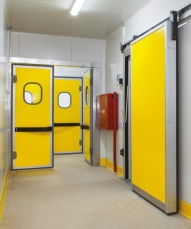
When a high-traffic refrigerator requires better door control during continuous daily use, the traffic-swing refrigerator door is often the best choice. In high-traffic environments, control means more than just opening and closing the door properly. It means the door moves predictably, withstands repeated traffic, supports safer movement for personnel, and does not turn the entrance into a weak point in terms of wear, blockages, or maintenance.
This is important because high-traffic refrigeration entrances are subjected to constant pressure from people, vehicles, shelving, and repeated use. When door control is weak, the problem quickly spreads to workflow, cleanliness, safety, and long-term ownership costs. When door control is right, the entrance feels more stable, more functional, and easier to manage throughout the entire operation.
The Problem Usually Starts Before the Door Breaks Down
In many cold storage rooms, the door isn’t obviously broken. It just loses that controllable feel.
This loss of control manifests in small but significant ways. The door sways more than expected. Staff hesitate at the entrance. Cart traffic becomes less fluid. During peak periods, the entrance feels more challenging. Repeated use begins to affect the consistency of closing, the cleanliness of the threshold, and the overall sense that the cold room entrance works with the team, not against it.
This situation is common in supermarkets, commercial kitchens, processing areas, warehouses, and distribution cold rooms where the entrance is used all day long. The door is no longer just an insulated access point. It becomes part of the operational rhythm. If it does not behave predictably under pressure, the room begins to lose efficiency at one of its most frequently used contact points.
That is why better door control is important. In a high-traffic cooler, a poorly controlled entrance creates a daily operational burden long before it leads to a serious service issue.
Poor Door Control Creates Real Operational Risks
A cold room door may still function, but it may not be suited for the traffic it handles.
When control is weak, the entrance begins to create consequences that affect the entire room. Staff lose confidence in the access point. Repeated contact around the frame and threshold increases. Cleaning around the door becomes more difficult. Hardware and gaskets are subjected to greater stress. The entrance wears out faster than the surrounding wall and panel systems.
The risk is not theoretical. It is operational:
- movement slows during peak activity
- the opening is exposed to more impact and wear
- daily traffic becomes more disorganized
- maintenance requirements increase over time
- maintaining hygiene standards near the threshold becomes difficult
- The room begins to fall short for actual use
This situation is particularly important in the U.S. market, where labor efficiency, downtime control, and background presentation influence purchasing decisions. A door that feels unstable, inconsistent, or difficult to manage under daily pressure silently increases the cost of ownership, even if it still functions technically.
Key Comparison: It’s Not Just About Access, It’s About Control
For high-traffic refrigeration entrances, the real comparison isn’t just between one door style and another. It’s between controlled movement and uncontrolled movement.
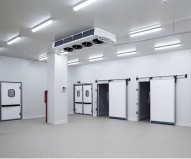
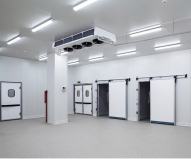
A standard swing refrigeration door may be sufficient in a rarely used room. In areas where personnel movement is constant and the opening must remain predictable during repeated use, a traffic swing refrigeration door is typically a more robust choice. In tighter layouts where swing space is limited, a sliding door may be a better solution, but it is not always the best answer when immediate passage and traffic management are priorities.
Here’s a practical comparison:
| Door Type | Best Fit | Control Advantage | Main Limitation |
|---|---|---|---|
| Standard swing cooler door | Lower-frequency access | Works in lighter-duty rooms with less traffic pressure | Can feel less controlled in active cooler openings |
| Traffic swinging cooler door | Repeated daily movement and busy back-of-house use | Better traffic handling and more stable daily door behavior | Needs correct sizing, clearance, and threshold planning |
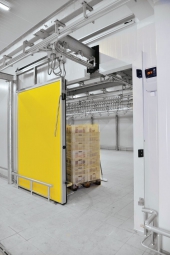
| Sliding cooler door | Layouts with restricted swing area | Helps where space control matters more than swing motion | Not always the most natural option for fast repeated passage |
Door Type Best Use Control Advantage Main Limitation
Standard swing-style refrigeration door Less frequent access Works in lighter-duty rooms with lower traffic pressure May feel less controlled during active refrigeration openings
Traffic-Swing Refrigeration Door: Frequent daily movement and heavy backroom usage. Better traffic management and more consistent daily door behavior. Requires proper sizing, clearance, and threshold planning.
Sliding Refrigeration Door: Layouts with limited swing space. Helps in areas where space control is more important than swing motion. Not always the most natural option for fast and frequent passages.
The most important decision is this: choose a door type that provides control not only when the room is quiet, but also when the opening is under normal daily pressure.
Why Do Traffic-Swing Refrigerated Doors Improve Door Control?
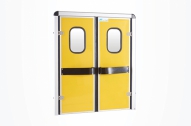
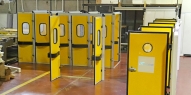
A traffic-swing refrigerated door is designed for repetitive movements; therefore, it generally provides better control in high-traffic refrigerated environments.
In high-traffic entrances, the opening must respond predictably time and time again. Staff should be able to pass through without difficulty. Vehicles should not make every passage unpredictable. The door should support a smoother flow of traffic rather than causing hesitation or repeated contact at the opening.
This makes this door type ideal for the following:
- supermarket backroom refrigerators
- restaurant and commercial kitchen support areas
- refrigerated preparation and holding areas
- food processing support areas
- warehouse refrigerator entrances
- beverage and supply storage rooms
- distribution-side refrigerator access points
In these environments, better control means the opening feels more orderly under pressure. It helps reduce unnecessary collisions, keeps movement more organized, and supports a stronger daily workflow rhythm.
The Right Solution Starts with Entry Conditions
Better door control isn’t achieved solely through the door panel. It stems from treating the opening as an active workspace.
This means examining how people and equipment actually use the entrance. Is traffic primarily made up of personnel, or is it mixed with hand trucks and pallet jacks? Does the entrance require better visibility for two-way traffic? Is the threshold detail suitable for repeated passage? Will the door be subjected to intensive cleaning routines? Is the entrance a visible back-of-house area where early wear affects the presentation?
A more robust refrigeration door solution typically involves considering the following:
- traffic frequency and movement patterns
- suitability of the door leaf for repeated use
- threshold conditions and floor transitions
- use of a sight panel for safer movement
- seal and closure consistency
- hardware durability and service access
- frame and edge protection
- compatibility with surrounding insulated panels and room layout
This is where application logic becomes crucial. The Freezewize Cooling System typically evaluates a high-flow refrigerant inlet as part of the entire room workflow; because better door control stems not only from the right catalog product but also from the right inlet strategy.
Better Control Also Supports Hygiene and Maintenance
In high-flow refrigerant rooms, control is closely linked to cleaning and maintenance.
A door that operates predictably is easier to keep clean, inspect, and maintain. A door that feels unbalanced or overloaded typically accumulates more visible wear around the opening, higher threshold stress, and increased daily friction. Over time, this weakens both the room’s appearance and its operational standards.
This is particularly important in food-related environments. When an entrance is exposed to constant traffic flow, even minor control issues can make managing the opening during cleaning routines more difficult and hinder compliance with hygiene standards. Better door control supports a cleaner and more professional work environment.
Quick Decision Guide
In situations where the opening requires better daily control under repetitive movements, a cold room door that withstands traffic is usually the right choice.
It is particularly suitable in the following situations:
- if staff pass through the cooler throughout the day
- if vehicles, racks, or pallet jacks regularly use the opening
- if the room supports preparation, replenishment, picking, or packing operations
- if the entrance needs to be more predictable under heavy conditions
- if the facility wants a system that requires less maintenance over time
- threshold cleaning and a smooth traffic flow are important
If the room is used less frequently and the opening isn’t under constant pressure, a standard swing door may still work.
When space constraints make it difficult to safely control the swing motion, a sliding door may be a better option.
The simplest rule is this: if the entrance is busy enough to affect daily traffic flow, choose a door that improves not only access but also control.
Related Solutions
Other relevant page opportunities include:
- insulated panel systems for cold rooms
- sliding cold room door solutions
- freezer door systems for low-temperature rooms
- refrigerated door hardware and protection options
- threshold and floor transition details
- hygienic wall and ceiling panels for cold rooms
- warehouse and distribution cold storage layouts
- commercial kitchen refrigeration access systems
These are important because door control is typically shaped by the entire entry area, including panels, flooring, sight lines, hardware, and traffic flow.
FAQ
What does better door control mean in a high-traffic cold room?
This means the door operates predictably during daily use, supports safer and smoother passage, and does not create unnecessary impact, delays, or maintenance pressure at the entrance.
Is a swing-type refrigerated door better for high-traffic openings?
In most cases, yes. If the entrance manages repetitive movements by personnel and needs to remain consistent and manageable throughout the day, it is generally a more suitable option.
Can poor door control slow down the cold room workflow?
Yes. Even if the door is still functioning, poor control can cause hesitation, congestion at the entrance, increased contact, and slower passage during peak periods.
Do vehicles and pallet jacks affect door control?
Absolutely. Wheeled traffic alters the behavior of the door, threshold, and opening, so it must be considered early in the selection process.
Should vision panels be included in high-traffic cold storage doors?
Generally, yes. In high-traffic entrances, vision panels can improve visibility and help reduce preventable contact during two-way traffic.
When should a facility upgrade for better door control?
If the current opening feels stiff during daily use, shows increased wear, slows down traffic, or requires repeated maintenance, an upgrade should generally be considered.
Better Door Control Improves the Entire Entrance
In a high-traffic cold storage facility, the opening must be stable, functional, and capable of withstanding operational demands.
If daily traffic pushes the entrance beyond its baseline performance, the smartest long-term solution for improving door control is often a cold storage door that opens according to traffic flow.
For new projects and retrofits, the most beneficial step is to evaluate the opening in terms of traffic flow, threshold usage, visibility needs, and maintenance expectations; this ensures the final door selection supports the way the room is actually used every day.