




Freezewize | Industrial Cooling Systems & Custom Cold Room Solutions

Long-Term Fit for Monorail Openings

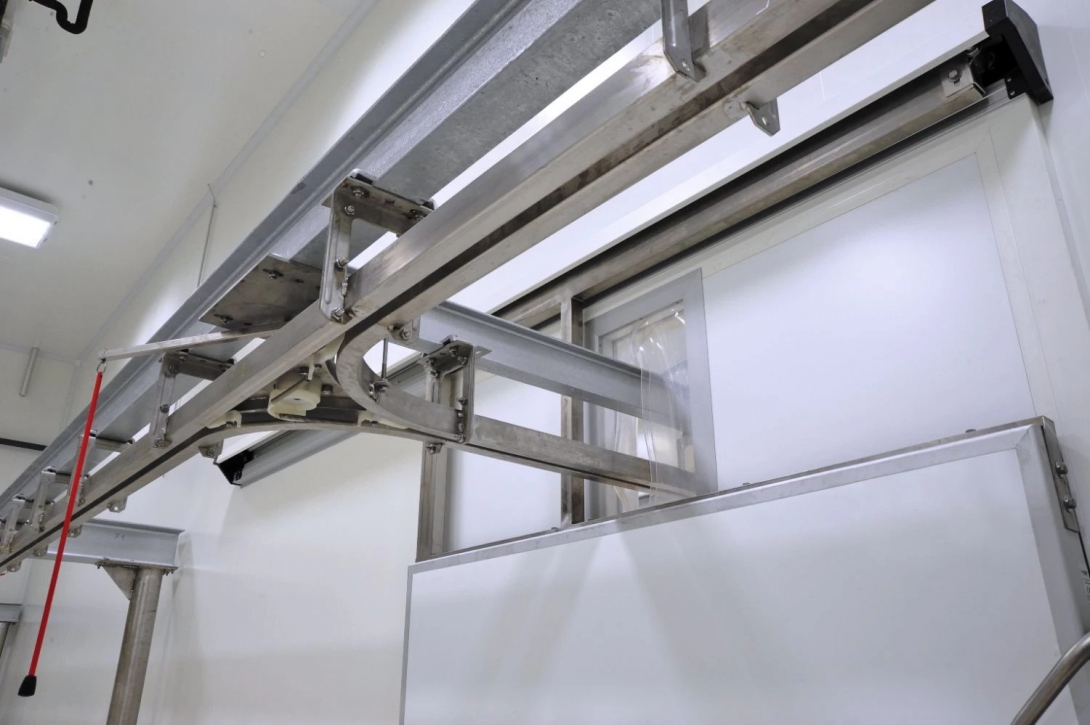
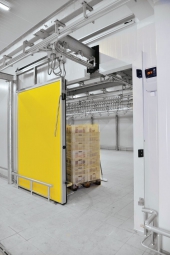
Monorail Sliding Cooler Door for Long-Term Monorail Opening Performance
Choose a monorail sliding cooler door for openings with overhead rail traffic when long-term fit, cleaner operation, and lower ownership friction matter.

Long-Term Fit for Monorail Openings

monorail sliding cooler door is often the best long-term fit when a refrigerated opening must work around overhead rail movement every day, not just look correct at installation. In these environments, the real question is not whether the door can function today. It is whether the opening will still feel efficient, clean, and operationally right after years of suspended product flow, cleaning pressure, and repeated use.

That distinction matters because monorail openings age differently from standard cooler entries. If the door is not selected for the actual traffic pattern, the opening may still operate, but it can create daily drag, visible wear, harder maintenance, and an earlier sense that the original choice was not built for the life of the facility.

The Problem Is Usually Hidden at the Beginning

Many monorail door decisions look acceptable during planning because the opening appears simple on paper. There is a rail path, a cold room opening, and a door selected to close the space. But the long-term problem usually starts with what that simplified view ignores.

A monorail opening is not just a doorway. It is a repeated movement zone. Suspended loads pass through it. Staff work around it. Cleaning teams return to it constantly. Maintenance teams rely on it staying aligned, serviceable, and predictable. The opening is exposed to traffic pressure in a more concentrated way than many standard cooler entries.

That is why short-term suitability and long-term fit are not the same thing. A door can seem adequate in the first phase of operation, then slowly become one of the most frustrating parts of the room. The signs usually appear in routine use: slower passage near the opening, more attention around seals and hardware, harder cleaning, or a growing sense that the entry never really matched the system around it.

Why Long-Term Fit Matters More Than Initial Function

In the U.S. market, professional buyers rarely want an access solution that merely survives installation. They want an opening that stays practical under real operating pressure. That is especially true in food businesses, processing facilities, cold storage rooms, and production-linked cooler spaces where suspended rail movement is part of daily throughput.

Long-term fit matters because a monorail opening affects more than temperature retention. It affects labor rhythm, maintenance planning, cleaning consistency, visual back-of-house standards, and replacement timing. If the access point begins creating friction in any of those areas, the total cost of ownership starts rising long before a complete failure occurs.

This is where many facilities feel the difference between a door that works and a door that belongs there. A strong long-term fit means the entry continues to support the movement pattern of the room without becoming an operational compromise.

The Risk of Choosing for the Short Term

A weak long-term fit usually does not fail dramatically at first. It wears the operation down in smaller, repeatable ways.

One risk is daily workflow drag. If suspended product flow slows or becomes less natural at the opening, the lost time compounds over months and years.

Another risk is maintenance burden. Openings that are not truly suited to monorail use tend to attract extra attention at seals, hardware zones, adjoining insulated panels, and protective surfaces. The system stays in service, but it asks for more care than it should.

There is also sanitation pressure. In inspection-conscious environments, awkward access points are harder to clean properly and harder to keep consistently presentable. That creates strain in routines that already have little room for inefficiency.

Then there is the more strategic risk: early replacement logic. A door does not need to break completely to trigger replacement pressure. If the opening feels underplanned, wears visibly, or creates steady friction, operators start pushing for a better solution earlier than expected.

Why Standard Access Logic Often Ages Poorly

Standard cooler door logic usually starts from basic needs such as room separation, opening size, and general traffic. That is enough for many applications. It is not enough for a monorail opening expected to hold up over time.

Rail-based openings are different because the doorway is shaped by overhead movement. That changes the stress pattern on the opening, the expectations for passage continuity, and the need for a cleaner relationship between the door and the surrounding access zone.

A standard entry may still appear serviceable, but it often ages poorly in this environment because it was never selected for the way the room actually moves product. The result is a door that remains technically operational while becoming less suitable each year.

That is the core issue behind long-term fit. The best choice is not the one that can be installed most easily. It is the one that continues to match the operation after heavy use, repeated cleaning, and daily traffic pressure have tested the opening.

Comparison That Helps Buyers Think Long Term

For monorail openings, the most helpful comparison is not only about door style. It is about how well the opening will hold its fit over time.

Access approachGood short-term resultLong-term concern in monorail use
Standard hinged cooler doorBasic closure and simple entrySwing behavior and access pattern age poorly around overhead movement
Standard sliding cooler doorBetter space use at wider openingsMay still leave the monorail condition only partially resolved
Monorail sliding cooler doorStronger alignment with suspended trafficBest long-term value when integrated with the full opening design

This comparison matters because long-term fit is rarely determined by one feature alone. It comes from how well the full opening supports the traffic pattern it will face for years.

Why a Monorail Sliding Cooler Door Is Often the Better Long-Term Choice

A monorail sliding cooler door is often the stronger answer because it is selected around the defining condition of the opening: overhead suspended movement inside a refrigerated environment.

That gives the opening a better chance of staying aligned with how the facility actually operates. Instead of asking a generic access format to tolerate monorail traffic, the solution is built around that traffic from the start. That usually leads to smoother daily passage, less forced movement at the opening, better long-term usability, and fewer signs of mismatch as the system ages.

This also creates a better foundation for the surrounding room details. Seals, adjacent panels, hardware, protective elements, visibility needs, and service access all tend to perform better when the opening strategy itself makes sense. That is why the best long-term results come from treating the opening as part of the operating system rather than as a standalone door package.

The Freezewize Cooling System approaches monorail openings with that long-view mindset. The goal is not only to close the room today, but to help the opening remain suitable under repeated use, sanitation pressure, and ongoing facility demands.

Quick Decision Guide

A monorail sliding cooler door is usually the better long-term fit when the opening is shaped by suspended rail traffic and the facility wants the access point to stay efficient over time.

It makes the most sense when:

overhead product flow passes through the opening every day

the room is part of a process, transfer, or production sequence

maintenance tolerance is low

sanitation and inspection readiness matter

visible wear at the opening would reflect poorly on facility standards

ownership cost matters beyond initial purchase simplicity

A more general door solution may still work for lighter-duty openings where overhead movement is occasional and does not define daily use. But when the monorail system truly drives the opening, the better long-term answer is usually the one designed around that reality.

Related Solutions

Long-term fit improves when the opening is planned as part of the larger refrigerated access zone. Related internal link opportunities that fit naturally with this topic include:

cooler sliding door systems for adjacent non-monorail openings

insulated cold room panels for stronger opening continuity

cold storage door hardware for heavy-cycle access points

impact protection solutions for traffic-exposed refrigerated areas

custom door configurations for process-driven facilities

These related solutions help buyers create a more durable operating standard across the room instead of solving one opening in isolation.

FAQ

What does long-term fit mean for a monorail opening?

It means the door continues to suit the traffic pattern, cleaning routine, and operational pressure of the opening over years of use, not just during initial installation.

Why can a door seem acceptable at first but become a problem later?

Because many mismatches only show up under daily use. Repeated suspended movement, cleaning, and wear reveal whether the opening was truly planned for the application.

Is long-term fit mostly about durability?

Durability is part of it, but not the whole issue. Workflow, sanitation, maintenance burden, and ownership cost also determine whether the opening remains a good fit.

Are monorail sliding cooler doors only for large facilities?

No. The key factor is not facility size. It is whether suspended rail movement defines how the opening functions every day.

What should buyers evaluate before specifying one?

They should review rail alignment, traffic frequency, opening width, sanitation needs, surrounding panel conditions, and long-term maintenance expectations together.

Can a standard sliding cooler door still work in some monorail applications?

In lighter-duty situations, sometimes. But where overhead flow is frequent and central to operations, a monorail-specific solution is usually the more suitable long-term choice.

Conclusion

Long-term fit for monorail openings is not about choosing a door that simply works at handover. It is about choosing an opening strategy that still works after the operation has truly tested it.

If overhead rail traffic defines the opening, the long-term solution should be designed around that condition from day one.

A monorail sliding cooler door is often the more reliable choice when sustained workflow, lower maintenance friction, better sanitation control, and longer ownership value all matter together. For teams evaluating a new project or rethinking an underperforming opening, the smartest next step is to assess the full traffic pattern and choose a solution built for the life of the operation.


Fill the Form!

Write your needs and fill the form to contact us.

Freezewize | Industrial Cooling Systems & Custom Cold Room Solutions
Merhaba, Size yardımcı olabilir miyiz ?
Whatsapp Destek