




Freezewize | Industrial Cooling Systems & Custom Cold Room Solutions

Cold Room Walls Without Fit Drift

Cam Locked Cold Room Panels for Wall Stability and Accurate Fit

Keep cold room walls aligned with cam locked panels that reduce fit drift, support cleaner installation, and protect long-term thermal and structural performance.

Cold Room Walls Without Fit Drift

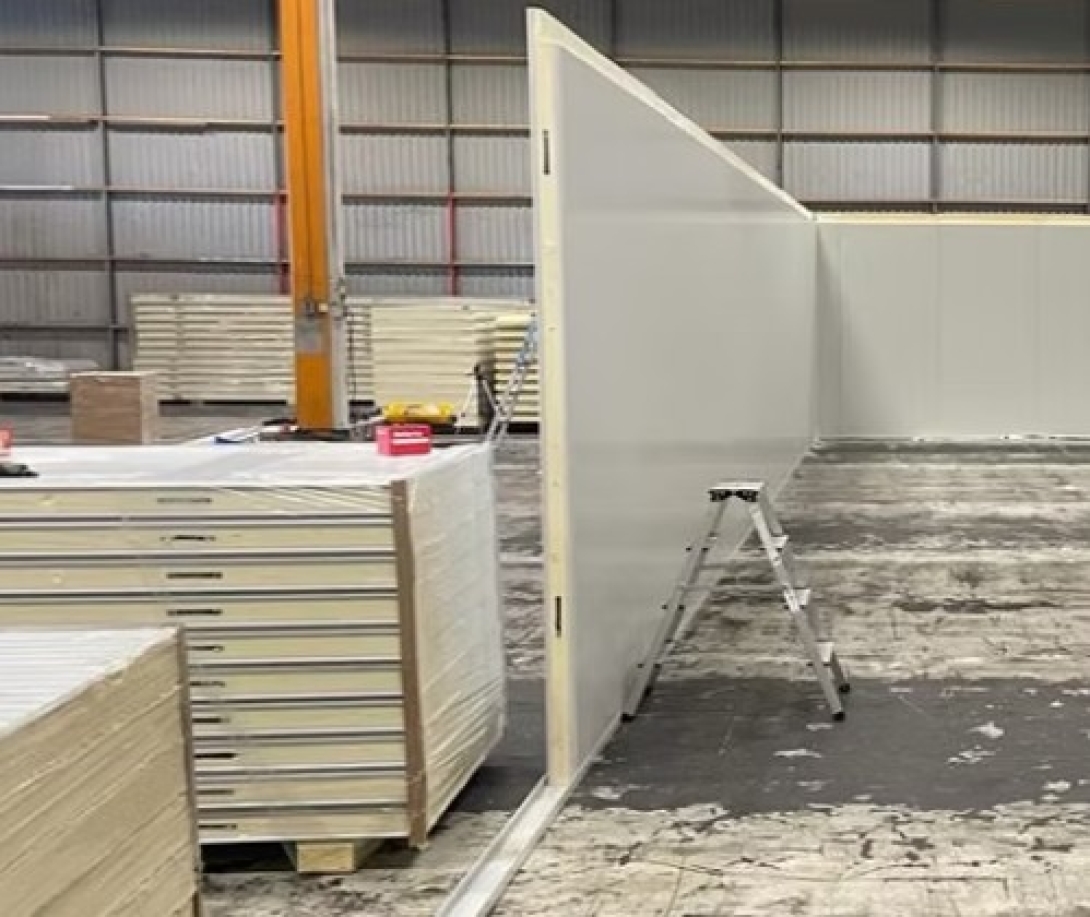
Cold room walls without fit drift start with a panel system that holds alignment under real operating pressure. Cam locked cold room panels help keep wall lines straight, joints tight, and openings stable, which reduces the small installation and performance problems that turn into bigger maintenance issues later.

That matters because fit drift is rarely just a visual problem. In active cooler and freezer environments, wall movement, uneven seams, and creeping misalignment can affect door fit, hygiene, thermal consistency, cleaning efficiency, and the overall sense that the room was built to the right standard.

Where Wall Alignment Starts Breaking Down

Most cold room walls do not fail suddenly. They begin to lose their straightness gradually.

A panel assembly may appear acceptable upon delivery, but once the room enters normal use, it may begin to show slight inconsistencies. Door frames no longer feel perfectly seated. Joint lines become less even. A corner begins to look different from the rest of the enclosure. A wall that once appeared sharp begins to feel as though it is slowly deteriorating.

This is the operational reality behind misalignment. It is not always a dramatic structural shift. More often than not, it is the cumulative effect of poor joint control, irregular installation, floor unevenness, thermal cycling, repeated door use, and the daily movement of people, vehicles, shelves, or pallet jacks around the room.

In commercial settings in the U.S., this type of misalignment creates real pressure. Facility managers do not want a room that functions technically but quietly becomes harder to maintain, loses reliability, and struggles to leave a good impression in a visible back-of-house environment.

Why Does Misalignment Become a Bigger Problem Over Time?

A wall line that begins to misalign rarely remains a minor issue.

As alignment begins to deteriorate, the affected sections of the room start to bear the brunt of the problem. Door edges may not feel as clean as they used to when in operation. Seal performance may become more inconsistent. More residue may accumulate along joint lines, or thoroughly cleaning these areas may become difficult. In freezer rooms, minor inconsistencies can lead to frost buildup at weak connection points. In refrigeration applications, these issues typically manifest as condensation problems, surface irregularities, or a housing that no longer feels secure.

The risk is not merely technical. It is operational and financial.

A room with misalignment can result in: 

  • Increased maintenance requirements around seams, corners, and openings.
  • More friction in workflow when adjacent elements are not properly aligned.
  • Greater cleaning burden at irregular joints or transitions.
  • Pressure to replace the room sooner as it begins to fail.
  • Diminished confidence in long-term structural integrity.

Therefore, an incorrect wall system can still be the wrong choice, even if it appears to perform well on paper. If the enclosure gradually loses its alignment, the room begins to generate higher costs in terms of labor, reliability, and maintenance.

The Truly Important Key Comparison

The key comparison regarding wall stability is not merely between insulated panels and insulated panels. It is between controlled joint connections and looser, site-dependent wall installation.

The cam-locked cold room panel is designed to join adjacent sections with a more controlled and repeatable connection. This increases the likelihood that the wall will remain straight and visually uniform across long spans, corners, and openings. In contrast, simpler, site-dependent installation methods typically make the result more dependent on site variations; this increases the likelihood of irregular lines and progressively greater alignment deviations.

Here’s the practical difference:

Wall System ApproachBest FitMain StrengthCommon Weak Point
Cam locked cold room panelsCooler rooms, freezer rooms, food facilities, distribution spacesMore consistent joint pull and wall alignmentStill requires proper floor prep and installation discipline
Basic field-fastened insulated wall sectionsLight-duty or less demanding enclosuresSimpler assembly logicMore tolerance variation and higher drift risk over time
Site-built insulated wallsHighly customized layoutsFlexibility around unusual conditionsSlower execution and less repeatable alignment

The lesson for buyers is simple: if wall lines, openings, and long-term structural stability are important, the connection system is not a detail. It is the decision itself.

How Do Kam-Locked Panels Reduce Alignment Deviation?

Kam-locked cold room panels help resolve alignment deviation by introducing order to the part of the room that typically causes inconsistency—namely, the connection between panels.

When the locking mechanism brings the panels together in a controlled manner, it results in straighter lines, tighter joints, and cleaner transitions at corners and door openings. This allows the wall to behave more like a single, cohesive structure rather than a series of separate pieces trying to stay aligned.

This becomes most critical when the following are present in a room: 

  • Long wall lines that make visual inconsistencies easier to spot.
  • Doorways where alignment affects both airtightness and daily use.
  • Frequent cleaning that exposes weak joints and rough transitions.
  • Freezer or refrigeration conditions where one must endure the consequences of careless seam inspection.
  • Visible back areas where presentation standards are critical.

A well-designed cam-locked cold room panel system yields better results when relevant components are considered early on. Floor levelness, thresholds, ceiling connection points, gasket compression, protective hardware, and panel thickness all affect whether the wall will remain straight over time. In many projects, 4-inch (100 mm) or 6-inch (150 mm) panel options are primarily discussed from a thermal perspective, but wall stability also depends on how the enclosure is connected and supported as a system.

The Freezewize Cooling System typically approaches the project correctly from this perspective: rather than treating wall panels as isolated components, it evaluates joint integrity, room layout, traffic flow, and adjacent openings as a single, coordinated cold room decision.

What Buyers Should Review Before Approving a Wall Package

If the goal is a leak-free cold room wall, a panel proposal alone is insufficient. Buyers must review the conditions that will affect whether the wall remains intact after installation.

The most useful checkpoints are: 

  • Wall lengths and number of corners.
  • Condition of the floor level prior to panel installation.
  • Number and size of door openings.
  • Expected traffic near openings and wall edges.
  • Refrigeration or freezer temperature range.
  • Washing and cleaning routine.
  • Tolerance for visible line variations over time.
  • Possibility of future changes or expansions.

This review is important because some rooms require more than basic thermal separation. Food processing facilities, supermarket backrooms, commercial kitchens, cold storage warehouses, and distribution environments typically require wall systems that remain consistent not only on installation day but also under daily operational stress.

Quick Decision Guide

Select tongue-and-groove cold room panels when the project requires the following: 

  • Wall lines that remain straight over long distances.
  • Tighter joints around doors, corners, and ceiling connections.
  • Better resistance to gradual alignment shifts.
  • Cleaner visual results in visible service areas.
  • Reduction of long-term maintenance burdens caused by wall misalignment.

If the project includes the following, examine all construction conditions more carefully: 

  • Irregular or questionable floor preparation.
  • Heavy traffic near wall edges or openings.
  • Frequent door opening and closing cycles that exert pressure on adjacent alignment.
  • Strict hygiene routines that cause rough transitions.
  • A low-budget specification focused solely on initial material costs.

If the room is to be evaluated primarily for durability, installation quality, and daily appearance, a wall system with controlled joint connections is generally a better long-term choice.

Related Solutions

If this topic is relevant to your project, you may also want to review the following related solution pages: 

  • Cold room doors for consistent opening performance.
  • Freezer room panel systems for low-temperature applications.
  • Refrigerated room wall and ceiling panels.
  • Threshold and ramp details for vehicle and pallet traffic.
  • Protective hardware for wall areas exposed to impact.
  • Gaskets, sealing accessories, and panel connection components.

Since wall stability is rarely just a wall-related issue, these are practical, relevant solutions. The best results are achieved when containment, openings, traffic exposure, and protective details are planned together.

FAQ

What is misalignment in a cold room wall?

Misalignment is the gradual loss of proper alignment between wall panels, joints, corners, or openings. It typically manifests as irregular panel lines, inconsistent joints, or openings that no longer feel as smooth as they should.

Do tongue-and-groove cold room panels really help prevent wall misalignment?

Yes. Their main advantage is a more controlled joint connection; this helps wall sections join more consistently and reduces the likelihood of future misalignment.

Is misalignment just a cosmetic issue?

No. It can also affect door performance, the cleanliness of joints, seal behavior, inspection readiness, and the overall maintenance burden of the room.

What typically causes cold room walls to lose alignment?

The most common causes are uneven floor conditions, inconsistent installation, poor joint control, thermal movement, heavy daily use, and poor coordination at doors and corners.

Are cam-locked panels suitable for both refrigeration and freezer walls?

Yes, provided they are specified appropriately for the room conditions. Joint discipline becomes even more critical in freezer applications, where poor alignment and inadequate joint control become apparent more quickly.

Should wall stability be evaluated in conjunction with doors and thresholds?

Absolutely. A wall can only remain operationally sound if adjacent openings, thresholds, gaskets, and protective hardware all operate at the same level of alignment control.

Conclusion

Cold room walls should not only look straight on installation day; they must remain straight during daily use.

If a wall system cannot maintain its alignment over time, it is not the right system for a demanding cold room. If the project requires tighter alignment, stronger joint control, and less long-term settlement deviation, tongue-and-groove cold room panels are generally a smarter choice. A careful examination of floor conditions, wall lines, openings, and traffic exposure is the right step to take before final approval.

Fill the Form!

Write your needs and fill the form to contact us.

Freezewize | Industrial Cooling Systems & Custom Cold Room Solutions
Merhaba, Size yardımcı olabilir miyiz ?
Whatsapp Destek