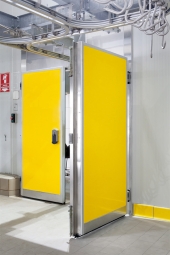





Avoiding Swing Conflict Under Track
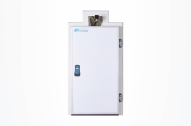
Monorail Hinged Cold Room Door Solutions for Avoiding Swing Conflict Under Track
Avoiding swing conflict under track requires a door plan built around rail clearance, traffic flow, and daily use. The right setup reduces damage, delays, and maintenance pressure.
Avoiding Swing Conflict Under Track
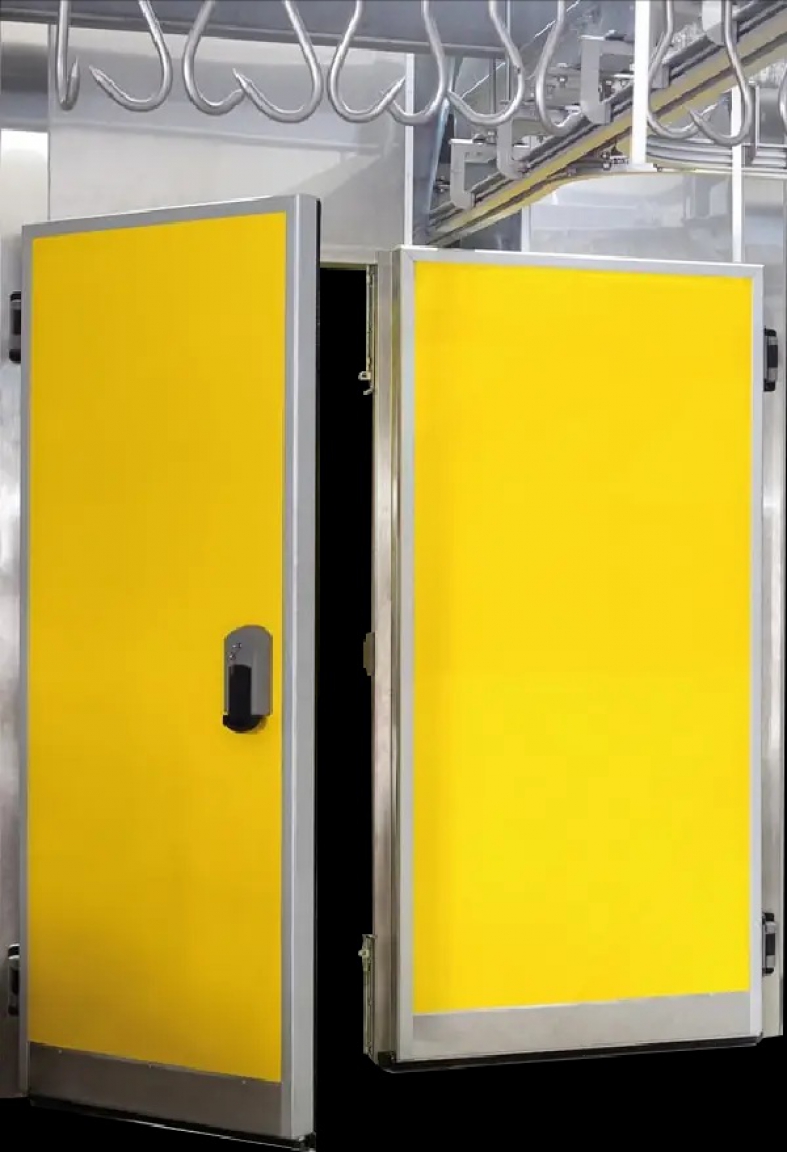
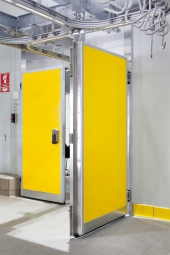
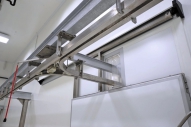
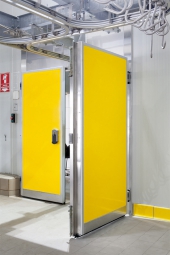
A monorail hinged cold room door is often the right solution when overhead track systems create swing conflict at the entry. In these openings, the issue is not simply whether the door can open. The real issue is whether it can open without interfering with track-adjacent movement, slowing staff, creating impact risk, or making the entry harder to use under daily operating pressure.
That is why avoiding swing conflict under track is a planning issue, not just a product issue. If the doorway is treated like a standard insulated opening, the result may still look acceptable after installation, but it can quickly become a source of workflow friction, maintenance attention, and visible wear once the room is active.
The Problem Begins When the Door Opening Stops Behaving Like a Simple Opening
In many cold room projects, the door opening is treated as a basic wall opening requiring insulation, sealing, and reliable hardware. This logic works in simpler layouts. However, it begins to fail when the ceiling rail alters how the opening is approached and used.
Under a single-track system, the entrance becomes more sensitive. Staff may approach from a narrower angle. Product flow may pass over or around the door opening. Carts and shelves may require a clearer path through the opening. Since the opening is no longer neutral, the opening angle of the door leaf becomes more critical. This is part of the operational movement area.
This is where the opening conflict begins. Technically, the door can pass in front of the track, but the opening still feels awkward. Workers slow down. The approach becomes more circuitous. The door leaf disrupts the space more than expected. The entrance begins to create hesitation rather than flow.
In food facilities, cold storage rooms, prep areas, and refrigerated kitchen back-of-house spaces in the U.S., this is more significant than it appears at first glance. A minor conflict at a frequently used entry point becomes a recurring operational cost. It affects workforce rhythm, visual order, equipment lifespan, and the overall perception that the room was properly planned.
Why Does Swing Conflict Create Bigger Problems Than Expected?
Swing conflict rarely manifests as a single dramatic failure. It appears as a series of minor, recurring obstacles. Consequently, it is easy to underestimate during the specification phase, and ignoring it after installation is costly.
Slows Down Daily Traffic
When a door leaf enters an already confined space, users alter their movement patterns. They wait, make adjustments, approach from different angles, or use the door more cautiously than necessary. This results in small but constant delays throughout the day.
Increases the Risk of Impact
A conflicting opening path exposes the door to more contact. As personnel or vehicles pass through a narrower space, edges, bottom panels, frames, hinges, and hardware wear out more quickly. The opening begins to wear out faster not because the door is weak, but because the access layout is incorrect.
Weakens Entry Discipline
When a door feels cumbersome to use, people stop using it properly. The door may be left open longer, pushed harder, or closed with less care. Over time, this affects both thermal discipline and overall hardware consistency.
Increases Maintenance Burden
A door that operates contrary to specifications requires repeated maintenance. Misalignment, seal wear, hinge tension, latch inconsistency, and surface damage become apparent more quickly. The issue isn’t just the repair cost; the door ends up seeming like it always needs something.
It Undermines the Professional Feel of the Space
In food processing and refrigerated operations, the entrance should feel intentional, clean, and controlled. A door that looks forced into the opening or behaves oddly under the track weakens the room’s visual quality. This is critical in environments sensitive to inspection and presentation.
The Most Useful Comparison Isn’t Just About Door Type
When there’s an opening conflict under the track, the key comparison isn’t simply one door category versus another. A more useful comparison is between a standard door plan and a plan specifically designed to prevent opening conflicts.
| Decision Factor | Standard Door Planning | Planning to Avoid Swing Conflict Under Track |
|---|---|---|
| Swing logic | Based mainly on opening size and wall layout | Based on rail position, traffic path, and real use |
| Entry usability | May appear fine on paper | Evaluated around actual movement behavior |
| Impact risk | Often underestimated | Reduced through better layout fit |
| Maintenance pattern | Can become reactive | More predictable when conflict is designed out |
| Hygiene suitability | Depends on general detailing | Improved when the opening works cleanly |
| Long-term ownership | May feel acceptable at first, costly later | More stable when planned around real conditions |
The key point is this: the best solution is not merely one that fits under the track, but one that eliminates conflicts in the actual use of the door opening.
Preventing Swing Interference Requires a Different Planning Mindset
The correct solution begins by evaluating the door opening as part of the room’s movement pattern. This means assessing how people, products, and support equipment interact around the opening before the door is selected.
In situations where the entrance requires regular yet controlled access, where an overhead track alters the door’s opening mechanism, and where the facility needs a practical, isolated access point without adding unnecessary operational complexity, a single-track hinged cold room door is typically the right answer.
Whether swing conflict is truly prevented depends on several decisions.
The Swing Direction Must Follow Actual Traffic Flow
This is one of the most critical choices made for the entire opening. If the door swings in a way that interrupts the natural approach of personnel or equipment, the conflict persists even if the track is technically clear. The swing direction must align not only with the wall’s layout but also with how the entrance is actually used.
The Opening Should Be Evaluated Based on Usage, Not Just Dimensions
An opening may appear sufficient on a plan view, but actual usage is different. People move quickly. Vehicles enter at an angle. Staff do not stop to admire the technical opening. They react to how the opening feels. Therefore, practical clearance is more important than theoretical space.
Sash Size and Movement Must Be Suited to the Room
An excessively large or poorly planned sash can cause unnecessary interruptions at an entrance affected by the track system. The goal is not merely to have an insulated door. The goal is to have a door that protects the room without dominating the movement area.
Hardware and Edge Protection Must Reflect the Risk Level
Gaps beneath or near track systems typically operate in high-traffic areas. Hinges, locking hardware, gaskets, bottom edge protection, and frame construction must be selected with actual traffic demands in mind. When the opening is properly planned, these details last longer because they do not have to constantly compensate for design flaws.
Thresholds and Floor Transitions Remain Critical
Opening conflicts are not limited to the upper region. In many cold room entrances, the lower transition also determines whether the opening feels seamless or frustrating. If pallet jacks, carts, or shelves pass through this area, the threshold must support this movement seamlessly.
Hygiene and Cleanability Must Be Maintained
Preventing opening conflicts should not lead to other issues. The entrance must continue to support cleaning routines, visual inspections, and hygienic compliance. In food-related environments, this means the solution must function mechanically and feel appropriate under inspection and washing conditions.
The Freezewize Cooling System approach adds value precisely at this point. Instead of treating the door as an independent component, the opening is considered a dynamic operational point. In monorail applications, this is often the difference between a functional installation and one that performs well over time.
Quick Decision Guide
A single-track hinged cold room door is generally a better option in the following situations:
- If there is an overhead track near the opening.
- If the door serves regular personnel access within a controlled environment.
- If standard swing-door planning would interrupt movement or reduce usable space.
- If hygiene, reliable closure, and durability are critical.
- If the facility wishes to avoid unnecessary impact exposure and maintenance burdens.
- The entrance must remain insulated without creating operational difficulties.
The decision should be reviewed more carefully in the following situations:
- Traffic is heavy and multi-directional.
- The opening continuously accommodates the movement of large equipment.
- The swing angle will disrupt the process rhythm even after adjustment.
- The passageway tends to remain open for extended periods.
- Practice shows that a different access strategy would resolve the conflict more effectively.
A useful rule: If the track alters the way the door approaches, the door should be planned to eliminate this conflict before installation, rather than managing it after installation.
Related Solutions
This topic is naturally linked to nearby cold room planning decisions, including the following:
- Heavy-duty cold room door systems.
- Freezer room doors for high-traffic openings.
- Sanitary door hardware for food processing facilities.
- Insulated service doors for refrigerated work areas.
- Threshold details for pallet jack and hand truck movement.
- Viewing panel options for improved traffic visibility.
- Cold storage wall and ceiling panel systems.
FAQ
What causes a clearance conflict at the cold room entrance?
A clearance conflict typically occurs when an overhead track alters the usable space around the opening, and the door panel’s movement is not planned according to actual traffic, approach angle, and opening behavior.
Can a door be the wrong choice even if it technically fits?
Yes. A door may fit the opening on paper and pass through the track, but in daily use, it can cause hesitation, exposure to impact, and friction in workflow.
Why is the opening direction so important in single-track applications?
Because the wrong opening direction can disrupt the natural flow of personnel and equipment, even if the door is well-made. In these openings, geometry is just as important as insulation.
Does preventing conflicts also reduce maintenance needs?
Yes. When the entrance operates smoothly, the likelihood of the door being subjected to repeated impacts, forced movement, premature seal wear, or constant alignment adjustments decreases.
Does this apply only to food processing environments?
No. It also applies to cold storage facilities, preparation areas, the back of supermarkets, refrigerated warehouses, and all controlled environments where overhead track systems affect access behavior.
What is often overlooked during selection?
The most common mistake is focusing on the opening size and ignoring how the door will actually be used once personnel movement, carts, cleaning routines, and activities alongside the tracks begin.
Conclusion
Preventing clearance conflicts under the tracks is not a minor detail. It is a fundamental part of ensuring the cold room entrance operates as the operation requires. If the door passes over the tracks but still obstructs movement, the conflict has not actually been resolved.
The most robust cold room entrance designs involve treating the door opening not merely as a part of the wall, but as an integral part of the workflow. If your project includes ceiling tracks, evaluate the door’s opening behavior, traffic flow, hygiene requirements, collision risks, and daily usage together before finalizing the opening dimensions.