




Freezewize | Industrial Cooling Systems & Custom Cold Room Solutions

Cleaner Access Around Suspended Product Lines

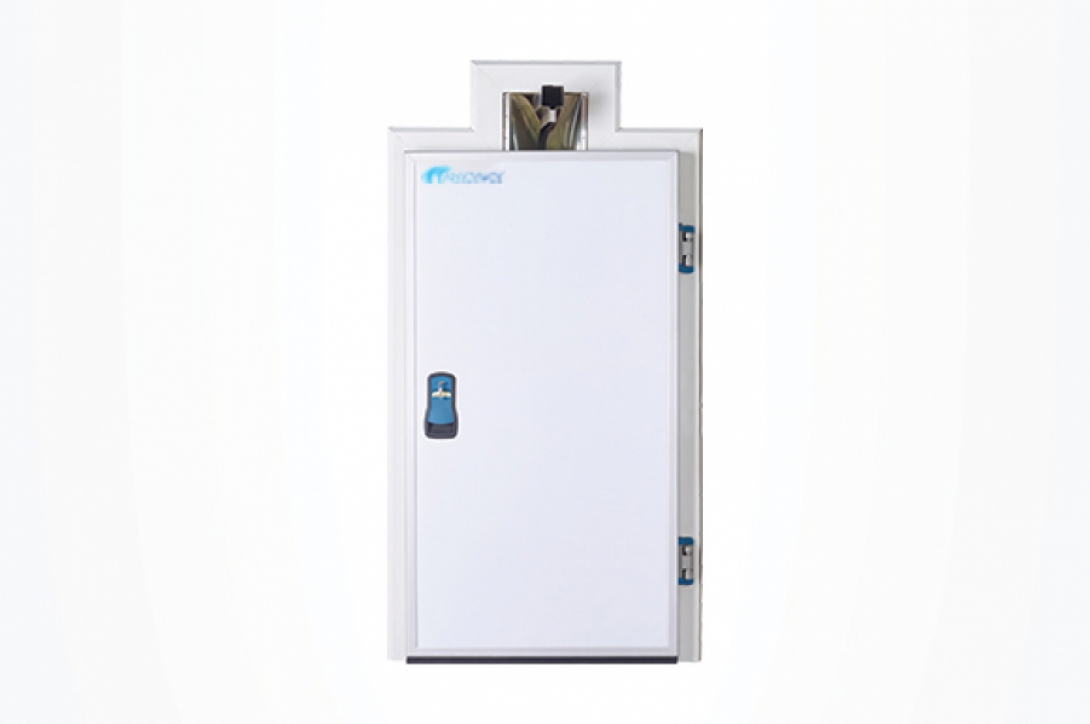
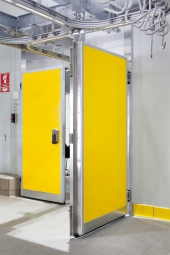
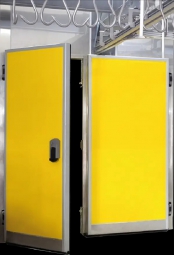
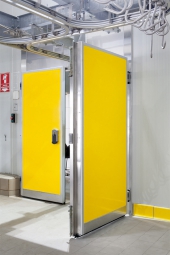
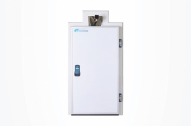
Monorail Hinged Cold Room Door for Cleaner Access Around Suspended Product Lines

A monorail hinged cold room door helps create cleaner access around suspended product lines by reducing swing interference, improving hygiene flow, and supporting durable daily operation.

Cleaner Access Around Suspended Product Lines

A monorail hinged cold room door is often the right solution when suspended product lines make a standard cold room entry harder to keep clean, controlled, and easy to use. In these spaces, the issue is not only getting an insulated door into the opening. The real challenge is protecting access flow without creating interference around overhead product movement, staff traffic, carts, and washdown routines.

That is why cleaner access matters as much as insulation. If the doorway works mechanically but creates congestion, awkward movement, impact exposure, or hard-to-clean details around the product line, the opening will start adding friction to the operation. The better solution is the one that keeps the entry usable, hygienic, and predictable under daily pressure.

The Problem Starts When Product Flow and People Flow Share the Same Entry Area

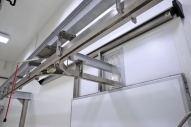
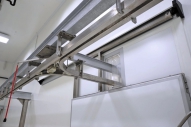
In refrigerated food environments, overhead product lines alter the behavior of the entire entry point. A door that appears simple in a basic cold room becomes more complex when airflow comes into play.

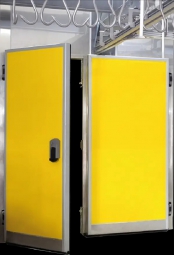
This situation applies particularly to meat processing, food production, preparation areas, cold storage transfer zones, and similar facilities where products move overhead while people and support equipment move below. At this point, the entrance is no longer just a door opening. It becomes a functional transition point balancing hygiene control, traffic efficiency, and temperature containment.

This is where many projects begin to appear poorly planned. The dimensions of the opening may be correct, the insulated door may be properly installed, and the hardware may be functioning as expected. However, when personnel begin passing through this area during an actual shift, minor issues emerge. The passage feels too narrow. The door’s swing path obstructs movement. Cleaning becomes more difficult. Contact marks appear sooner than expected. The access point begins to look as though it was designed around a wall opening rather than the actual operational space.

For facility managers and contractors in the U.S. market, this is no minor issue. When overhead product lines affect the entrance, an inadequate access plan impacts workflow, hygiene protocols, visual order, and long-term maintenance reliability.

Why Does Cleaner Access Become a True Operational Priority?

Clean access isn’t just about appearance. It affects how reliably the area can function day in and day out around overhead product lines.

Movement Must Be Smooth

When personnel, carts, shelves, or pallet jacks move near the overhead product line, the door opening must provide a clear and intuitive path. If the door panel obstructs this path or narrows the opening, movement slows down immediately. This is where friction in the workflow begins.

Hygiene Standards Are Higher in These Areas

Entrances near overhead product lines are typically located in environments with higher hygiene expectations. These are not casual service openings. They are usually part of areas where food processing, washing, inspection preparation, and visible cleanliness are critical. If the door configuration creates awkward corners, poor approach flow, or repeated impact marks, the opening ceases to support the hygiene standard the room requires.

The Door Opening Should Be Easy to Use Without Feeling Fussy

A clean-looking entrance that becomes difficult to use under actual operational pressure is insufficient. Staff should not be forced to slow down excessively, adjust it unnaturally, or treat the door like a fragile component. The opening should feel manageable, not fussy.

The Presence of a Product Line Changes the Space

Even if an overhead line does not physically obstruct the door, it alters how the entrance is perceived and used. This can affect the approach angle, visible clearance, ease of opening, and the sense of confidence users feel as they pass through the opening. Therefore, suspended product lines change not only ceiling height but also behavior.

The Risk of an Entrance That Functions but Never Feels Fully Resolved

Even if a cold room door functions correctly, it may be the wrong choice for access around suspended product lines. This is one of the most common issues encountered in monorail applications.

Daily Access Becomes Less Efficient

If the entrance feels narrower or more awkward than it should, employees hesitate. They alter their approach, wait for a better timing, or move more cautiously around the door panel. This repeated hesitation eventually becomes a labor issue.

Surface Wear Occurs Sooner

When the entryway is not properly resolved, the door panel, frame, bottom edge, hinges, gaskets, and surrounding trim are exposed to increased wear and tear. The impact may not always be severe, but repeated minor contact leads to faster deterioration and gives the impression of lower quality control.

Cleaning Routines Become More Difficult

In areas sensitive to washing or inspection, improper door alignment can hinder cleaning access and complicate the visual maintenance of the surrounding area. A door that disrupts the flow of hygiene procedures becomes a hidden operational burden.

Closing Discipline May Weaken

If a door feels cumbersome in daily use, users may leave it open longer, close it less carefully, or view proper sealing as a secondary concern. This situation quietly affects both temperature consistency and daily operational discipline.

Ownership Costs Begin to Rise Much Too Early

A flawed entry design doesn’t always fail dramatically. More often, it creates small, recurring issues: alignment checks, gasket fatigue, hardware adjustments, visible wear, and maintenance requirements that shouldn’t be necessary this early. This is where ownership costs become frustrating.

A Comparison That Truly Helps with Decision-Making

In such applications, a useful comparison isn’t just between one insulated door and another. A better comparison is between a standard door plan and a door plan specifically designed for cleaner access around suspended product lines.

Decision FactorStandard Cold Room Entry PlanningPlanning for Cleaner Access Around Suspended Product Lines
Entry logicBased mainly on wall opening and insulation needBased on hygiene flow, suspended movement, and daily traffic
Swing suitabilityMay work on paperEvaluated around real approach and real clearance behavior
Cleaning practicalityOften treated as secondaryBuilt into the access decision
Impact exposureCan be underestimatedReduced through better flow and positioning
Visual controlMay look acceptable at installationMore likely to stay orderly over time
Long-term ownershipCan create early frictionMore predictable when planned for the application

The real deciding factor is this: a better door is not just one that looks better, but one that keeps the entrance cleaner during use.

The Right Solution Starts with the Access Diagram, Not the Product Page

A single-track hinged cold room door is typically the right choice when the opening serves regular yet controlled access, when overhead product movement affects how the door can be used, and when the facility requires a durable, insulated entrance that remains practical during cleaning, traffic, and daily operations.

The strongest solution depends on various planning choices.

The Opening Direction Must Support the Room’s Hygienic Flow

The opening direction should never be determined solely based on wall alignment. It must support how personnel approach the opening, how nearby movements occur, and how the room is cleaned. A door that opens in the wrong direction can make an otherwise good opening feel constantly problematic.

The Opening Should Be Evaluated Based on Usability, Not Just Geometry

A door opening may meet clearance requirements on paper, but this does not guarantee clean access in actual use. Staff need a direct path. Vehicles must be able to move easily. The opening must not only be technically feasible but also feel natural at working speeds.

Hardware and Door Construction Must Be Suitable for the Environment

These are typically not passive openings. They are usually found in active food environments with repetitive use, surface exposure, and hygiene demands. Hinges, locking hardware, gaskets, edge protection, and frame integrity all affect whether the entrance will remain reliable and functional over time.

Threshold and Floor Transition Remain Critical

Cleaning access is not limited to the area above the opening. If carts, shelves, or pallet jacks pass through this area, the threshold and floor transition determine how smooth the entrance feels. A door may be correct in the upper region, but if the transition is poorly managed, it can still cause issues in the lower region.

Cleanability Must Be Part of the Solution

The opening must support washing access, visible order, and hygienic performance without making maintenance difficult. This means the solution must function not only as part of the construction package but also as part of the hygiene routine.

This is where the Freezewize Cooling System approach adds value. Instead of being treated as a standalone product, the door is evaluated as part of the entire cold room workflow. In areas affected by overhead product lines, this typically leads to a more stable, cleaner, and higher-performing result.

Quick Decision Guide

A single-track hinged cold room door is generally a better choice in the following situations: 

  • Suspended product lines affect the opening.
  • The door serves both controlled traffic and regular personnel access.
  • Hygiene, cleaning routines, and visible order are important.
  • The facility requires durable, insulated access without unnecessary complexity.
  • Carts or racks move near the opening, but the area is not constantly filled with heavy equipment traffic.
  • Predictability of long-term maintenance is important.

The decision should be reviewed more carefully in the following situations: 

  • Traffic is very heavy and multi-directional.
  • The opening serves continuous movement of large equipment.
  • Even after planning adjustments, the opening angle disrupts the workflow.
  • The access point tends to remain open for extended periods.
  • The application would be better served by a different access strategy for flow control.

The practical rule is simple: If suspended product lines require the entrance to remain clear and usable, the door plan must be designed from the outset to accommodate this reality.

Related Solutions

This topic is naturally linked to nearby refrigerated area planning decisions, including the following: 

  • Heavy-duty cold room door systems.
  • Freezer room doors for active work areas.
  • Hygienic equipment packages for food facilities.
  • Insulated service doors for refrigerated processing areas.
  • Threshold details for hand truck and pallet jack traffic.
  • Viewing panel options for safer entry visibility.
  • Cold room wall and ceiling panel systems.

FAQ

What makes it difficult to keep access around overhead product lines clear?

Overhead lines alter how people approach the opening, how the door opens, and how nearby traffic behaves. If the entrance isn’t planned around this movement, it becomes difficult to use and maintain the area.

Is this primarily a hygiene issue or a traffic issue?

Both. In these applications, the quality of access depends on how well the opening supports daily movement, as well as how well it facilitates cleanability, visual inspection, and reliable separation.

Can a standard cold room door still work in these areas?

It may work in less intensive usage scenarios. However, in situations where overhead product lines significantly impact the entrance, a standard design typically creates avoidable friction, wear, and maintenance pressure.

Why is the direction in which the door opens so important near a suspended product flow?

Because the wrong opening direction can disrupt the natural movement of personnel and equipment, even if the overhead line is technically empty. In these areas, entry behavior is just as important as the door’s performance.

Does cleaner access also reduce long-term costs?

Yes. When the opening operates more cleanly, preventable issues typically decrease, closure consistency improves, maintenance requirements decrease, and visible wear slows down.

What is the most common design mistake?

The most common mistake is focusing on opening size and insulation requirements while ignoring how cleaning, traffic, product flow, and daily use interact around the door.

Conclusion

Cleaner access around suspended product lines is not merely a cosmetic improvement. It is a practical necessity to keep the cold room entrance efficient, hygienic, and reliable under daily pressure. If the door fits the opening but makes the entrance crowded, awkward, or difficult to keep clean, the solution has not been planned well enough.

The best results are achieved by treating the door opening not merely as part of the wall, but as part of the work environment. If your project includes suspended product lines, evaluate access flow, hygiene requirements, the risk of impact, and daily usability together before finalizing the opening.


Fill the Form!

Write your needs and fill the form to contact us.

Freezewize | Industrial Cooling Systems & Custom Cold Room Solutions
Merhaba, Size yardımcı olabilir miyiz ?
Whatsapp Destek