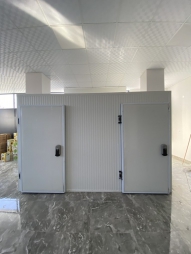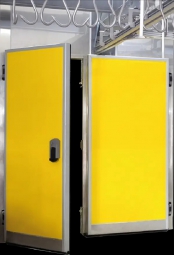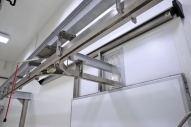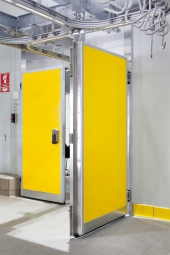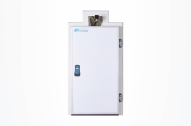





Monorail Flow at Cold Room Entries
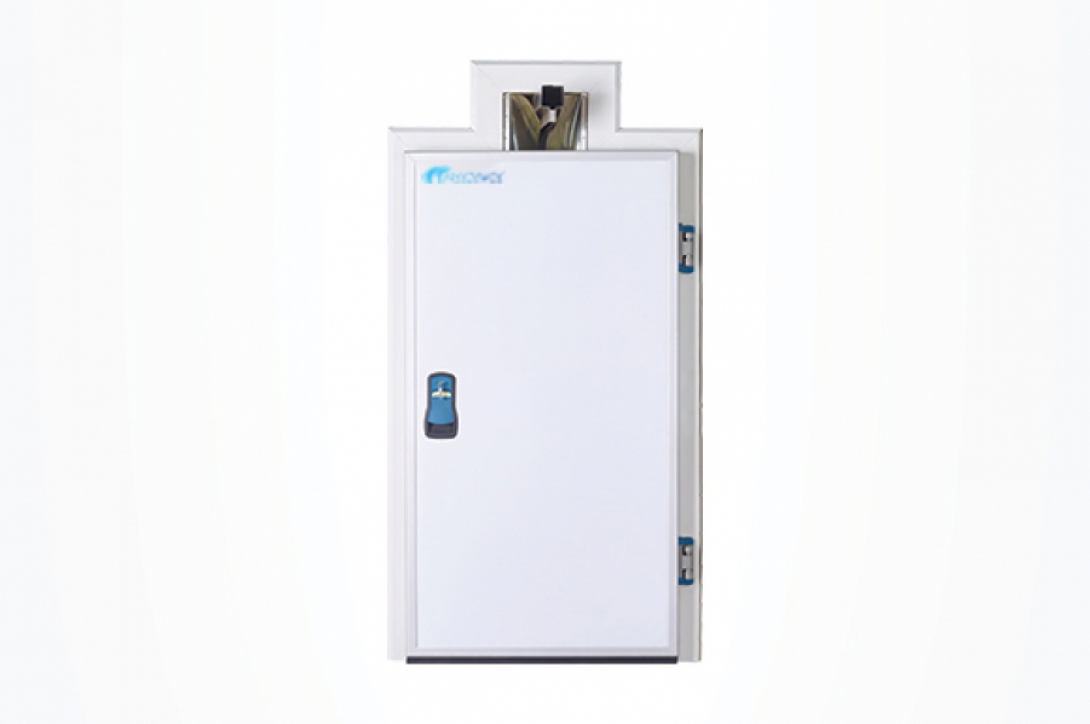
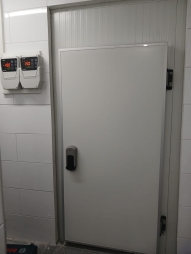
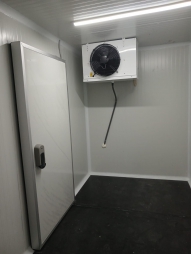
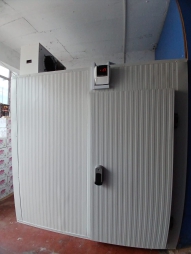
Monorail Hinged Cold Room Door for Smoother Flow at Cold Room Entries
A monorail hinged cold room door improves entry flow where overhead rails disrupt access, helping reduce congestion, impact risk, hygiene pressure, and long-term maintenance burden.
Monorail Flow at Cold Room Entries
A monorail hinged cold room door is often the right choice when overhead rail systems begin to control how people, products, and equipment move through a refrigerated entry point. In these spaces, the problem is rarely the opening itself. The problem is that standard door planning no longer matches the way the entry actually functions once suspended movement, staff traffic, and daily operating pressure are added.
That is why flow matters as much as insulation. A cold room entry that feels awkward beneath a monorail may still work technically, but it can slow personnel, complicate cart movement, increase impact exposure, and create avoidable maintenance pressure. The best entry solution is the one that protects temperature and supports movement at the same time.
The Real Problem Starts at the Entry Point
Cold room entrances can easily be overlooked during planning. On a drawing, the opening may look simple. In actual operation, however, it becomes one of the room’s busiest and most sensitive points.
This situation becomes even more pronounced when a ceiling monorail is part of the layout. The rail does not merely occupy the space above the door opening. It alters how workers approach the opening, how they pass by suspended products, how equipment maneuvers, and how much usable space remains while the door is in motion.
In many facilities across the U.S., this pressure manifests in predictable ways. The prep team needs quick access. The cold storage operator needs a clean separation and a reliable seal. The contractor needs a door that works in harmony with the room rather than causing callbacks. The facility manager needs the opening to remain reliable under daily use, washing, and repeated traffic.
This is where many standard door options start to fall short. The entrance still functions, but it no longer feels efficient, clean, or fully optimized.
Why Does Monorail Flow Change the Door Decision?
When the monorail system impacts the entrance, the door is no longer just a closing mechanism. It becomes part of the room’s movement pattern.
The Entrance Must Manage Mixed Traffic
In many cold room environments, the door entrance is not used by a single type of movement. Staff pass through the door quickly. Service carts approach at an angle. Shelving units or pallet jacks may enter the same area. Suspended product flow may operate above or alongside the opening.
This mix changes the decision. A door designed to function in a simple opening intended solely for personnel may feel restrictive when the same opening must unhesitatingly manage multiple types of movement.
Swing Behavior Begins to Affect Workflow
At a monorail entrance, the swing path is more critical than ever. A door panel may technically open the passage, but it can still create operational friction. If the door’s movement disrupts the natural flow—forcing staff to adjust their approach, slow down, or wait for one another—the entry point begins to work against the room.
This kind of friction isn’t always immediately apparent. It manifests as lost seconds, repeated attention, awkward transitions, and small interruptions that, over time, turn into a real workload.
Door Entrances Also Carry Hygiene and Presentation Pressure
In refrigerated food environments, an entrance isn’t evaluated solely on whether it opens and closes properly. It’s also assessed based on whether it’s orderly, cleanable, and ready for inspection. A door entrance that looks cramped, has been damaged, or shows visible wear and tear too quickly can undermine confidence in the entire back-of-house area.
This is critical for processing rooms, supermarket prep areas, kitchens, and controlled cold storage facilities where visual order and hygienic compliance are part of daily standards.
The Risk of a Technically Functional but Poorly Flowing Door
Even if a door is installed correctly, it may still be the wrong choice for the operation. This is particularly true for cold room entrances affected by overhead monorails.
The greatest risk is not a complete failure. The greater risk is the presence of constant minor obstructions.
Slower Daily Access
When an entrance does not support natural movement, employees hesitate. They alter their approach angles, wait for gaps, or use the door more cautiously than necessary. This slows down opening speed even if the hardware functions properly.
Higher Impact and Wear
A poorly designed entrance leads to contact points. When people or vehicles are forced into tighter movement patterns, door edges, hinges, bottom panels, frames, seals, and surrounding surfaces wear out more quickly. This means the door may begin to age faster, even if there is no technical issue with the product itself.
Increased Maintenance Requirements
When the entry flow is incorrect, maintenance frequency increases. Hardware adjustments, gasket wear, repeated alignment checks, and surface repairs begin to arise sooner. The door starts requiring attention not because it is faulty, but because it is operating within an incorrect access pattern.
Weaker Temperature Control
If the door becomes difficult to use, users may leave it open longer, use it more forcefully, or stop prioritizing closing it properly. This can quietly weaken thermal consistency and increase the load on the cooled environment.
The Most Important Comparison
In monorail entrances, the useful comparison is not merely comparing one door category to another. The more important comparison is between a standard entrance plan and a flow-focused entrance plan.
| Decision Factor | Standard Entry Planning | Monorail Flow-Conscious Planning |
|---|---|---|
| Entry movement logic | Based mainly on opening size | Based on how staff, carts, and suspended flow interact |
| Swing suitability | May look acceptable on paper | Evaluated around real traffic behavior |
| Daily usability | Can create hesitation | Better aligned with practical movement |
| Impact exposure | Often underestimated | Considered as part of the layout |
| Hygiene readiness | Depends on basic detailing | Built around access, cleaning, and visible order |
| Long-term ownership | May seem fine at first, then add friction | More predictable when planned around real use |
The key shift in thinking is this: the entrance should be planned not just around the wall opening, but around the flow pattern that the opening is intended to support.
The Right Solution Starts with Movement, Not the Door Leaf
For monorail flow in cold room entrances, the right solution begins by treating the opening as an operational zone. This means examining how people approach it, what passes by it, how frequently it is used, and what kind of discipline the room requires.
A single-track hinged cold room door is typically the right choice when the opening serves regular yet controlled access, when the overhead tracks influence how the door can be used, and when the facility requires a durable, insulated entry solution that doesn’t overly complicate daily operations.
Several details determine whether this solution will be successful.
The Opening Direction Must Align with the Entry Flow
This is one of the most critical decisions to be made regarding the entire entrance. Even if the opening direction appears suitable on the drawing, if it does not align with the actual entry flow, the door will feel wrong from the very start. Staff movement, side openings, and the presence of carts or shelves should influence the decision on the opening direction.
The Opening Must Be Evaluated from a Practical Perspective
The entrance may theoretically clear the track, but this is not sufficient. What matters is whether the entrance feels usable at operational speeds. A smooth entrance flow depends on the actual approach angle, sash movement, headroom, and side clearance during actual use.
Hardware and Sealing Must Be Suitable for the Pressure Level
Cold room entrances affected by monorail systems are typically active, high-traffic areas. Hinges, locking hardware, gaskets, edge protection, and frame stability must be designed to accommodate this reality. A door inadequately designed for traffic patterns may still function, but it will show signs of wear sooner than expected.
Thresholds and Floor Transitions Must Not Be Overlooked
Threshold planning is critical in areas where pallet jacks, carts, or service vehicles move within the entry zone. A well-designed door with poor floor transition will still cause friction. In high-traffic areas, usability issues typically first arise here.
Cleanability Must Be Considered as Part of Suitability
In food production and cold storage facilities, the entrance must do more than just support traffic. It must also meet expectations for daily cleaning, visual inspection, and monitoring. Surface selection, sealing performance, hardware placement, and environmental details all influence whether the entrance will maintain its suitability over time.
This is where the Freezewize Cooling System approach comes into play. Rather than evaluating the door as a standalone product decision, the entrance is considered as part of the entire working environment. In monorail applications, this typically yields better long-term results.
Quick Decision Guide
A monorail-hinged cold room door is generally a better choice in the following situations:
- Overhead tracks influence how the entrance can be utilized.
- The opening serves both controlled traffic and regular personnel access.
- Carts or shelves move near the door entrance, but the entrance is not constantly exposed to heavy equipment traffic.
- Hygiene and readiness for inspection are important.
- The facility requires a durable, insulated door without unnecessary complexity.
- Reliable closure and reduced maintenance needs are important.
The decision should be reviewed more carefully in the following situations:
- Traffic is extremely heavy and multi-directional.
- The entrance serves wide and continuous equipment movement.
- The door panel may interrupt a fast processing rhythm.
- The passage tends to remain open for extended periods.
- The access pattern indicates that a different door strategy would better support the flow.
A useful rule is simple: if the monorail changes the way people pass through the opening, the door’s design must also change.
Related Solutions
This topic is naturally linked to nearby cold room decisions, including the following:
- Heavy-duty cold room door systems.
- Freezer room entrances for high-traffic areas.
- Cold storage wall and ceiling panels.
- Sanitary equipment options for food processing facilities.
- Threshold details for pallet jack and hand truck movement.
- Viewing panel configurations for improved entry visibility.
- Insulated service doors for controlled-temperature areas.
FAQ
When does monorail flow become a real door planning issue?
It becomes a real issue when the overhead track affects the approach angle, opening behavior, usable clearance, or the way personnel and equipment pass through the opening during normal operations.
Is the Monorail-hinged cold room door suitable only for processing facilities?
No. It is also suitable for preparation areas, refrigerated storage zones, supermarket back entrances, kitchens, and other cold room environments where the overhead track affects the flow.
Why is entry flow more important than it appears at first glance?
Because a weak entry flow rarely fails dramatically. It slows down operations, increases contact, raises maintenance demands, and gradually degrades the overall quality of the space.
Can a standard insulated door still work in a monorail entrance?
It may work in less frequent-use scenarios. However, if the overhead track alters movement behavior and the opening handles daily traffic repeatedly, a standard design typically creates unnecessary friction.
What is often overlooked during selection?
The most common oversight is treating the opening as a simple sizing issue rather than evaluating how the opening direction, threshold behavior, traffic flow, and overhead track operations interact with one another.
How does the right entrance design reduce long-term costs?
It reduces long-term costs by limiting preventable wear, improving motion efficiency, supporting better closing behavior, and reducing the repetitive maintenance requirements the opening demands.
Conclusion
Monorail flow at cold room entrances is not merely a layout issue. It is a performance issue that affects motion, wear, hygiene, and ownership costs. Even if the entrance functions physically, if it disrupts the room’s daily workflow, the plan was never truly correct.
The most sound decisions regarding cold room entrances stem from understanding how the opening will perform under real operational pressure. If your project involves overhead monorail operations, plan the door from the outset with traffic flow, hygiene requirements, impact exposure, and daily use in mind.