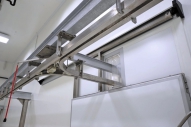





Cold Room Hinged Doors for Rail Paths
Monorail Hinged Cold Room Door for Safer, Smoother Rail Path Access
A monorail hinged cold room door helps protect rail path access by reducing swing conflict, preserving workflow, and supporting cleaner, more reliable cold room operation.
Cold Room Hinged Doors for Rail Paths
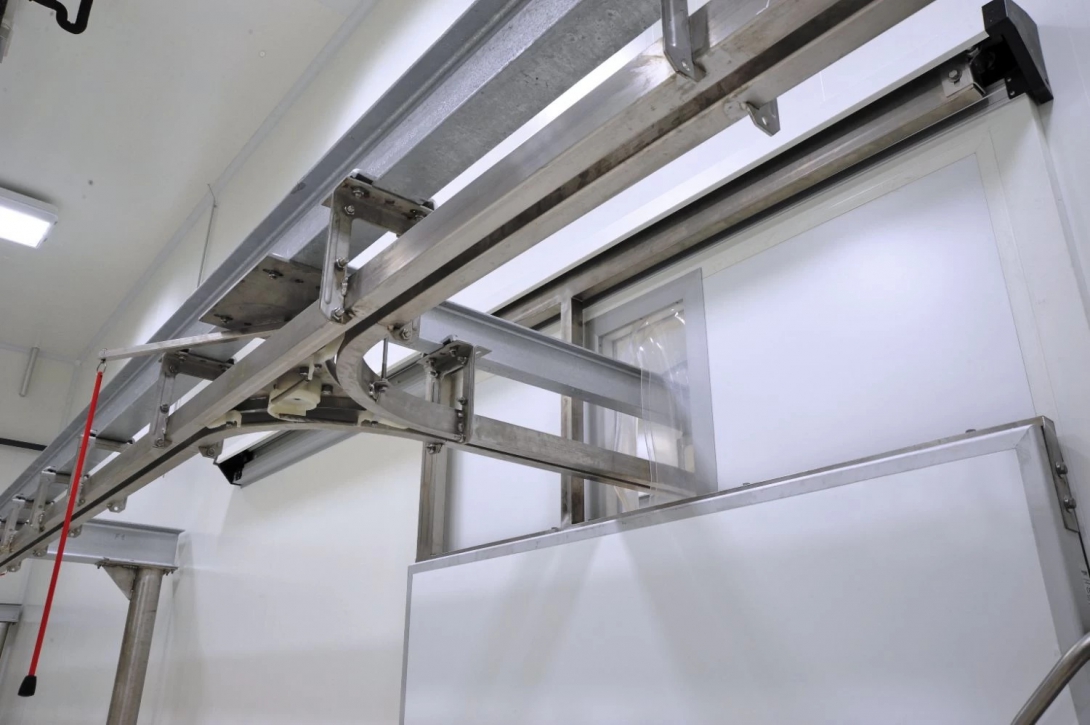
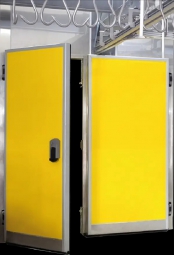
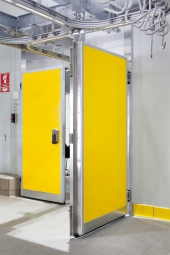
A monorail hinged cold room door is the right choice when a cold room opening sits near an overhead rail path and a standard hinged setup starts creating movement conflict. In these environments, the issue is not simply whether the door can open. The real issue is whether it can open without interfering with personnel flow, suspended product movement, cart traffic, cleaning access, or temperature discipline.
That is why rail path access has to be planned as an operating condition, not just a doorway detail. A door may fit the opening and still be the wrong decision if it creates hesitation, impact exposure, maintenance pressure, or a constant sense that the entry was never properly resolved.
The Problem Begins Where Access and Track Movement Intersect
Cold room doors are typically selected based on opening size, insulation requirements, and basic durability criteria. This logic works in simpler areas. However, it falls short when the track path begins to dictate how the entrance functions.
In food processing, cold storage, prep rooms, supermarket backrooms, and similar refrigerated areas, the door opening may be located directly below or next to a suspended track system. In this scenario, the opening no longer functions as a simple passageway. Staff movement, suspended product flow, carts, shelves, and cleaning routines all begin to share the same workspace.
This overlap quickly creates pressure. An employee trying to pass through the entrance cannot use the door as a standard access point if the door’s opening path overlaps with the track area. Approaching with a cart becomes less natural. The entrance may start to feel narrower than it actually is. The door may still function, but the surrounding area begins to lose its ease of use.
This is where many facilities sense something is wrong without being able to easily pinpoint the issue. The opening is technically complete, but it doesn’t feel right in daily use. It slows down the room’s workflow slightly, creates more contact than expected, and adds enough friction to make the door entrance feel like an unresolved weak point.
The Risk of Using a Standard Door Plan in the Track Area
A cold room entrance near the track doesn’t require a dramatic failure to become a problem. Most of the real cost stems from repeated low-level obstructions.
Slowing Down Daily Movement
When the door panel obstructs the access area next to the track, people can no longer move smoothly. They hesitate, adjust their stance, wait for a gap, or open the door more carefully than necessary. This repeated slowing down eventually becomes a real workflow problem.
Higher Impact Exposure
Track entries are typically located in high-traffic areas. When the door’s opening arc interferes with movement, the bottom panel, frame, hinges, edge guards, and surrounding surfaces experience increased wear. Even if the door itself is structurally sound, the opening area begins to wear out sooner.
Increased Maintenance Requirements
A door that operates contrary to its intended alignment typically requires more frequent adjustments. As the entrance constantly attempts to compensate for inadequate alignment, misalignment, seal wear, hinge strain, latch inconsistency, and repeated surface damage emerge sooner.
Weaker Hygiene Standards
In food-related environments, a poorly functioning opening does more than just slow down traffic. It can also complicate cleaning routines, disrupt visual order, and create an access point that looks more worn out. This is particularly important in areas subject to hygiene and inspection requirements.
Pressure for Early Replacement
A technically functional door can still give the impression that the initial choice was wrong. When the opening never feels fully comfortable or controlled, discussions about replacement begin sooner than they should.
The Most Useful Comparison
In this application, the most useful comparison is not merely between one insulated door and another. A more useful distinction is between a standard hinged cold room door design and a hinged door design specifically manufactured for track-mounted conditions.
| Decision Factor | Standard Hinged Door Planning | Monorail Hinged Door Planning for Rail Paths |
|---|---|---|
| Swing logic | Based mainly on opening size and wall layout | Based on rail path location and real traffic behavior |
| Access comfort | May seem acceptable on paper | Evaluated for actual daily movement |
| Impact exposure | Often underestimated | Reduced through better operating fit |
| Hygiene support | Depends on general detailing | Planned with cleaning access and visual order in mind |
| Maintenance pattern | More reactive in the wrong application | More predictable when matched to the opening |
| Long-term suitability | Can feel adequate at first, frustrating later | Better aligned with real operational use |
The Right Solution Starts with the Access Plan
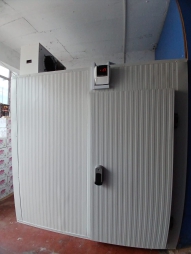
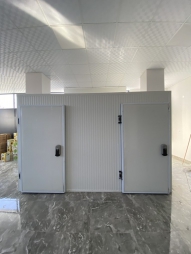
A single-track hinged cold room door is typically the right solution when the opening serves regular yet controlled access, the suspended track movement alters the approach to the entrance, and the facility requires an insulated door that remains practical without adding unnecessary complexity.
The solution works best when several planning choices are made correctly from the start.
The Opening Direction Must Follow Actual Movement
This is one of the most critical decisions regarding the opening. If the door opens in a way that interrupts the natural approach of personnel or support equipment, the problem persists even if the door technically clears the area. The opening direction must follow actual traffic flow, not just for the sake of drawing convenience.
The Opening Should Be Evaluated Not Just on Paper, but in Use
A rail-track opening may appear feasible in a plan view but still feel awkward in actual use. A practical opening implies more than just the measured area. This means the door opening can be used safely at working speed without hesitation or requiring extra attention.
Door Construction Must Be Suitable for the Pressure Level
Railway passageways are typically active, high-traffic openings. When the opening is in constant daily use, hinge quality, latch reliability, sealing performance, edge protection, frame stability, and the durability of the door surface become even more critical.
The Threshold and Floor Transition Still Matter
The issues mentioned above may draw the most attention, but the lower transition also shapes usability. If vehicles, pallet jacks, or racks pass through or near the opening, the threshold detail and the floor’s behavior affect how smooth the entrance feels.
Cleanability Must Be Part of the Decision
In refrigerated food environments, a well-planned opening should support washing access, visible organization, and routine hygiene without feeling crowded or overly complex. A good access solution should help the room stay cleaner not just in appearance, but in practice as well.
This is where the Freezewize Refrigeration System approach adds value. Rather than treating the door as a standalone product decision, the opening is evaluated as part of the fully refrigerated workflow. In track-based systems, this typically yields a more stable and long-term result.
Quick Decision Guide
A single-track hinged cold room door is generally a better choice in the following situations:
- The opening is located under or next to a suspended track.
- Personnel regularly pass through the entrance in a controlled traffic pattern.
- A standard hinged door would obstruct movement.
- The room must close reliably and provide a strong, insulated barrier.
- Hygiene, visual order, and cleanability are important.
- Predictability of long-term maintenance is important.
The decision should be reviewed more carefully in the following situations:
- Traffic is very heavy and multi-directional.
- The opening serves continuous movement of large equipment.
- Even after adjustment, the door’s opening angle disrupts the process rhythm.
- It is likely that the entrance will remain open for extended periods.
- The workflow indicates that another access strategy would better control the flow.
A practical rule applies here: If the rail path changes the way the entrance is used, the design of the door must also change.
Related Solutions
This topic is naturally linked to nearby cold room decisions, including the following: ****
- Heavy-duty cold room door systems.
- Freezer room doors for high-traffic openings.
- Hygienic equipment packages for food facilities.
- Insulated service doors for refrigerated work areas.
- Threshold details for cart and pallet jack movements.
- Viewing panel options for safer traffic visibility.
- Cold room wall and ceiling panel systems.
FAQ
How do track-guided openings differ from standard cold room entrances?
A track-guided opening does more than just manage the door’s opening. It must also support overhead movements, personnel flow, equipment access, cleaning access, and reliable separation without creating daily obstacles.
Can a standard hinged cold room door still function near a track opening?
It can function under lighter load conditions. However, when the track opening alters the usage pattern, a standard design typically creates preventable friction, wear, and maintenance pressure.
Why is the opening direction so important in trackway applications?
Because the wrong opening direction can disrupt the natural flow of people and support equipment, even if the opening is technically large enough. In these areas, operational geometry is just as important as insulation.
If the main issue is at the ceiling, is the threshold important?
Yes. Many usability issues begin at floor level. If vehicles, racks, or pallet jacks interact with the entrance, the lower clearance affects how smoothly the opening operates.
How does the right door plan reduce long-term costs?
It reduces long-term costs by limiting preventable impacts, improving daily operations, supporting better closing behavior, and reducing the repetitive maintenance requirements the opening needs.
What is the most common planning mistake?
The most common mistake is selecting the door based solely on the wall opening and failing to consider how traffic, cleaning, and overhead track movement will interact around that opening every day.
Conclusion
Cold room hinged doors for track systems must be planned based on movement, not just dimensions. Even if the door fits the opening, if it causes hesitation, wear, or cleaning difficulties around the track, the solution is technically complete but operationally incorrect.
The best results are achieved by treating the door opening as an integral part of the workflow from the very beginning. If your project involves overhead track systems, evaluate the door’s opening behavior, traffic flow, hygiene requirements, impact risk, and long-term maintenance tolerance before the opening dimensions are finalized.