




Long-Term Fit for Trackside Access
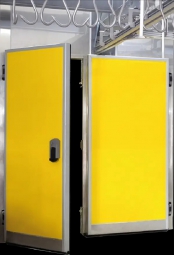
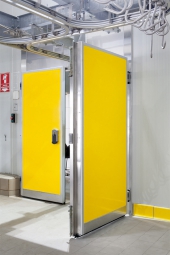
Monorail Hinged Cold Room Door for Long-Term Trackside Access Performance
Choose a monorail hinged cold room door for trackside access that stays reliable over time, reduces wear, supports hygiene, and lowers long-term maintenance pressure.
Long-Term Fit for Trackside Access
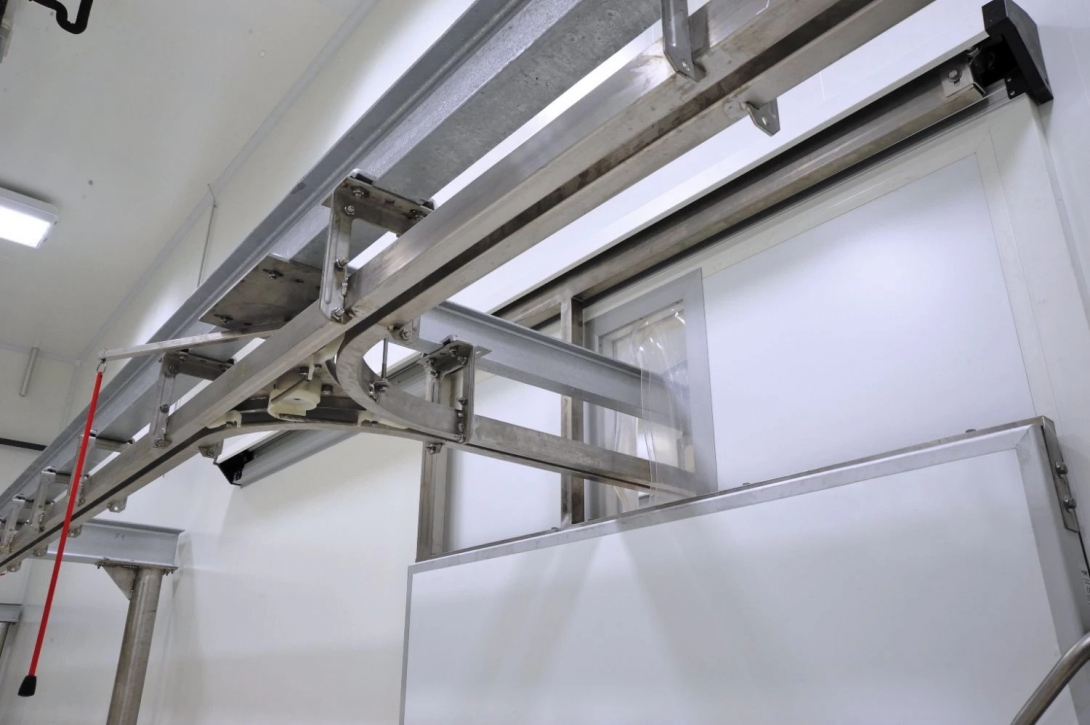
A monorail hinged cold room door is the right long-term solution when trackside access points need more than a door that simply fits on installation day. In refrigerated spaces with overhead rail activity, the real test is whether the opening will still feel practical, clean, and durable after months of traffic, washdown, impact exposure, and repeated daily use.
That is why long-term fit matters more than first-fit convenience. A door can look correct during installation and still become a weak point later if swing behavior, clearance, hardware durability, and cleaning access were not planned around the actual trackside conditions. The best choice is the one that keeps working without becoming a recurring operational problem.
The Problem Starts with Evaluating “Fit” Too Early
Track-edge clearances in cold rooms often appear simple during the specification phase. The clearance size is set, an insulated door can be selected, and the access point seems resolved. The problem is that most of these decisions are based on initial fit rather than long-term suitability.
This gap becomes apparent in active facilities. Staff pass through the opening throughout the day. Product flow continues nearby. Carts and shelves pass through the adjacent area. Cleaning crews work around the door. Temperature control must still be maintained. In this environment, the rail-edge access point is not evaluated based on whether it is opened or not. It is evaluated based on whether it still feels right after repeated actual use.
This is particularly important in U.S. food facilities, processing areas, refrigerated preparation zones, supermarkets, and cold storage operations, where maintenance labor, hygiene expectations, and operational time all have a real cost. A door that appears acceptable upon delivery may still become unsuitable in the long term if the access point was not designed with daily wear and tear in mind.
This is the crux of the matter. Long-term suitability is not about whether the door meets the clearance specifications on paper. What matters is whether the clearance remains suitable for the operation.
The Risk of a Door That Is Suitable Now but Prone to Deterioration Over Time
A wrong decision regarding an entrance along a rail rarely fails in a single dramatic moment. More often, it creates a cycle of small problems that escalate into a larger operational burden.
Daily Movements Begin to Feel Less Natural
If the opening was not planned with actual usage at the rail edge in mind, people begin to adjust their approach to it. They slow down, open the door more carefully, or move while accounting for the door’s opening direction. This may seem insignificant, but repeated friction in a frequently used opening becomes a real cost to workflow.
Wear Increases Faster Than Expected
Openings along the track edge are subjected to more stress than passive door entrances. When the access pattern is irregular, the edges, hinges, gaskets, frames, and bottom surfaces experience increased contact. Even a technically sound door can wear out very quickly if the surrounding usage pattern is incorrect.
Maintenance Becomes a Routine Hassle
The problem isn’t always a major breakdown. It’s often early adjustments that arise sooner than expected, repeated alignment checks, hardware fatigue, gasket wear, or surface damage. The door begins to require attention before anyone planned for it.
Maintaining Hygiene Standards Becomes Difficult
In cold rooms associated with food processing or inspection-sensitive operations, a door subjected to poor wear and tear becomes more than just a maintenance issue. It can also affect cleanability, visual order, and confidence in the environment. An entry point along the track should not appear worn out long before the rest of the room.
The Need for Replacement Comes Too Soon
One of the clearest signs of long-term unsuitability is when the door triggers discussions about replacement much sooner than expected. This typically means the product isn’t theoretically wrong, but it’s wrong for the actual operating environment.
The Most Useful Comparison Isn’t Short-Term Compatibility
The true comparison for rail-edge access is not merely between one door model and another. A more useful distinction is between a door selected for immediate installation compatibility and one selected for long-term operational compatibility.
| Decision Factor | Immediate-Fit Door Planning | Long-Term Trackside Fit Planning |
|---|---|---|
| Initial installation | May appear fully acceptable | Also fully acceptable |
| Daily usability over time | Can decline under repeated use | Designed to stay practical under pressure |
| Wear pattern | Often underestimated | Considered early in selection |
| Hygiene support | May weaken as surfaces age | Better aligned with ongoing cleanability |
| Maintenance burden | Can become reactive | More predictable and manageable |
| Ownership value | Lower if problems appear early | Stronger when the opening stays stable |
This is the crux of the matter: the best rail-edge door is not the one that provides the fastest compatibility, but the one that still fits the operation a year later.
The Right Solution Starts with Long-Term Suitability
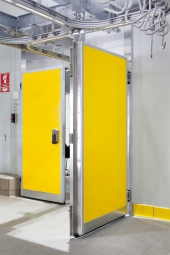
A monorail-hinged cold room door is typically the right answer in situations where the opening serves regular yet controlled access, where rail-edge conditions affect the door’s usage, and where the facility requires an insulated entrance that maintains reliability over time without becoming a constant source of friction.
The most robust solution involves planning not just based on the opening’s appearance at the time of delivery, but by considering how it will age over its service life.
The Opening Direction Must Support Repeated Use
In rail-edge openings, an incorrect opening direction may work on the first day. However, over time, it causes unnecessary movement conflicts and wear. The opening path must support the actual approach pattern of personnel and equipment, ensuring the opening remains smooth during repeated use.
Hardware Quality Must Be Suitable for the Area’s Demands
Long-term suitability is largely determined by hinges, locking components, gaskets, edge protection, and frame stability. The rail-edge opening is subjected to repeated operational stress, so the door system must be designed not only for basic functionality but also for durability.
The Opening Must Be Evaluated in Terms of Daily Reality
Clearance must not only be acceptable on paper but also feel easy to use under actual operating conditions. People move faster in real-world environments. Vehicles do not always approach perfectly. Cleaning does not occur under ideal conditions. A door that is only suitable in theory will not be durable as a long-term solution.
Thresholds and Bottom Clearance Affect Ownership Costs
Track-side access points typically interact with pallet jacks, carts, racks, or support equipment. If the underpass is poorly designed, the opening will suffer from friction and damage from below, even if the upper geometry is correct. Long-term suitability must encompass the entire access point.
Cleanability Must Be Durable in Real-World Use
In food and refrigerated operations, long-term suitability depends on the opening remaining cleanable even after months of traffic and contact. The right solution must maintain visual order, ensure practical hygiene, and not become a nuisance during routine washing.
This is where the Freezewize Cooling System approach becomes particularly valuable. Instead of treating the door as an isolated technical component, the opening is considered an integral part of the room’s long-term operational workflow. In track-mounted applications, this typically results in higher durability, better daily usability, and fewer unexpected issues.
Quick Decision Guide
A single-track hinged cold room door is generally a better long-term choice in the following situations:
- If the opening is located next to or below the overhead track.
- If staff regularly use the door within a controlled traffic pattern.
- If the project prioritizes reliable closing and durable, insulated separation.
- If hygiene and visual order are important throughout the opening’s entire lifespan.
- If the facility aims to prevent premature wear and repeated adjustments.
- Long-term maintenance predictability is part of the purchasing decision.
The decision should be reviewed more carefully in the following situations:
- The opening serves continuous high-speed, multi-directional traffic.
- Large equipment passes through the area continuously.
- The opening angle remains obstructive even after adjustments.
- The entrance tends to remain open for extended periods during operation.
- Another access strategy may be more suitable for the flow pattern and operational objectives.
Here, a simple rule helps: if the opening must operate reliably under rail-side pressure for years, choose the door by prioritizing long-term suitability over short-term convenience.
Related Solutions
This topic is naturally linked to nearby refrigerated area planning decisions, including the following:
- Heavy-duty cold room door systems.
- Freezer room doors for high-traffic areas.
- Hygienic equipment options for food processing facilities.
- Insulated service doors for refrigerated work areas.
- Threshold details for pallet jack and hand truck movement.
- Viewing panel options for safer traffic visibility.
- Cold room wall and ceiling panel systems.
FAQ
What does long-term suitability for rail-edge access mean?
This means the door continues to operate cleanly, smoothly, and reliably not just at installation, but after prolonged actual use.
Why do some track-edge doors feel good at first but cause problems later?
Because the initial choice may have been based on opening dimensions rather than long-term movement patterns, wear exposure, cleaning demands, and maintenance realities.
Is hardware quality really that important for track-edge openings?
Yes. Hinges, latches, gaskets, edge protection, and frame stability play a crucial role in whether the opening will remain reliable under repeated use.
Can a standard insulated door be sufficient?
Sometimes, yes—in less frequently used applications. However, when the pressure on the track edge is real and daily use is consistent, a standard solution typically requires wear and maintenance sooner than expected.
How does the threshold affect long-term suitability?
A poor threshold or floor transition can cause repeated friction from vehicles and equipment; this leads to surface damage, more difficult movement, and a weaker overall performance.
What is the most common purchasing mistake?
The most common mistake is selecting a door based solely on initial installation fit and failing to consider how the opening will perform after months of real-world traffic, cleaning, and operational stress.
Conclusion
Long-term suitability for rail-edge access is not a luxury. It is the factor that determines whether the opening will remain a functional asset or become a recurring problem. Even if a door fits the opening on day one, if it fails to adapt to operations over time, it was never the right solution.
The most robust track-side access decisions are made by planning for durability, usability, hygiene, and total cost of ownership together. If your project involves overhead track conditions, evaluate how the opening will perform after continuous daily use before finalizing the door system.