




Freezewize | Industrial Cooling Systems & Custom Cold Room Solutions

When Overhead Rails Change Door Planning

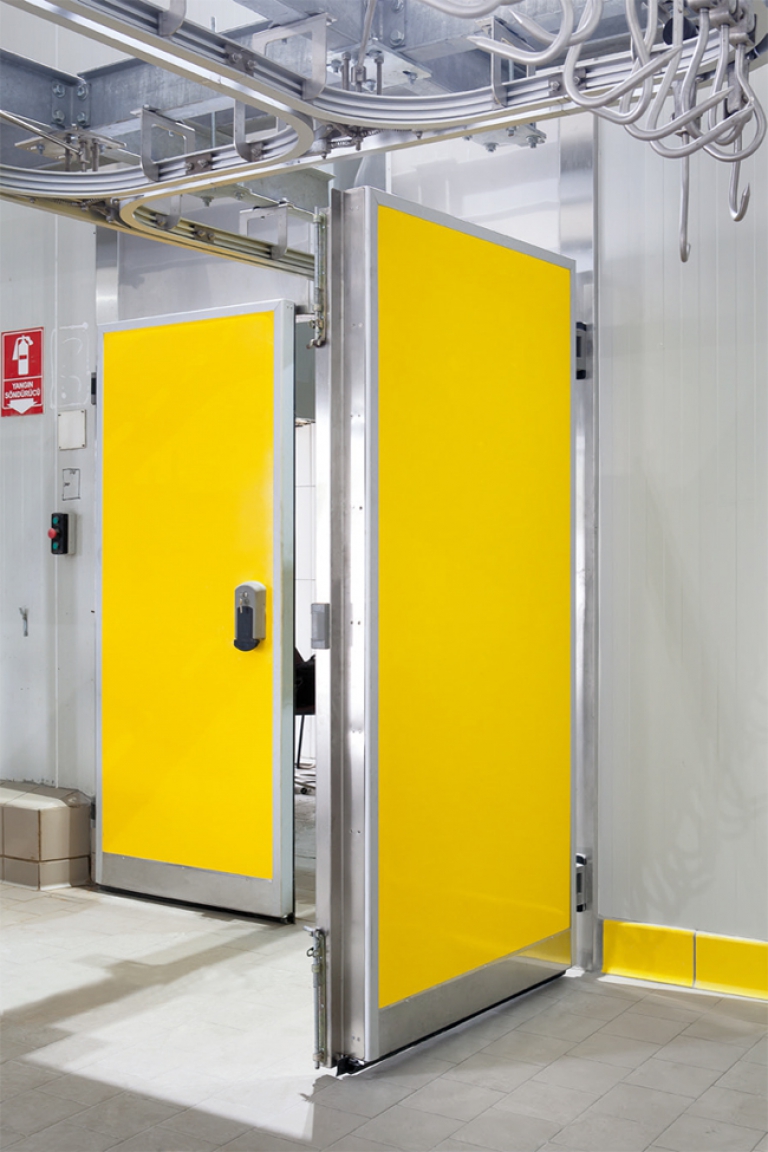
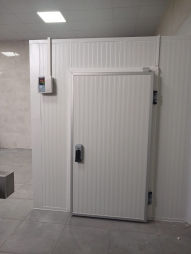
Monorail Hinged Cold Room Door Planning for Overhead Rail Applications

Overhead rails change cold room door planning by affecting swing path, clearance, workflow, and maintenance. The right setup reduces friction, damage risk, and long-term ownership cost.

When Overhead Rails Change Door Planning

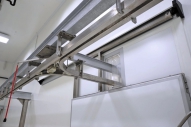
A monorail hinged cold room door becomes the right solution when overhead rails change how an opening can actually be used inside a refrigerated space. Once a rail system passes above or near the doorway, door planning is no longer just about filling an opening with an insulated leaf. It becomes a question of clearance, swing behavior, traffic flow, hygiene access, and long-term reliability.

That is why standard planning logic often fails in these applications. A door may still open and close, but if the overhead rail changes the approach path, reduces usable movement space, or creates daily friction for workers, carts, or suspended product flow, the opening has not really been solved.

The Problem Begins Before the Door Is Installed

In many cold room projects, the opening appears simple until the ceiling system is considered. The space may appear usable in drawings. In actual use, however, the track alters the clearance’s behavior.

This is particularly true in controlled back-of-house environments where food processing rooms, meat processing areas, preparation zones, cold storage, and the movement of suspended products share the same space with personnel access. When the ceiling track comes into play, the door is no longer just a routine technical feature. It becomes an integral part of the room’s operational geometry.

This is where many projects go wrong. The opening is measured correctly, an insulated door is selected, and the installation appears acceptable. However, once the room becomes operational, the access point begins to cause hesitation, slower movement, awkward swinging, and repeated minor collisions. None of these issues appear dramatic on the first day. Over time, they become the reason why the door opening never feels fully resolved.

In U.S. facilities operating under labor pressure, hygiene expectations, and operational time requirements, such daily friction matters. A door opening that slows people down or feels awkward in actual use quietly impacts labor productivity, workflow consistency, and maintenance attention.

Why Do Overhead Tracks Change the Logic of Planning?

An overhead track does more than just occupy the space above the opening. It changes how users approach the door, how the door panel moves, and how comfortable the opening feels in daily use.

Swing Geometry Becomes a Real Constraint

Without a ceiling track, the swing direction is typically determined by wall layout, traffic flow, and general operational preferences. When a track is present above or near the opening, the same swing decision becomes more sensitive. A door may technically clear the space, but the sash movement may still feel off because it no longer aligns with how people or equipment approach the opening.

This is an important distinction. The issue is not always a physical collision. In most cases, the real problem is discomfort during use. Users slow down, alter their approach, or use the door more cautiously than necessary. This is where friction in the workflow begins.

The Opening No Longer Behaves Like a Neutral Passage

A standard cold room door typically provides a predictable approach and movement. Under the overhead track, this predictability changes. Personnel may need to enter at a narrower angle. Carts may require more careful positioning. Suspended product movement can visually narrow the space, even if the opening dimensions haven’t changed.

This makes the access point more sensitive to swing direction, sash width, hardware placement, and usable clearance. The door is no longer just a barrier between two zones. It becomes part of the room’s movement pattern.

Maintenance and Cleaning Demands Also Change

Overhead track systems typically operate under higher hygiene and inspection expectations. In these environments, the access point must support regular cleaning without making maintenance more difficult. Door hardware, sealing areas, frames, and surrounding passages must remain practical under repeated washing, inspections, and daily use.

Therefore, planning cannot focus solely on installation compatibility. The opening must also function during cleaning, maintenance, and long-term use.

The Risk of Treating It Like a Standard Opening

Even if a door is technically functional, it may be the wrong choice for a ceiling track application. This is the real risk in such projects.

When the environment is no longer standard but the door planning remains standard, the results typically become apparent first during operation.

Slower Daily Movement

If the door panel causes hesitation, restricts the movement area, or feels awkward under the track, each passage through the opening requires a bit more effort. A single delay may not seem significant. When repeated hundreds of times, however, this becomes a labor issue.

More Frequent Stress on Surfaces and Hardware

In high-traffic areas, the door panel, bottom edge, frame, hinges, latch area, and all visible components are at greater risk. A door that doesn’t feel natural under the track is prone to being opened more forcefully, pushed more frequently, or used in ways that increase wear and tear.

Weaker Hygiene Performance

In food-related facilities, an access point is not evaluated solely on whether it functions properly. It is also assessed based on whether it supports a clean, controlled, and inspection-ready environment. If a door appears narrow, worn, difficult to clean, or oddly designed, confidence in the overall area diminishes.

Increased Maintenance Burden

Improper door installation does not always result in immediate failure. More often than not, it requires recurring maintenance. Alignment adjustments, seal fatigue, repeated impact marks, hardware loosening, and inconsistent closing become part of the long-term ownership burden.

This is where many operators feel the true cost. The door may never turn into a major failure event, but it always becomes a detail that requires attention.

The Comparison That Really Matters

In overhead track applications, the comparison isn’t just between a hinged door and another door category. A more useful comparison is between a standard door design and a door design specifically engineered for a track environment.

Decision FactorStandard Door PlanningPlanning for a Monorail Hinged Cold Room Door
Swing path logicBased on general opening layoutBased on rail presence and actual movement pattern
Usable clearanceMay look acceptable on paperEvaluated for real approach and real swing behavior
Traffic suitabilityCan create hesitation in active zonesBetter aligned with controlled operational flow
Hygiene and maintenance accessDepends on basic fitConsidered as part of the application
Long-term wear patternOften underestimatedMore predictable when planned correctly
Ownership outcomeCan feel acceptable at first, costly laterMore stable when site conditions are read early

Here is the fundamental decision point: the right door is not just one that fits the wall opening, but one that fits the opening in the way the track requires it to function.

The Right Solution Starts with How It’s Used

The right solution is created by evaluating the opening not as an isolated construction detail, but as part of the operation.

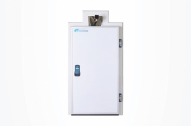
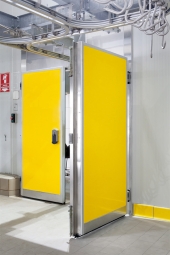
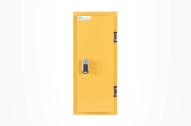
A single-track hinged cold room door is typically the right approach in situations where the opening provides regular yet controlled access, where personnel movement and suspended track operations share the same space, and where the facility requires a durable, insulated door that keeps the access point simple, reliable, and hygienic.

The solution is further strengthened by properly addressing several planning points from the very beginning.

The Opening Direction Must Follow Actual Traffic Flow

This is often the most overlooked decision. The opening direction should be determined based on how people, vehicles, or work processes approach the opening during daily use. If the door opens correctly from a design perspective but incorrectly in terms of workflow, it will feel wrong even if the installation is technically sound.

The Opening Must Be Evaluated from a Practical Perspective

Theoretical space is insufficient. The opening must be evaluated based on how the door panel moves relative to the track, how staff approach it quickly, how equipment passes through the area, and whether the opening remains naturally usable under pressure.

Hardware and Edge Protection Must Be Suitable for the Environment

Overhead track environments are rarely passive spaces. They are typically active, repetitive, and unforgiving. Hinge strength, latch reliability, seal quality, frame integrity, and edge protection all affect whether the door will remain reliable over time.

Threshold and Floor Transition Require Special Attention

If vehicles, racks, or pallet jacks pass near or through the opening, the threshold cannot be treated as an afterthought. A poor floor transition causes friction even if the rest of the door system is correct. In many facilities, usability issues begin here.

Hygiene Requirements Must Be Considered Early On

In food processing, supermarket preparation, cold storage handling, and controlled production environments, door planning must support cleanability, readiness for inspection, and visual order. These are not cosmetic additions. They are part of compliance.

This is where the Freezewize Cooling System approach proves its value. The door is treated not as an independent product choice but as an integral part of the refrigerated operation. Under overhead track conditions, this shift in thinking often makes the difference between a merely functional opening and a well-resolved one.

Quick Decision Guide

A single-track hinged cold room door is generally a better choice in the following situations: 

  • If there is an overhead track system above or near the opening.
  • If the door serves regular personnel access within a controlled traffic pattern.
  • If standard hinged planning causes hesitation or awkward movements.
  • If hygiene, cleaning access, and closure reliability are critical.
  • If the area requires durable, insulated access without unnecessary complexity.
  • The long-term maintenance burden should be predictable.

The decision should be reviewed more carefully in the following situations: 

  • Traffic is extremely heavy and multi-directional.
  • The opening serves continuous movement of large equipment.
  • Opening the door panel interrupts the fast production rhythm.
  • The passageway will likely remain open for extended periods.
  • Operational patterns indicate that a different access strategy might be more appropriate.

A simple rule of thumb applies here: When ceiling tracks alter how people and equipment use the opening, door planning must also change.

Related Solutions

This topic is naturally linked to other cold room planning decisions, including the following: 

  • Heavy-duty cold room door systems.
  • Freezer room doors for high-traffic areas.
  • Cold storage wall and ceiling panels.
  • Insulated service doors for food facilities.
  • Hygienic equipment packages for cold rooms.
  • Threshold details for hand truck and pallet jack movements.
  • View panel options for controlled access points.

FAQ

When does the overhead track affect door planning?

The track affects door planning when it influences the door’s opening path, approach angle, usable opening, cleaning access, or the way people and equipment pass through the opening during normal operations.

Is a single-track hinged cold room door suitable only for meat processing facilities?

No. It is also suitable for food production, preparation areas, cold storage facilities, supermarket backrooms, and other refrigerated areas where the presence of an overhead track affects access.

Can a standard insulated door still function under an overhead track?

In some low-pressure situations, yes. However, if the opening is subject to daily traffic and the track alters movement behavior, a standard design can cause constant friction even if the door is technically shallow.

What is the most common planning mistake in these projects?

The most common mistake is evaluating the opening solely based on dimensions and failing to consider how the access point will actually function once traffic, cleaning, and daily use begin.

Is the threshold as important as the door leaf?

Yes. In many facilities, the threshold and floor transition are critical because they affect how easily vehicles, shelves, and personnel can pass through the opening.

How does proper planning reduce ownership costs?

It reduces ownership costs by limiting preventable wear and tear, minimizing the need for repeated maintenance, supporting reliable closing behavior, and preventing the opening from becoming a constant source of operational friction.

Conclusion

When ceiling tracks change door planning, the access point must be designed not just based on dimensions, but on movements. If the opening works on paper but creates hesitation, wear, or maintenance pressure in actual use, it has not been planned well enough.

The best decisions regarding cold room doors are made by evaluating the working environment early on and adapting the access system accordingly. If your project includes overhead track systems, plan the door opening from the outset by considering traffic flow, hygiene requirements, exposure to impact, and daily use.

Fill the Form!

Write your needs and fill the form to contact us.

Freezewize | Industrial Cooling Systems & Custom Cold Room Solutions
Merhaba, Size yardımcı olabilir miyiz ?
Whatsapp Destek