




Freezewize | Industrial Cooling Systems & Custom Cold Room Solutions

Reducing Interference at Monorail Openings

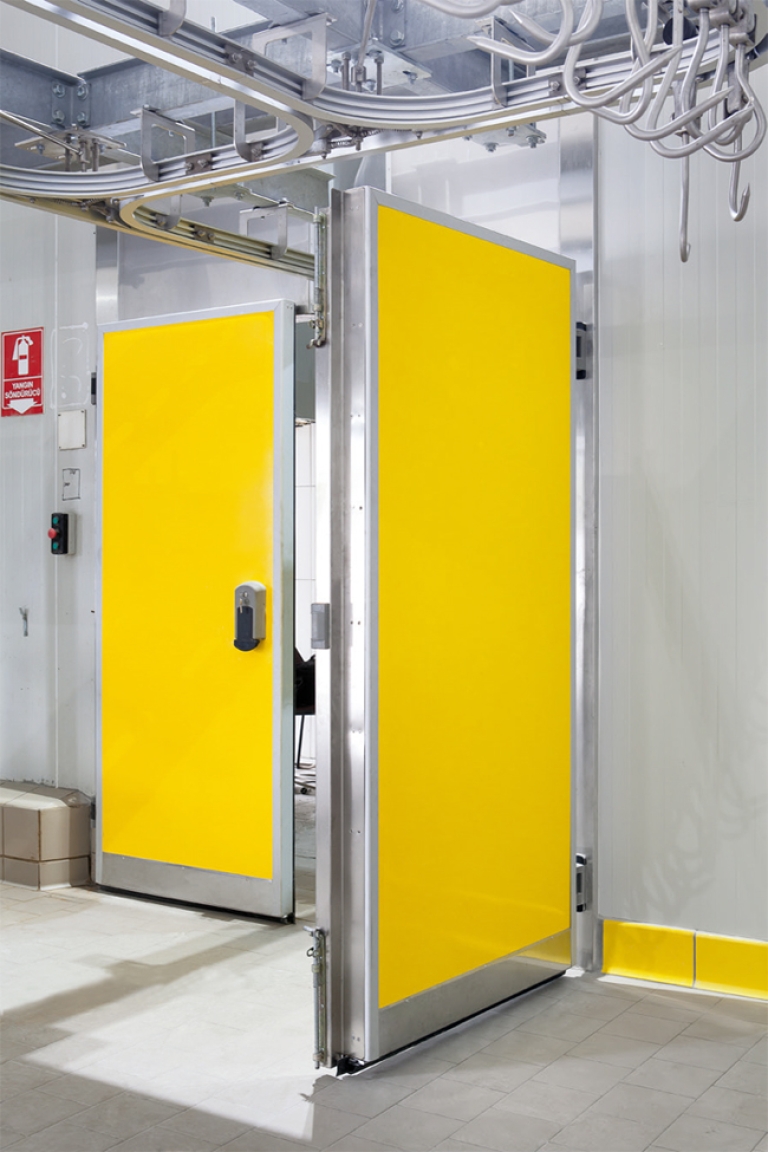
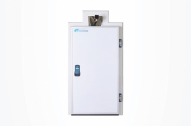
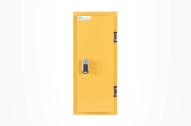
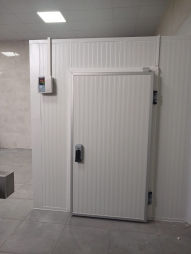
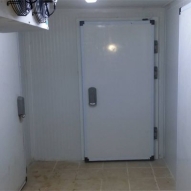
Monorail Hinged Cold Room Door for Reducing Interference at Active Openings

Reduce interference at monorail openings with a cold room door plan built for cleaner flow, lower impact risk, easier sanitation, and more reliable daily access.

Reducing Interference at Monorail Openings

A monorail hinged cold room door is often the right solution when an opening sits beneath or beside a suspended rail line and standard access starts creating friction. In these applications, the goal is not simply to install an insulated door. The goal is to reduce interference between door swing, staff movement, product flow, carts, and cleaning routines so the opening stays usable under real operating pressure.

That matters because monorail openings are rarely passive doorways. They are active transition points inside refrigerated spaces where workflow, hygiene, and temperature control meet. If the entry is planned like a standard opening, it may still function, but it can quietly slow movement, increase contact, and create maintenance issues that should have been designed out from the start.

The Problem Isn’t in the Design; It Emerges in Daily Use

At first glance, a cold room entrance near a monorail may seem simple. The wall opening is the right size, the insulated door fits, and the hardware looks appropriate. However, the real problem emerges once the room is operational.

The monorail alters the behavior of the area around the opening. Staff may need to approach from a tighter angle. Suspended products may pass over or alongside the entrance. Carts, shelves, or pallet jacks may share the same space. Cleaning crews may need open access without having to navigate a difficult turn. What looks acceptable on paper may start to feel crowded, hesitant, or poorly resolved on the ground.

This is the point where operators begin to notice small but persistent glitches. The entrance gate isn’t broken, but it isn’t helping the operation either. It creates enough hesitation to slow down the room’s workflow, enough contact to increase wear and tear, and enough discomfort to make the entrance feel like a compromise.

For U.S. facilities grappling with labor pressure, food safety expectations, and maintenance cost control, such an obstacle is significant. An opening used dozens or hundreds of times per shift cannot afford to create friction with every pass.

Why Obstacles in Monorail Openings Are Costly

Most opening issues in these environments are not dramatic. The real cost stems from repeated minor glitches.

Movement Becomes Unnatural

When a swing gate interferes with the path of people or support equipment, users alter their movement patterns. They slow down, adjust their approach, or wait for a better timing. This repeated interruption becomes a workflow issue long before anyone identifies it as a gate problem.

Increased Wear and Tear

A conflicting opening leads to more contact. When the access path is not clear, door edges, frames, hinges, panels, hardware, and surrounding finishes are subjected to greater wear and tear. A door may be durable, but durability should not be used to excuse unnecessary obstacles.

Cleaning Access Becomes Less Efficient

In food processing and cold storage areas, the entrance should support hygiene, not hinder it. If the door layout creates awkward corners, areas that obstruct movement, or hard-to-reach spots around the opening, cleaning routines become slower and less consistent.

Temperature Control May Be Compromised

When a door entry is inconvenient, users often adapt in the wrong way. They may leave the door open longer, pass through it more carelessly, or view closing the door properly as a secondary priority. This situation affects cold room performance over time, even if the opening still appears functional.

Maintenance Pressure Increases Sooner

Wear and tear typically manifests later. Hinges require more attention, gaskets wear out faster, alignment issues arise sooner, and visible damage accumulates more quickly. The result isn’t always a failure. More often than not, it’s a door that requires constant attention.

The Most Useful Comparison

In such applications, the best comparison isn’t simply between hinged and hingeless doors. A more useful comparison is between a standard opening plan and a plan specifically designed to minimize intervention in a single-track opening.

Decision FactorStandard Cold Room Opening PlanMonorail-Focused Opening Plan
Swing behaviorBased mainly on wall layoutBased on real movement around the opening
Usable clearanceTechnically acceptable in many casesEvaluated for daily comfort and flow
Impact riskOften discovered after installationReduced through better opening logic
Cleaning practicalityMay become an afterthoughtConsidered early in the access plan
Long-term wearCan build faster than expectedMore predictable in the right setup
Operational suitabilityAdequate in simple layoutsBetter for active monorail zones

The key decision point is this: a better opening is not just one that clears the space, but one that minimizes intervention during normal use.

The Right Solution Starts with How It Works

A monorail-hinged cold room door is typically the right choice in situations where the opening serves regular yet controlled access, the overhead track alters the door’s approach, and the facility requires an insulated entrance that remains durable without overly complicating operations.

The strongest solution comes from planning the opening according to the actual working environment.

The Opening Direction Should Follow Traffic Flow, Not Convenience

This is one of the most critical decisions regarding the opening. A door that opens in the wrong direction can continue to cause obstruction issues even if the track is technically clear. The correct opening direction should reflect how personnel move, how equipment approaches, and how the area is actually used during a typical shift.

Clearance Must Be Evaluated Based on Actual Use

The measured area is not the same as the usable area. In active cold room entrances, people move quickly, support equipment does not approach perfectly, and no one wants to struggle with the clearance on every pass. The clearance must feel open not only on the plan view but also in actual use.

Door Durability Must Match the Pressure Level

Monorail openings are typically found in environments with repetitive use. This means that the durability of the hinges, locking hardware, frame structure, gaskets, edge protection, and door surface are all critical. A properly selected opening must not only withstand use but also maintain its integrity under these conditions.

Threshold and Floor Transition Still Matter

Obstruction is not just an issue for the upper region. If vehicles, pallet jacks, or racks are moving near the door entrance, the floor transition directly affects how smooth the opening feels. A well-planned upper region will still be disappointing if the lower transition is weak.

Hygiene Must Remain an Integral Part of the Opening

Cleanability is not a separate issue from accessibility. In refrigerated food environments, the entrance must support both. The opening must be easy to clean, visually inspectable, and suitable for conditions that require regular inspection.

This is where the Freezewize Cooling System approach proves particularly beneficial. Rather than treating the door as a standalone product choice, the opening is evaluated as an integral part of the fully refrigerated workflow. In monorail applications, this typically leads to a cleaner result in the long term.

Quick Decision Guide

A monorail-hinged cold room door is generally a better choice in the following situations: 

  • If the opening is located under or next to a suspended rail track.
  • If personnel regularly use the door within a controlled traffic pattern.
  • Vehicles or support equipment pass nearby, but the area is not dominated by constant heavy machinery traffic.
  • Hygiene, reliable sealing, and visual order are important.
  • The facility requires durable, insulated access without unnecessary operational complexity.
  • Reducing maintenance burden is part of the decision.

The decision should be reviewed more carefully in the following situations: 

  • Traffic is dense, fast-moving, and multi-directional.
  • The opening serves the continuous movement of large equipment.
  • Even after adjustment, the opening angle will interrupt the process.
  • The entrance is likely to remain open for extended periods.
  • Operational patterns indicate that a different access strategy would eliminate friction more effectively.

A practical rule applies here: if the monorail changes the way the opening is used, the door should be planned to minimize intervention before installation, rather than managing intervention after installation.

Related Solutions

This topic is naturally linked to nearby refrigerated area decisions, including the following: 

  • Heavy-duty cold room door systems.
  • Freezer room doors for high-traffic openings.
  • Sanitary equipment packages for food processing facilities.
  • Insulated service doors for refrigerated work areas.
  • Threshold details for hand truck and pallet jack movements.
  • Viewing panel options for improved traffic visibility.
  • Cold room wall and ceiling panel systems.

FAQ

What causes obstructions in monorail openings?

Obstructions typically arise when the opening path, traffic flow, overhead rail movement, and cleaning requirements are not considered together during door planning.

Can a door be the wrong choice even if it fits technically?

Yes. Even if a door fits the opening, it can cause daily friction if it obstructs movement, is subject to impacts, or makes cleaning and maintenance of the entrance difficult.

Why is the opening direction so important in these openings?

Because the wrong opening direction can disrupt the natural movement path of personnel and support equipment, even if the door opening appears sufficiently wide on paper.

Does reducing obstructions also help with maintenance?

Yes. When the opening operates more smoothly, preventable collisions typically decrease, sealing performance improves, alignment becomes more stable, and the need for repetitive maintenance decreases.

Does this apply only to meat and food processing facilities?

No. It also applies to cold storage rooms, prep areas, refrigerated storage areas, supermarket backrooms, and any area where the presence of overhead tracks affects access behavior.

What is the most common planning mistake?

The most common mistake is selecting a door based solely on the wall opening without considering how people, equipment, cleaning routines, and the flow of suspended products interact around that opening every day.

Conclusion

Reducing obstructions in monorail openings is not a minor design improvement. It is a practical necessity to ensure the entrance functions as the operation requires. If the door opening does not obstruct but still disrupts movement, cleaning, or daily inspections, the problem has not been truly resolved.

The best results are achieved by treating the door opening as an integral part of the workflow from the very beginning. If your project involves monorail conditions, evaluate the door’s opening behavior, traffic flow, hygiene requirements, risk of impact, and long-term maintenance needs together before the opening is finalized.

Fill the Form!

Write your needs and fill the form to contact us.

Freezewize | Industrial Cooling Systems & Custom Cold Room Solutions
Merhaba, Size yardımcı olabilir miyiz ?
Whatsapp Destek