




Freezewize | Industrial Cooling Systems & Custom Cold Room Solutions

Hinge Duty in Hard-Use Freezers

Freezer Hinged Door Performance for Hard-Use Freezers

Choose the right freezer hinged door for hard-use freezers to reduce hinge wear, downtime, seal failure, and long-term maintenance pressure.

Freezer Hinged Door Performance in Hard-Use Freezers

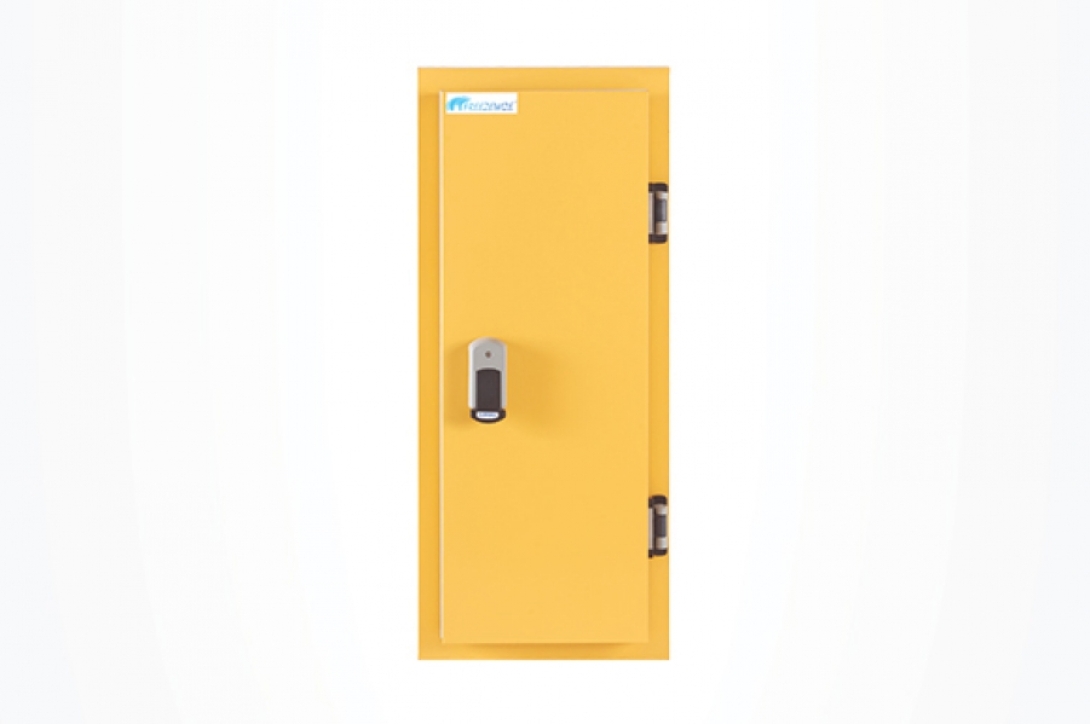
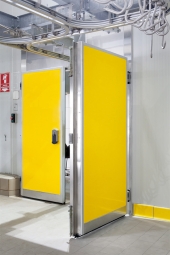
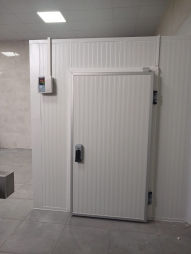
In hard-use freezer environments, hinge duty is not a minor hardware detail. It directly affects door alignment, sealing consistency, closing reliability, and how well the opening holds up under constant daily use. The right freezer hinged door is not simply one that fits the opening. It is one built for the traffic pattern, door weight, temperature stress, and impact exposure the room will face every shift.

That distinction matters because freezer doors rarely fail all at once. They usually decline through sag, resistance, gasket inconsistency, harder closing, and growing maintenance attention. In busy facilities, that slow decline turns into workflow friction, frost problems, and a door that no longer feels right for the room.

Where Hinge Problems Begin in Hard-Use Freezers

Many freezer access issues start long before anyone calls it a hinge problem.

A door may still open and close, yet already be under strain. In hard-use freezer rooms, hinges absorb more than door movement. They carry the weight of the leaf, resist repeated pull force, endure cold-driven material stress, and respond to the way staff actually use the opening during busy operations. That includes rushed entry, repeated cycling, loaded cart passage, aggressive closing, and occasional impact from racks or pallet equipment.

When hinge duty is under-specified, the result is rarely isolated to the hinge itself. The whole entrance starts drifting out of its intended behavior. The seal may stop landing with the same consistency. The latch may begin feeling less precise. Staff may need to pull harder or close more deliberately. What looked like a straightforward door choice becomes an ongoing maintenance conversation.

This is especially relevant in food production areas, distribution freezers, supermarkets, commercial kitchens, and cold storage back rooms where the opening sees repeated use across the day. In those settings, the door is not just a closure point. It is part of the operating rhythm of the room.

Why Standard Duty Thinking Breaks Down

A common buying mistake is treating a freezer hinged door like a basic insulated panel with hardware attached.

That logic usually works poorly in hard-use freezer applications because hinge duty changes the long-term behavior of the entire system. A door can appear acceptable on paper, yet still be wrong in real use if the hinge package does not match door size, cycle frequency, impact exposure, and operating discipline.

In freezer conditions, hardware is working against more than weight. It is also working against thermal contraction, heavier sealing pressure, repeated resistance at closure, and the wear pattern created by rushed or imperfect handling. Once those forces build over time, the opening begins to lose consistency.

That is why hinge duty should be evaluated as a core performance factor, not as a background specification line.

The Real Risk of Under-Specified Hinges

The biggest risk is not dramatic breakage. It is gradual operational loss.

A freezer door with insufficient hinge duty may still function for a period, but it starts creating small daily penalties that spread through the facility. The door may hang slightly out of line. The seal may compress unevenly. Frost may appear where alignment has changed. Staff may begin compensating with force, which adds more stress to the hardware and speeds up wear.

That creates practical consequences: 

  • Slower opening and closing during busy periods.
  • Rising maintenance burden around alignment and sealing.
  • More visible wear at a high-use access point.
  • Earlier gasket fatigue caused by inconsistent contact.
  • More downtime pressure during repairs or adjustments.
  • A stronger sense that the opening was not specified for the real job.

This is why a technically functional door can still be the wrong decision. If the hinge system cannot carry the daily operating burden of the freezer, the room starts asking for attention it should not need.

Hinge Duty vs. Basic Door Suitability

Not every freezer application needs the same hinge strategy. The key is matching the entrance to its real duty level.

A lighter-duty freezer room with controlled staff access and limited daily cycling may perform well with a simpler configuration. A hard-use freezer is different. If the room sees repeated entry, larger door leaves, more aggressive handling, heavier sealing force, or routine cart movement nearby, hinge duty becomes a primary specification issue.

That decision is not only about durability. It also affects how stable the opening feels over time. A well-supported freezer hinged door tends to preserve alignment better, maintain more consistent closing behavior, and reduce the frequency of service corrections.

Here is the practical comparison.

Application FactorStandard-Duty Hinged SetupHeavy-Duty Hinged Setup
Daily cycle volumeBetter for moderate useBetter for repeated high-frequency use
Door size and weightWorks for smaller, lighter openingsBetter for larger or heavier insulated doors
Alignment stability over timeMore vulnerable under stressMore stable in demanding freezer use
Maintenance pressureCan rise faster in busy roomsBetter suited to long-term hard use
Seal consistencyMore likely to drift with wearBetter support for consistent closure
Best fitControlled freezer accessHard-use freezers with repeated daily traffic

The right choice depends on duty profile, not on appearance or first-cost alone.

What Hard-Use Freezers Actually Need

Hard-use freezers demand a door system that remains dependable after repeated cycles, not just at installation.

That usually means the freezer hinged door should be considered as a complete access assembly. Hinge capacity matters, but so do the surrounding conditions that increase hinge stress. These include door weight, opening width, frame integrity, threshold behavior, gasket compression, staff handling habits, and the presence of push carts, racks, or nearby impact risk.

In practical terms, hard-use freezer performance is supported by: 

  • Hinge hardware matched to real operating cycles.
  • A door leaf sized and reinforced for the opening.
  • Stable frame attachment and proper mounting support.
  • Dependable closing action that does not rely on staff discipline alone.
  • Perimeter sealing that stays consistent as the door ages.
  • Protective details where traffic or impact is part of the workflow.

This is also the point where many buyers benefit from experience-based specification. The Freezewize Cooling System perspective is most useful when hinge duty is treated as part of the room’s operational design rather than a hardware afterthought. In freezer projects, the best outcomes usually come from matching the opening not only to temperature, but to labor behavior, use intensity, cleaning exposure, and the ownership expectations of the facility.

Hard Use Changes the Buying Logic

A hard-use freezer should not be bought with a low-intensity mindset.

Facility teams often focus first on insulation value, opening size, and basic access needs. Those factors matter, but they do not fully explain why some doors remain dependable while others start feeling tired much earlier than expected. In heavy-use rooms, hinge duty often becomes the dividing line between an entrance that ages predictably and one that becomes a recurring source of adjustment, complaints, or premature replacement planning.

This is especially true in operations where labor is moving quickly and access discipline is imperfect. The door will be pulled, pushed, rushed, and occasionally stressed in ways that are never visible on a simple specification sheet. Good procurement decisions account for that reality.

The better buying question is not “Will this door work?” It is “Will this opening still feel stable, aligned, and low-friction after real freezer use?”

Quick Decision Guide

Choose a higher-duty freezer hinged door setup when the room has repeated daily entry, a larger insulated door leaf, or visible pressure around labor speed and access reliability.

Lean toward a simpler hinged setup when the opening serves controlled personnel traffic, the door is modest in size, and the room does not face frequent use or operational abuse.

Upgrade hinge strategy and surrounding door details when the freezer opening is part of a high-traffic back-of-house route, exposed to rushed handling, or expected to maintain a clean, professional appearance with minimal ongoing correction.

Reconsider the full door format if the opening is exceptionally wide, traffic is continuous, or the room serves constant cart and pallet movement that may push a swing system beyond its most efficient use case.

Related Solutions

If hinge duty is a serious concern in your freezer application, these related solutions are usually worth reviewing alongside the door specification:

  • Heavy-use freezer door hardware packages.
  • İnsulated freezer wall and ceiling panels.
  • Threshold and frame details for frost-prone openings.
  • Kick plates and impact protection for traffic-exposed doors.
  • Freezer sliding door options for wider access points.
  • Visibility panels and safety-oriented traffic details.

FAQ

Why does hinge duty matter so much in a freezer hinged door?

Because hinge duty affects alignment, seal consistency, and how the door performs after repeated cycles in cold, demanding conditions. In hard-use rooms, it is a primary reliability factor.

What are the first signs that hinge capacity may be too light?

Common early signs include door sag, inconsistent sealing, harder closing, latch misalignment, frost around the perimeter, and growing need for adjustments.

Can a freezer door still operate even if the hinges are under-specified?

Yes, but that does not mean the opening is correctly specified. The door may continue functioning while creating more wear, more maintenance pressure, and less reliable long-term performance.

How do hard-use freezer rooms differ from standard freezer applications?

They usually involve more daily cycles, faster labor movement, greater handling force, more exposure to carts or impact, and less tolerance for downtime or alignment drift.

Should hinge duty be considered separately from the rest of the door?

No. Hinge performance depends on the full system, including door size, frame support, seal pressure, traffic conditions, and how the room is used every day.

When should a buyer consider another door type instead of a hinged freezer door?

If the opening is very wide, traffic is constant, or repeated cart and pallet movement makes swing operation inefficient, another door format may offer a better long-term fit.

Conclusion

In hard-use freezers, hinge duty is not a secondary detail. It is one of the clearest indicators of whether a freezer hinged door will remain reliable under real operational pressure.

If the hinge system is not matched to the room’s actual workload, the door may function, but the entrance will never fully perform the way the facility needs.

When you are reviewing a new project or replacement opening, the smartest next step is to evaluate hinge duty together with door size, cycle frequency, traffic behavior, and long-term maintenance expectations. That is where better freezer access decisions are made.

Fill the Form!

Write your needs and fill the form to contact us.

Freezewize | Industrial Cooling Systems & Custom Cold Room Solutions
Merhaba, Size yardımcı olabilir miyiz ?
Whatsapp Destek