




Freezewize | Industrial Cooling Systems & Custom Cold Room Solutions

Hygienic Access for Hard-Use Storage

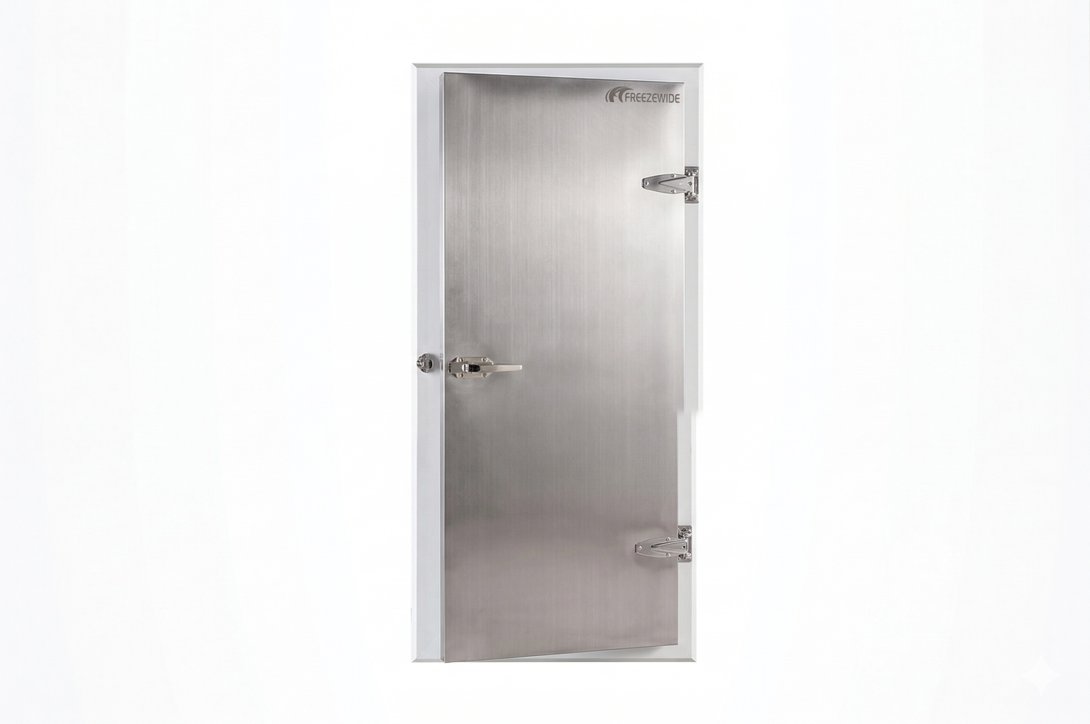
Hygienic Access for Hard-Use Storage | Stainless Steel Cold Storage Door

Choose hygienic access built for hard-use storage when cold room entries face constant traffic, repeated cleaning, and impact risk. A stainless steel hinged cold storage door helps protect sanitation, reduce wear, and keep the opening reliable under daily operational pressure.

Hygienic Access for Hard-Use Storage

For hard-use storage areas, hygienic access means more than a clean-looking door. It means an opening that can handle constant staff movement, carts, racks, wet cleaning, and repeated temperature separation without becoming a sanitation or maintenance weak point. In many facilities, a stainless steel hinged cold storage door is the right fit because it supports both daily durability and hygiene control.

That matters because the opening is where storage pressure and sanitation pressure meet. If the door starts wearing early, getting harder to clean, or interrupting movement, the room may still hold temperature while the operation around it becomes slower, less controlled, and more expensive to manage.

Heavy-Duty Storage Presents a Different Door Challenge

Not every cold room opening operates under the same conditions. Some entrances are used just a few times a day. Others are constantly in use by teams moving products, restocking inventory, rotating pallets, cleaning floors, and entering and exiting the refrigerated area throughout shifts.

In high-traffic storage, the entrance becomes the focal point for nearly all operational pressures at once. Staff open the door with gloved hands. Wheeled carts bump against the frame. Shelves pass through a narrow gap. Repeated traffic pressure is seen at the thresholds. Moisture and debris accumulate near the bottom edge. Cleaning crews wash the same surfaces repeatedly. The opening is not merely a part of the room’s exterior. It is an integral part of the storage workflow.

Therefore, hygienic access cannot be treated as a cosmetic preference or a mere formality. An improper opening may still function, but it begins to absorb labor, maintenance time, and hygiene attention that should be allocated elsewhere.

The Risk of Choosing a Door That Simply Looks Suitable

A common purchasing mistake is assuming that any insulated door that looks clean will work in a high-traffic hygienic storage environment. This rarely holds true over the long term.

A door may look suitable upon delivery, but if the opening is not specified in terms of contact, traffic, cleaning frequency, and visible hygiene standards, it can become a poor decision within a few months. In these settings, the problem is rarely an immediate failure. The issue lies in gradual operational glitches.

These glitches typically manifest as follows: 

  • Slower movement during high-volume storage cycles.
  • Increased cleaning effort around edges, hardware, and thresholds.
  • Visible wear and tear that compromises the room’s hygienic appearance.
  • Increased maintenance needs on hinges, latches, and gaskets.
  • Discussions about replacing them sooner than originally planned.
  • A growing sense that the door is too lightweight for the actual workload.

Therefore, high-traffic warehouse doors should be evaluated not just based on their appearance in technical specifications, but on how they age under stress.

Hygiene and Durability Must Work Together

In storage areas under daily real-world pressure, durability alone is not sufficient. A door that is too sturdy—one that is difficult to clean or begins to conflict with hygiene routines—may still be the wrong choice. The opposite is also true. A door that is visually hygienic but cannot withstand repeated use may still be the wrong choice.

The right answer is a door that combines both.

A stainless steel-hinged cold storage door makes sense in this context because it provides a more hygienic surface while also offering a simple and durable access solution. It helps facilities meet hygiene expectations without creating unnecessary operational complexity. In many high-traffic storage rooms, this balance is more important than over-specializing in a single direction.

The goal is simple: the entrance must remain reliable, easy to maintain, and compliant with the room’s standards even after constant use.

Why Does Hinged Access Still Work in Demanding Storage Environments?

For many commercial and industrial cold storage facilities, hinged doors remain the most practical solution. They are easy for teams to use, familiar to service crews, and well-suited for environments with heavy traffic that is controlled but not fully automated.

This is typically the case in: 

  • Cold storage facilities.
  • Food service kitchen cold rooms.
  • Supermarket refrigeration and freezer support areas.
  • Material storage areas.
  • Cold storage rooms on the preparation side.
  • Distribution support rooms where personnel and vehicles are constantly moving.

In these environments, the door must perform several functions simultaneously. It must help maintain temperature, support daily hygiene, withstand physical wear and tear, and not create bottlenecks. When combined with a hinged design, proper material selection, hardware, sealing strategy, and protective details, it can perform these functions effectively.

Hygienic Heavy-Duty Access and Standard Storage Openings

When buyers compare options, the key difference is rarely just the door style. It’s whether the opening is suitable for heavy-duty hygienic storage or only for lighter, less demanding applications.

Decision AreaStainless Steel Hinged Cold Storage DoorStandard Lower-Duty Storage Opening
Hygiene supportBetter suited for repeated cleaning and sanitary presentationMore likely to become harder to keep looking controlled
Daily use toleranceStronger fit for constant staff and cart movementOften better only for lighter traffic
Surface durabilityHolds up better in wet, high-contact areasMore likely to show wear earlier
Maintenance pressureHelps reduce recurring wear and finish-related upkeepCan create more service attention over time
Suitability for hard-use storageStrong long-term fitOften becomes mismatched as pressure builds
Ownership logicBetter value where storage pace is demandingMay seem cheaper only at initial purchase

This comparison is crucial because an incorrect opening rarely fails immediately. It gradually increases labor costs and erodes confidence in the facility.

The Opening Must Be Planned as a Complete System

A hygienic storage entrance is never just a single door panel. True performance comes from the entire opening.

This includes the frame, hinge set, latch hardware, threshold condition, bottom edge protection, gasket design, the need for a viewing panel, and the transition between the door system and the surrounding insulated panel wall. If any of these elements are inadequately specified, the entire opening becomes more vulnerable to wear, cleaning difficulties, or premature service calls.

A better system for high-traffic hygienic storage areas typically includes: 

  • Stainless steel surfaces in the most exposed areas.
  • Hardware selected for high-cycle operation.
  • Seal performance that supports both airtightness and cleanability.
  • Threshold details resistant to repeated cart traffic.
  • Protective features where impact is foreseeable.
  • View panels that reduce accidental contact for safer movement.
  • A door-panel interface designed for long-term stability.

This is where the Freezewize Cooling System becomes practically significant. In demanding storage projects, the strongest results are typically achieved by treating the opening not as an independent product choice, but as part of the overall room operation.

What Does the Right Solution Look Like in Practice?

The right solution depends on the actual speed and pressure of the storage area.

If the opening serves a room exposed to heavy traffic, routine cleaning, visible hygiene expectations, and regular contact from people or mobile equipment, a stainless steel-hinged cold storage door is generally a smarter choice. While providing reliable access without overly complicating usage, it also gives the opening a stronger long-term position against wear and hygiene issues.

This is particularly relevant when the facility aims to prevent the following: 

  • Constant touch-up maintenance.
  • Early visual wear at the entrance.
  • Hard-to-clean contact areas.
  • Repeated service interruptions.
  • An opening that feels less robust than the surrounding room.

In rooms with lighter workloads, a simpler door may still suffice. However, once the entrance becomes part of the daily workload, inadequate features often become costly sooner than expected.

Quick Decision Guide

Choose a stainless steel-hinged cold storage door when the opening needs to support both hygiene and demanding daily use without becoming a maintenance burden.

It is generally the right choice in the following situations: 

  • If staff pass through the opening all day long.
  • Vehicles or shelves regularly cross the threshold.
  • The area is cleaned frequently.
  • A hygienic appearance is important.
  • The room is operationally critical.
  • Total cost of ownership is more important than the lowest initial price.

A simpler opening may still be suitable in the following situations: 

  • Traffic is light.
  • Cleaning frequency is limited.
  • Room visibility is low.
  • The risk of impact is minimal.
  • The opening is not in constant use.
  • Short-term budget considerations are more important than long-term durability.

If the warehouse room subjects the opening to heavy loads every day, the access system must be designed from the outset to account for this reality.

Related Solutions

If you are planning hygienic access for high-traffic warehouses, it is generally beneficial to also review the following related interior solutions along with the door itself: 

  • Hygienic cold room panel systems.
  • Heavy-duty cold room door solutions.
  • Freezer room doors for low-temperature storage.
  • Threshold details for the passage of vehicles and racks.
  • Impact protection around cold room entrances.
  • Viewing panels for safer movement within the cold room.
  • Seal and gasket systems for high-cycle doors.
  • Heavy-duty hardware packages for warehouse openings.

These complementary elements often determine whether an entrance will remain efficient over time or begin experiencing preventable issues early on.

FAQ

What makes a cold storage entrance suitable for high-traffic hygienic storage?

It must be able to handle heavy traffic, repeated cleaning, impact exposure, and constant temperature fluctuations without becoming difficult to clean or expensive to maintain.

Why is stainless steel typically preferred for hygienic storage access?

Because it is better suited for repeated cleaning, wet conditions, and long-term surface control in environments where both hygiene and durability are critical.

Are hinged cold storage doors practical for high-traffic storage rooms?

Yes. In many facilities, hinged doors remain a practical choice because they provide direct and reliable access and are well-suited for frequent yet controlled movement.

Can a door still be the wrong choice even if it provides proper sealing?

Yes. If it causes friction during cleaning, visible wear, repeated maintenance requirements, or slowdowns in workflow, it can still be the wrong operational choice—even if it has acceptable thermal performance.

Which parts of the opening are most critical in high-traffic storage environments?

Thresholds, hinges, latches, gaskets, bottom edges, frame details, and connections to the insulated panel system—all are critical. The opening functions as a single unit.

When should customers switch to a heavy-duty hygienic entrance?

If the room is subject to constant daily use, repeated cleaning, cart or shelf movement, regulatory scrutiny, or visible operational standards, a heavy-duty hygienic solution is generally warranted.

Conclusion

For high-traffic cold storage rooms, hygienic access isn’t about choosing the cleanest-looking door. It’s about selecting an entrance that maintains hygiene, supports workflow, and withstands daily wear and tear without becoming a constant source of friction.

If the cold storage room places excessive strain on the entrance, the entrance must be constructed to remain hygienic and reliable under that pressure.

If you’re evaluating a new cold room or replacing an entrance that’s already inadequate for the job, it’s worth assessing the entire entrance system before the daily demands of storage turn a manageable detail into a recurring operational cost.

Fill the Form!

Write your needs and fill the form to contact us.

Freezewize | Industrial Cooling Systems & Custom Cold Room Solutions
Merhaba, Size yardımcı olabilir miyiz ?
Whatsapp Destek