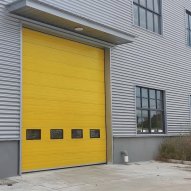





Commercial Overhead Doors Built for Throughput
Commercial Overhead Doors Built for Throughput in Busy Facilities
Choose a commercial overhead door built for throughput to reduce loading delays, limit maintenance pressure, improve dock flow, and support long-term facility performance.
Commercial Overhead Doors Built for Throughput
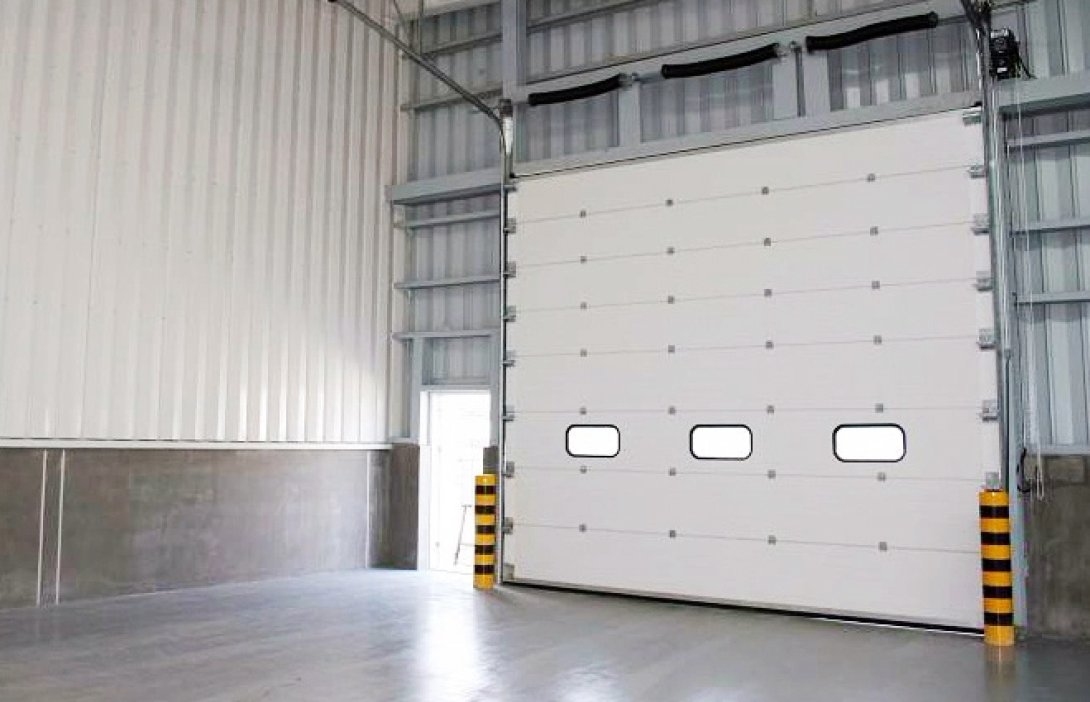
A commercial overhead door built for throughput is designed to keep dock and facility movement consistent under real operating pressure. The right door helps reduce avoidable delays, supports cleaner opening cycles, handles repeated daily use, and keeps traffic moving without turning the opening into a maintenance problem.
In many facilities, the issue is not that the door fails completely. The issue is that it adds friction to every shift. Slow cycling, poor recovery after repeated use, impact-related wear, inconsistent sealing, and rising service calls can quietly reduce throughput long before the opening is treated as a problem.
Efficiency Issues Often Start at the Opening
Facilities rarely lose efficiency due to a single dramatic door failure. More often, efficiency declines due to small, repeated interruptions throughout the day.
A truck is ready, but the opening cycle feels slow. A forklift stops because the opening fails to reset properly between movements. The driver waits while the door closes erratically. Staff work around the door instead of passing through it. None of these issues seem like a major problem on their own, but when they combine, they cause delays in receiving, shipping, and internal movements.
Therefore, the selection of an overhead door is more critical than many projects assume. In a high-traffic facility, the door is not merely an access point; it is an integral part of the building’s operations.
This is particularly true in warehouses, food processing facilities, supermarkets, manufacturing operations, and distribution environments where timing is critical. If the opening is located at a high-traffic passageway, even a technically functional door may be the wrong choice if it slows down traffic, wears out too quickly, or requires excessive maintenance.
A Door That Works Can Still Be a Poor Choice
One of the most common purchasing mistakes is the assumption that if a door opens and closes, it is doing its job.
This is a very narrow standard for a professional facility. A door can still create operational costs even if it functions technically. It may operate too slowly for the traffic load. It might be sufficient on the first day, but as the facility begins operating at full capacity, it may start showing signs of strain. It might provide enough sealing to pass a superficial inspection, but it may not be robust enough to consistently maintain the opening during daily use. It may withstand light use, but it can wear out prematurely under the pressure of hand trucks, pallet jacks, forklifts, or repeated loading activities.
Such incompatibility leads to real consequences:
- Longer turnaround times for trucks and extended loading times.
- More downtime in workflow around high-traffic openings.
- Higher service frequency and repair downtime.
- More noticeable wear in back areas.
- Greater exposure to airflow, dust, and weather conditions.
- A faster decline in operator and facility crew confidence.
The deeper issue isn’t just wear and tear. The problem is the sense that the opening wasn’t built to suit the facility’s operations.
Throughput isn’t just about opening speed
Many buyers focus on how fast a door can open. This is important, but throughput isn’t just about raw cycle speed.
A door designed for throughput supports all the realities of the opening. This includes repeatable motion, smooth operation, reliable closing, proper alignment, adequate sealing, hardware durability, and a shorter recovery time after daily wear and tear. It also means the door works well with the surrounding system rather than becoming a weak point within it.
At a loading dock or the entrance to a high-traffic facility, this typically involves coordination with the following:
- Traffic frequency and shift intensity.
- Opening width and equipment clearance.
- Bottom sealing and perimeter sealing requirements.
- Impact exposure near the threshold.
- Visibility expectations through sight panels.
- Cleaning routines and surface durability.
- Conditions of surrounding walls, loading ramps, or insulated exterior facades.
Risks increase further in refrigerated or temperature-sensitive areas. A door that slows down operations can increase unwanted air exchange, create additional backpressure, and make it difficult to control the opening during daily operations.
Selecting the Right Structure for the Job
Not every commercial overhead door is equally suited for high-traffic conditions. The right choice depends not on how the opening is defined in a general equipment list, but on how it is actually used.
In an opening with steady but not heavy traffic—moderate usage—a lighter structure may be acceptable. When the opening affects a climate-controlled or refrigerated area, a more insulated structure may be a better choice. In situations where the door is used repeatedly throughout the day and downtime would immediately impact operations, higher cycle ratings may be necessary. In more demanding operating conditions, robust hardware and a durable structural approach are often just as important as the panel itself.
Comparison Table
| Door Approach | Best Fit | Main Advantage | Main Limitation |
|---|---|---|---|
| Standard commercial overhead door | Moderate daily use with balanced cost priorities | Practical, dependable baseline performance | May wear faster in high-cycle environments |
| Insulated overhead door | Openings near conditioned or refrigerated areas | Better thermal control and tighter opening performance | Higher initial investment |
| High-cycle overhead door | Shipping and receiving points with frequent daily operation | Better support for repeated opening demand | Requires more deliberate specification |
| Heavy-duty throughput-focused configuration | Busy docks and harsh operating conditions | Stronger long-term durability under pressure | Often unnecessary for lighter-use sites |
The right decision rarely involves purchasing the most aggressive option. It involves selecting a structure that matches the facility’s actual rhythm. An under-specified opening will eventually lead to friction. Unnecessary over-engineering can waste the budget. The optimal solution is usually found where durability, operating speed, sealing performance, and maintenance tolerance meet the actual traffic conditions.
What overhead doors designed for high-volume traffic actually need
An overhead door designed for high-volume traffic should be selected based on the opening’s performance, not on general catalog specifications.
This typically involves closely examining the panel structure, cycle demand, track layout, spring life, bottom sealing performance, sight lines, hardware durability, and how the opening interacts with nearby equipment. If forklifts or vehicles operate near the door line, impact resistance and recovery stability are critical. If the opening affects indoor conditions, insulation and environmental sealing become more important. If labor efficiency is under pressure, predictable cycle times and reduced service downtime play a larger role in the purchasing decision.
This is where many projects see significant improvement. When the conversation shifts from “Which door should we buy?” to “What does this opening need to do every day?”, the specifications typically become clearer.
A robust solution is one that supports productivity without forcing the business to compensate for the opening.
A Better Solution for High-Pressure Facilities
From a productivity standpoint, the best commercial overhead door is one that minimizes friction throughout the entire workday.
This translates to faster and more consistent movement in high-traffic areas, better sealing where the opening affects environmental control, higher durability where wear and tear is constant, and lower maintenance costs where downtime is costly. It also means selecting the door not as an isolated product, but as part of a broader opening strategy.
This broader strategy may include threshold conditions, wall integration, loading ramp accessories, protective hardware, visibility requirements, and service access. In facilities where uptime is critical, the opening performs better when these elements are evaluated together.
At this point, a more experienced solution process also helps. The Freezewize Cooling System treats overhead doors as an integral part of the actual facility workflow, particularly in operations where speed, control, durability, and long-term suitability are more important than basic closing functionality. This ensures better alignment between the door, the opening, and the facility’s actual operations.
Quick Decision Guide
If the opening’s usage is moderate and the priority is reliable daily performance without unnecessary extra features, choose a standard commercial overhead door.
If the opening affects a climate-controlled, refrigerated, or freezer-adjacent area and better sealing or thermal control is important, choose an insulated overhead door.
If the opening is used intensively throughout the day and delays caused by slow cycles or premature wear will affect productivity, choose a high-cycle overhead door.
If the opening faces regular impact risks, the use of heavier equipment, or a work environment that rapidly wears down standard hardware, choose a heavy-duty configuration.
If the opening supports access to a visible rear area, also consider the quality of the finish, window layout, consistency of sealing, and how the door looks during daily use. In many facilities, these details influence the timing of replacement sooner than buyers might expect.
Related Solutions
If this opening is part of a broader facility improvement plan, the following related interior solution areas are typically logical to consider alongside the overhead door decision:
- Insulated loading dock door systems.
- Loading dock seals and loading dock shelters.
- Sectional doors for refrigerated loading areas.
- Cold room door and panel integration.
- Impact-resistant hardware and protective details.
- Loading ramp efficiency solutions.
FAQ
Are commercial overhead doors suitable for high-efficiency loading ramps?
Yes. When properly designed, they support daily repetitive opening cycles, enable smoother traffic flow, and reduce operational obstacles that slow down loading and unloading.
What makes an overhead door “designed for efficiency”?
It’s not just speed. It’s a combination of reliable operation, durability, airtightness, reduced maintenance requirements, and adaptability to the actual traffic patterns at the opening.
Is a standard overhead door sufficient for a high-traffic facility?
Sometimes, but not always. If the opening is used frequently on a daily basis, if there is a risk of impact, or if environmental control requirements exist, a standard design can become a weak point over time.
When is an insulated overhead door a better choice?
It is a better choice when the opening affects indoor comfort, the cooled area, energy control, or environmental airtightness performance.
Can the wrong overhead door increase long-term costs?
Yes. A low-cost door can end up being more expensive due to service calls, workflow interruptions, premature wear, and the pressure to replace it sooner.
Should dock equipment be evaluated alongside the door?
Yes. Dock seals, shelters, bumpers, thresholds, and nearby wall conditions all affect how well the door performs in real-world daily use.
Conclusion
Operational volume isn’t protected by the opening alone. It’s protected by selecting a door that can keep pace with the operation.
If the door opening is slowing down traffic, it is already reducing facility performance. A commercial overhead door designed for high-volume traffic helps maintain flow, reduce maintenance demands, and support more reliable operation over time. For facilities planning improvements or new openings, the smartest step is to evaluate the opening in terms of actual traffic, actual wear and tear, and actual long-term use.