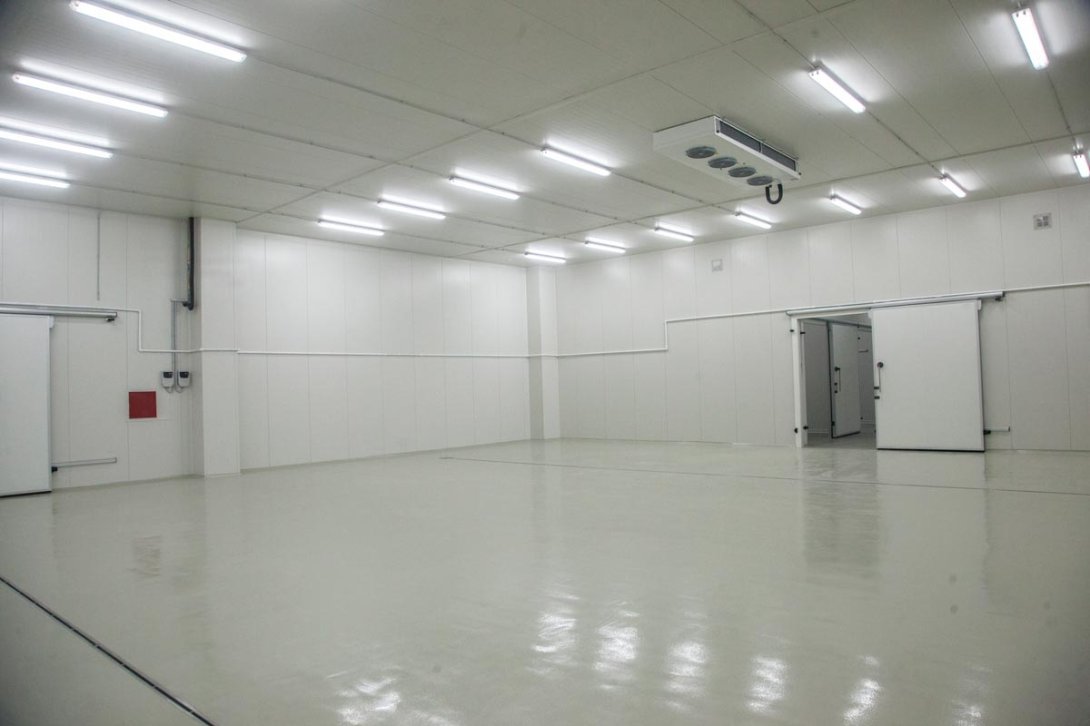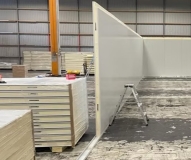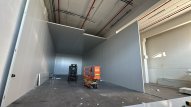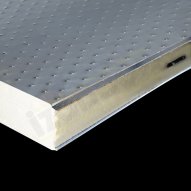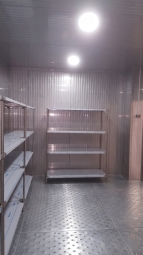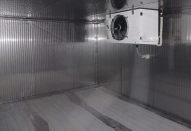





Panel Joints That Hold the Line
Cam Locked Cold Room Panel Joints That Hold the Line
Learn how cam locked cold room panel joints protect temperature control, hygiene, alignment, and long-term durability in demanding commercial facilities.
Panel Joints That Hold the Line in Cold Rooms
A cold room rarely starts losing performance through the middle of a panel. It usually starts at the joint. When panel connections are weak, uneven, or poorly compressed, the result is not just air leakage. It becomes condensation, frost, cleaning difficulty, visual wear, and a room that feels wrong under daily pressure.
That is why cam locked cold room panel performance is really a joint story. In coolers, freezers, food prep areas, and back-of-house storage, the line between one panel and the next is what holds thermal integrity, structural order, and long-term operating confidence together.
Where Cold Rooms Start Losing Control
Many cold rooms appear acceptable on day one, yet still cause problems six months later. The general cause is not a dramatic panel failure. It is the gradual weakening at the seams.
In real-world facilities, panels are not subjected to static conditions. They absorb door opening and closing cycles, cleaning routines, wheeled carts, nearby pallet jack movements, temperature fluctuations, and constant foot traffic. If the joints between panels do not remain tight and aligned, the room begins to show this in subtle yet costly ways.
You may first notice this as small gaps, uneven lines, damp spots, or a section that cannot be cleaned as effectively as the rest of the wall. In freezer environments, issues emerge more quickly due to pressure-induced ice buildup or joint stress. In cold storage rooms, they typically manifest as condensation, hygiene issues, or a surface that begins to wear out sooner than expected.
For this reason, joint design is critical in gasket-sealed cold room panel systems. A panel may be well-insulated, but if the joint remains weak, the room loses its reliability at the very point where operators feel it most.
When the Workroom Is Still the Wrong Room
A room may maintain temperature, yet it can still be the wrong room for operations.
This occurs when panel joints create daily resistance rather than daily stability. A technically functional wall can create minor issues significant enough to increase labor pressure, cleaning time, maintenance calls, and replacement concerns. This is a real problem for food processing facilities, warehouses, supermarkets, and processing plants where consistency is as important as performance.
The risks of weak or inconsistent panel joints typically manifest in five ways:
- Thermal leakage causing the room to work harder than necessary.
- Condensation or frost formation at weak joint lines.
- Hygiene issues due to residue buildup or difficulty in cleaning at joint locations.
- Alignment deviations that affect visual quality and adjacent components.
- Premature wear and tear that gives the impression the chamber is underperforming.
In the U.S. market, where labor efficiency, food safety expectations, and audit readiness are all critical, these are not merely cosmetic issues. They influence how the room is evaluated internally and how reliably it performs over time.
Joint Type Influences the Purchase Decision
Not every insulated enclosure solves the same problem. If the room requires repeatable fit, clean alignment, quick installation, and reliable long-term performance, the joint system becomes a key selection criterion.
When a facility requires a modular system that can be installed with consistent compression along the joint, a tongue-and-groove cold room panel is typically a stronger choice. This is important in both standard refrigeration applications and more demanding freezer enclosures, whether the project uses 4-inch (100 mm) panels or thicker assemblies for lower-temperature rooms.
In contrast, simpler on-site joining approaches can reduce initial complexity in some light-duty applications, but they generally introduce more installation variability at connection points and result in lower reliability.
| System Approach | Best Fit | Main Strength | Main Friction Point |
|---|---|---|---|
| Cam locked cold room panels | Commercial coolers, freezers, food facilities, distribution rooms | Repeatable joint compression and faster modular assembly | Performance still depends on good installation discipline |
| Basic field-fastened insulated sections | Lower-pressure enclosures or simple partitions | Simpler initial build logic | More seam variability and less clean modular precision |
| Site-built insulated assemblies | Highly custom structural conditions | Layout flexibility | Slower execution and less streamlined serviceability |
The key point is simple: a panel system should not be selected based solely on insulation thickness or appearance. The joining method typically determines whether the room will remain airtight, clean, and stable once operations begin.
Why Do Cam-Locked Joints Solve the Problem Correctly?
The true strength of a cam-locked cold room panel lies not merely in connecting one panel to another. It creates controlled compression at the joint, so the wall line behaves more like a unified system rather than a collection of separate parts.
This offers several practical benefits in active facilities:
- Better joint consistency in long panel runs.
- Stronger support for thermal continuity.
- Cleaner visual lines in the facility’s back areas.
- More predictable installation results.
- Easier future removal, expansion, or relocation under suitable project conditions.
This is even more important when the room contains stress points such as door openings, viewing panels, corner transitions, ceiling joints, ramps, thresholds, or service passages. A good joint system helps surrounding elements function more reliably because the enclosure remains more stable as a whole.
In projects shaped around actual operating pressures, the Freezewize Cooling System typically delivers the best long-term results when joint performance is treated not as a hidden detail within a panel offering, but as a system-level decision. This means addressing joint compression, sealing logic, installation quality, room traffic, and adjacent equipment collectively.
What to Check Before Approving the Panel Package
A strong panel joint is not just a product feature. It is also a matter of application.
Before approving a tongue-and-groove cold room panel system, buyers should look beyond panel thickness and ask whether the entire joint line has been properly considered. The most important checkpoints are as follows:
- Panel alignment quality along long wall runs.
- Consistency of joint compression.
- Sealing approach at seams and corners.
- Transitions around doors, ceilings, and floor edges.
- Compliance with cleaning routines and hygiene standards.
- The room’s ability to remain stable under actual traffic conditions.
This is where many purchasing decisions go wrong. The room is often described as if all panel systems were functionally equivalent, yet in reality, what distinguishes a reliable room from one that begins to create minor operational issues almost immediately is usually the connection details.
Quick Decision Guide
If the project requires the following, choose a cam-locked cold room panel system:
- Quick modular installation with reliable assembly.
- Tight joint performance in repeated panel sequences.
- Clean wall lines for visible back areas.
- Potential for easier future expansion or relocation.
- Better control in refrigeration or freezing environments under daily operational pressure.
If the project includes the following, take a closer look before purchasing:
- Poor floor conditions that could compromise alignment.
- Complex openings without a clear sealing plan.
- Heavy traffic near openings but no edge protection strategy.
- Installation teams with limited experience in cold room installation.
- A budget focused solely on initial costs and disregarding ownership costs.
If the room will be frequently exposed to movements involving hand carts or pallets, panel selection must be coordinated with door type, threshold conditions, protective hardware, and wall protection. Strong joints help, but they should never be expected to solve wear caused by traffic on their own.
Related Solutions Supporting Joint Performance
Panel joints perform best when the surrounding system is designed with the same attention to detail. Related solutions that should be considered alongside this issue include:
- Cold room doors suitable for traffic and temperature levels.
- Freezer room panel systems for low-temperature applications.
- Hygienic wall and edge protection near impact zones.
- Ramps and threshold crossings for the movement of vehicles and pallets.
- Spare gaskets, hardware, and sealing accessories.
- View the panels and service access details for controlled operation.
These are not merely additional components in the abstract sense. They directly affect whether the panel line remains protected, clean, and operationally stable.
FAQ
What is the difference between a cam-locked cold room panel and a standard insulated panel?
The fundamental difference lies in the joining mechanism. The cam-locked panel is designed to pull adjacent panels together with a more controlled compression; this improves the consistency, alignment, and thermal performance of the joints.
Do panel joints really affect temperature stability that much?
Yes. In many rooms, performance deviations begin not at the panel’s interior but at the joints. Weak joints can lead to air leakage, condensation, and preventable loads on the refrigerated shell.
Are cam-locked panels suitable for freezer rooms as well as refrigerated rooms?
Yes, they are suitable when properly specified for the temperature range and installed correctly. In freezer environments, the integrity of the joints becomes even more critical, as frost and thermal stress erode weak joints more rapidly.
Could a cold room still be unsuitable even if it functions technically?
Yes. A room can still reach the target temperature while causing issues such as cleaning problems, visual wear, maintenance burden, or workflow friction. Therefore, suitability is just as important as basic functionality.
What typically causes early failure of panel connections?
Early issues typically stem from inconsistent installation, poor alignment, inadequate sealing, surrounding traffic stress, or a system selected without sufficient consideration of actual operating conditions.
Can cam-locked cold room panels be expanded later?
In many applications, yes. This is one of the practical advantages of modular cam-locked systems. Future expansion depends on whether it was planned with consideration for the original layout, access conditions, and the reconfiguration of the panel assembly.
Conclusion
When a cold room begins to lose reliability, the problem is rarely the panel surface itself. The issue lies in the joints between the panels.
If the joint cannot maintain alignment, compression, and cleanliness under daily stress, no matter how acceptable it may seem on paper, it is a flawed system. For facilities requiring reliable temperature control, cleaner joint performance, and stronger long-term suitability, cam-locked cold room panels are generally a wiser choice. When you’re ready to evaluate the concept of full containment, it makes sense to review panel joints, door strategy, and traffic conditions as a single coordinated decision.