




Durable Door Surfaces in Cold Environments
Durable Door Surfaces in Cold Environments | Stainless Steel Guide
Protect cold room openings from moisture, abrasion, and premature surface breakdown with a stainless steel hinged cold storage door built for long-term performance in cold environments.
Durable Door Surfaces in Cold Environments
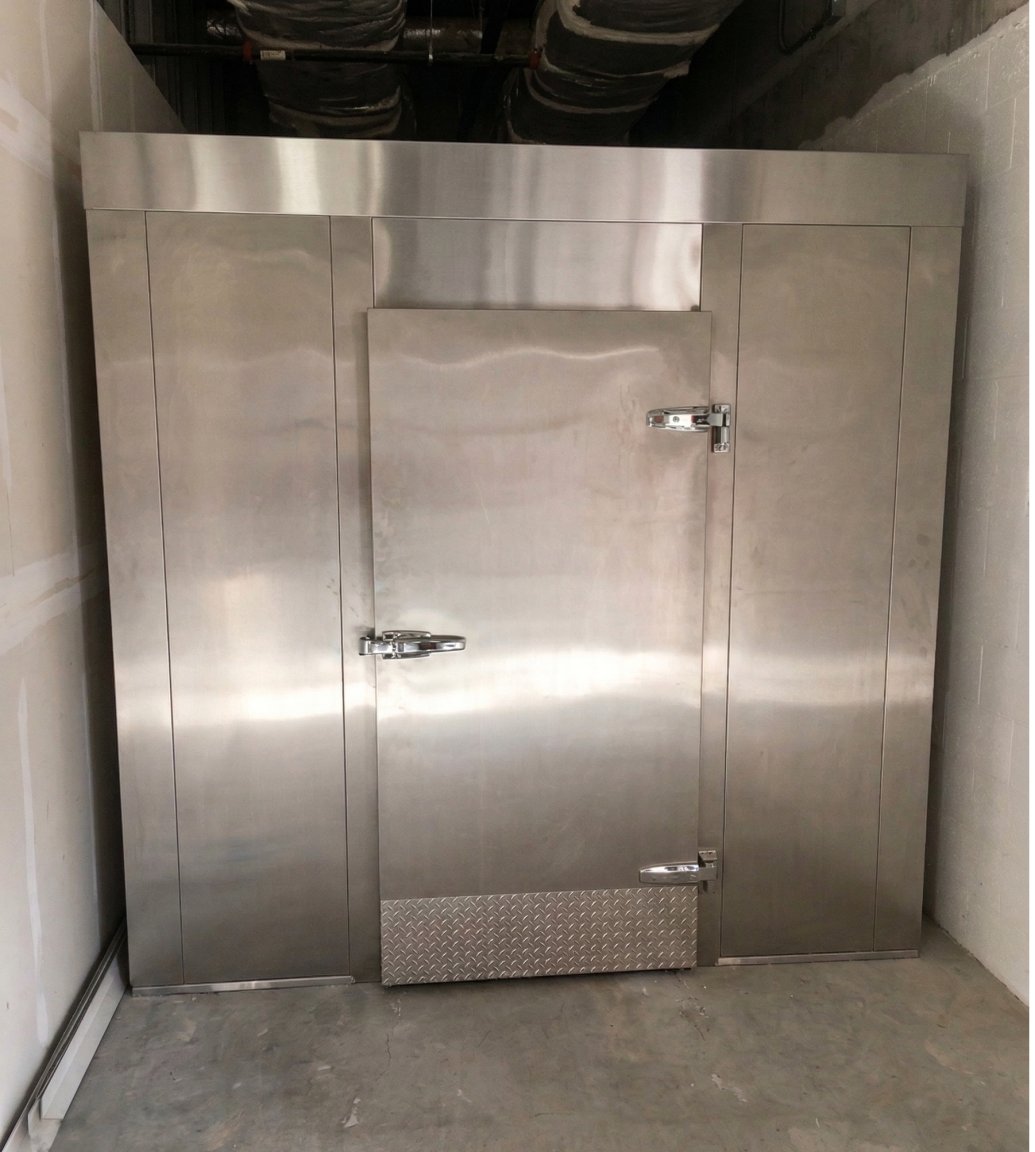
In cold environments, a durable door surface is not just a cosmetic advantage. It helps the opening stay easier to clean, more stable under daily use, and less likely to become the first component that shows wear. For many facilities, a stainless steel hinged cold storage door is the practical choice when the entry must handle moisture, traffic, temperature stress, and cleaning without aging too quickly.
That matters because door surfaces in refrigerated spaces take a different kind of punishment than openings in ordinary rooms. Condensation, washdown, carts, hardware contact, and constant movement all concentrate at the entry. If the surface breaks down early, the door can still function while the opening starts creating maintenance, hygiene, and presentation problems
Surface Wear Starts Where Operations Touch the Room
Cold rooms do not wear evenly. The opening is almost always exposed to more wear than the rest of the enclosure.
This is easily visible on the floor. Staff pass through the entrance all day long. Wheeled carts scrape against the edges. Pallet jacks apply pressure to the threshold. Gloves, moisture, and cleaning agents repeatedly strike the handles and latches. Cold air encounters warmer traffic conditions at the same spot shift after shift. Even if the room panels still look sound, the door surface usually begins to show signs of wear first.
For facility managers and contractors, this is not a minor coating issue. When the surface begins to lose its controlled appearance, maintaining the opening can become difficult, and its reliability as a long-term solution for the space may diminish. Especially in food-related operations, the condition of the surface does more than just affect appearance. It also influences how the room is perceived during cleaning, inspections, and daily use.
That is why durable door surfaces are crucial in cold environments. These surfaces prevent the door from becoming a weak point in an otherwise well-planned room.
The True Cost of a Surface That Ages Too Quickly
A cold storage door doesn’t have to completely fail to become an expensive mistake. It’s enough for it to age faster than the facility expects.
In many facilities, the initial signs are subtle. The surface begins to look worn near contact areas. Scratches remain visible longer than they should. Cleaning crews spend more time on the same areas. The opening starts to look older than the surrounding room. Maintenance teams begin monitoring the door more closely because surface fatigue typically manifests alongside wear in the gaskets, hardware, and edges.
Over time, this creates an operational burden:
- More effort required to keep the entrance looking presentable.
- Greater maintenance attention around areas prone to wear.
- Less control over the appearance of the back side.
- Greater concern during food safety or hygiene inspections.
- Pressure to replace it sooner than originally planned.
- A growing sense that the original specification was too lenient.
This is a risk many buyers underestimate. The door may still maintain temperature, but the choice could still prove to be the wrong one in the long run.
Cold Conditions Change Surface Requirements
A surface that performs adequately in a dry, low-traffic service area may be the wrong choice in a refrigerated room.
Cold environments alter how materials age. Moisture lingers longer. Condensation cycles repeat daily. Cleaning routines are typically more frequent. In rooms expected to remain controlled and hygienic, surface scratches and wear become more noticeable. Even moderate traffic in cold, wet, or wash-exposed conditions feels more demanding.
Therefore, cold room door surfaces should be selected not only based on the door’s insulation value but also by considering the environment surrounding the opening. The entrance is where people, equipment, cleaning, and temperature control converge. If the surface cannot manage this combination effectively, the cost of ownership quietly increases over time.
Stainless Steel and Standard Surface Logic
When buyers compare door surfaces, the real question isn’t which one looks good on installation day. The real question is which one will remain suitable under cold, wet, and repetitive use conditions.
| Decision Area | Stainless Steel Hinged Cold Storage Door | Lower-Spec Door Surface |
|---|---|---|
| Moisture resistance | Better suited for humid and condensation-prone openings | More likely to show deterioration sooner |
| Cleaning tolerance | Handles repeated cleaning more confidently | Can become harder to maintain over time |
| Visual longevity | Holds a more controlled appearance in demanding rooms | Often shows wear earlier |
| Hygiene presentation | Stronger fit for sanitary and food-related environments | Can weaken room presentation faster |
| Maintenance burden | Helps reduce surface-related upkeep pressure | More likely to create recurring touch-up concerns |
| Long-term ownership logic | Better value in hard-use cold environments | Often only cheaper at purchase stage |
This comparison is the point where many purchasing decisions are finalized. If the opening will be exposed to frequent contact, moisture, and cleaning, surface durability ceases to be an upgrade and becomes a part of operational necessity.
Hinged Access Still Strikes the Right Balance
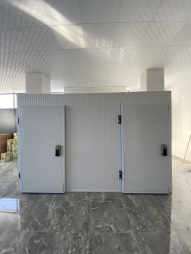
For many cold rooms, a hinged door remains the most practical form of access. It offers direct use for staff and routine traffic, reliable closing, and easy daily operation.
This is important in areas where the opening is frequently used but does not require a more specialized access system. Commercial kitchens, food preparation rooms, supermarket backrooms, cold storage areas, and support areas typically benefit from a hinged design because it keeps movement simple while maintaining temperature separation.
When this hinged design is combined with stainless steel, the result is often a better balance between usability and durability. The door remains familiar and efficient to use, while the surface is better prepared to withstand cold-environment wear. This combination is particularly beneficial when the opening must support both hygiene expectations and a long service life.
The Surface Is Only Part of the Solution
A durable surface helps, but it does not solve the entry issue on its own.
The performance of a cold room door depends on the entire opening. Hinges, latch hardware, gaskets, threshold details, kick plates, frame condition, and panel interfaces all influence whether the door will truly withstand a harsh cold environment. A strong surface combined with weak surrounding details still results in a weak opening.
Therefore, treating the entrance not as a standalone product but as a functioning system generally yields better results. Under real-world project conditions, the Freezewize Cooling System evaluates surface selection in conjunction with hardware durability, traffic patterns, cleaning frequency, and connections to surrounding insulated walls. Long-term performance is often won or lost at this stage.
A better-designed opening typically includes the following:
- Stainless steel in areas where repeated contact and moisture are expected.
- Hardware suitable for cold and wet operating conditions.
- Gaskets that maintain both sealing and cleanability.
- Threshold details that tolerate vehicles and repeated traffic.
- View panels that enhance visibility and enable safer movement.
- Protective features in predictable impact zones.
These are not decorative details. These are components that help the entrance age to the same standard as the surrounding room.
Making Choices for Actual Use Rather Than Assumptions in the Technical Specifications Table
Many surface issues begin with a single incorrect assumption: the assumption that the door will be used more gently than it actually is.
On paper, the room may appear moderately busy. In practice, however, the entrance faces constant use, hurried traffic, frequent cleaning, and regular contact with equipment. This discrepancy between assumed and actual use is the point at which surfaces begin to wear out prematurely.
A better purchasing decision is typically made by asking direct operational questions:
- How often will the door open and close each day?
- Does the area remain wet or is it subject to routine washing?
- Do hand trucks, shelves, or pallet jacks pass through the opening?
- Is the room hygiene-sensitive or subject to inspection?
- Does the team require low-maintenance tolerance or merely acceptable short-term functionality?
- Will the opening need to remain visually intact for years, not just months?
These answers typically reveal whether a standard surface is sufficient or if the room requires a more durable solution from the outset.
Quick Decision Guide
When the opening requires a durable, cleanable surface under frequent use in a cold environment, choose a stainless steel-hinged cold storage door.
This is generally the right choice in the following situations:
- The door is used throughout the day.
- Moisture or condensation is common.
- The area is cleaned regularly.
- The opening is visible to managers, inspectors, or customers.
- Vehicles or shelves pass through the entrance.
- Long-term ownership value is more important than the lowest initial price.
A lighter-duty surface may still be suitable in the following situations:
- Opening traffic is low.
- The area remains relatively dry.
- If cleaning frequency is limited.
- If appearance requirements are modest.
- If the room is not operationally critical.
- If replacement timing is less critical.
If the entrance will be exposed to multiple factors such as cold, moisture, traffic, and repeated cleaning, the door surface must be selected from the outset to withstand this combined stress.
Related Solutions
If durable door surfaces are part of the purchasing decision, these related solutions typically warrant consideration at the same time:
- Hygienic cold room panel systems.
- Insulated cold room door options.
- Freezer room doors for more demanding thermal conditions.
- Heavy-duty hardware for refrigerated entrances.
- Threshold details for vehicle and pallet jack traffic.
- Seal and gasket solutions for cold room entrances.
- Viewing panels for safer movement in refrigerated areas.
- Impact protection in high-contact door areas.
These environmental factors often determine whether a door with a durable appearance actually delivers long-term, reliable performance.
FAQ
Why do door surfaces wear out faster in cold environments?
Because they combine factors like exposure to the outdoors, humidity, condensation cycles, cleaning, repeated use, and equipment contact all in one place. These factors accelerate visible wear compared to ordinary interior doors.
Is stainless steel primarily about appearance?
No. Stainless steel surfaces are frequently chosen not just because they look higher quality, but because they better withstand moisture, cleaning, and daily wear in harsh cold-room environments.
Can a door that properly maintains temperature still be the wrong choice?
Yes. If the surface becomes difficult to maintain, shows visible wear, or fails to meet room standards, it can still be an operational misstep—even if it offers acceptable thermal performance.
Are hinged cold storage doors suitable for high-traffic areas?
Yes. In many facilities, hinged doors are highly suitable for controlled access where reliable closure is essential amid regular personnel traffic, cart movement, and simple operation.
What are the most important supporting details regarding the surface?
Hardware, gaskets, thresholds, frame quality, impact protection, and how the opening integrates with the insulated panel wall are all critical. Surface durability yields the best results when the entire opening is properly specified.
When should buyers opt for a more durable surface?
If the entrance is exposed to daily traffic, frequent cleaning, moisture, visible hygiene standards, or constant contact with equipment, a more durable surface is generally preferred.
Conclusion
Durable door surfaces in cold environments do more than just ensure the door looks good. They prevent the opening from becoming a source of premature wear, maintenance pressure, and operational resistance.
If a cold room entrance is subject to daily wear and tear, the surface should be designed to absorb this wear without losing control too early.
If you are planning a new cold room or replacing a door that appears more worn than the rest of the space, it would be beneficial to review the entire entrance strategy before surface wear turns into a broader performance issue.