




Freezewize | Industrial Cooling Systems & Custom Cold Room Solutions

Corner Panels That Tighten the Envelope

Corner Panels That Reinforce Cold Room Wall Cladding | Better Cold Room Performance

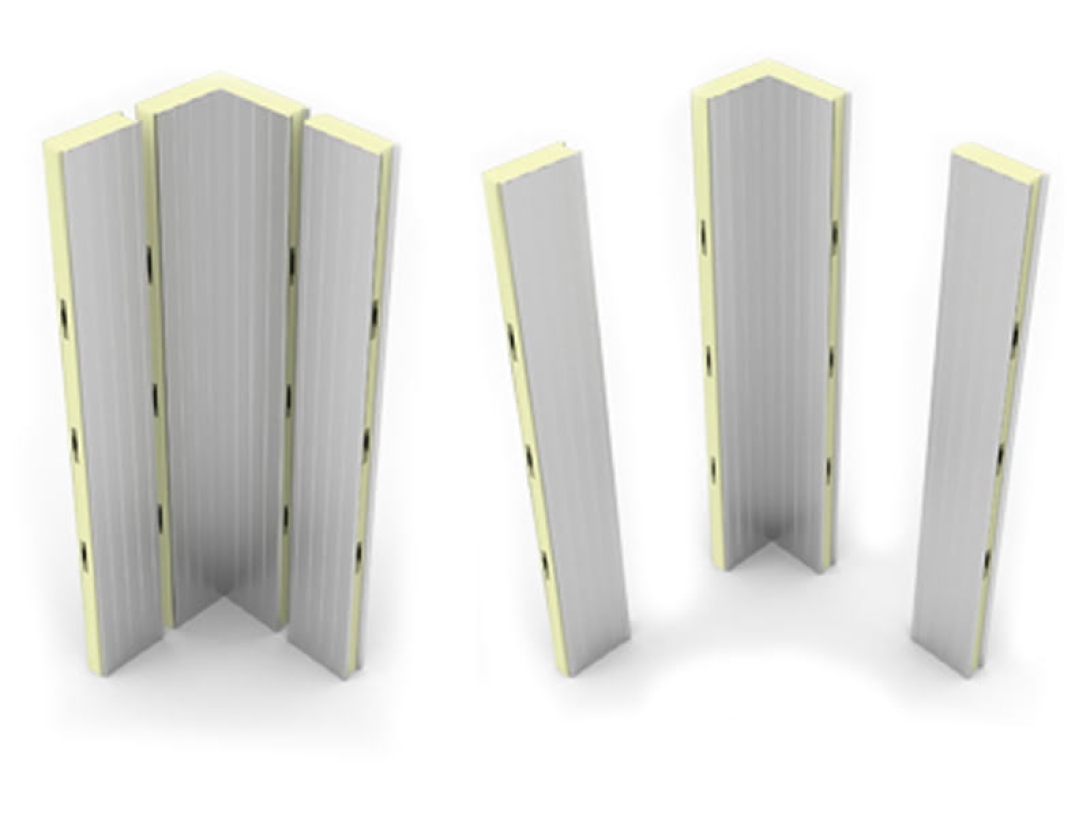
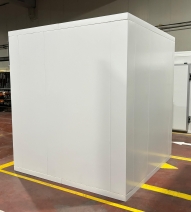
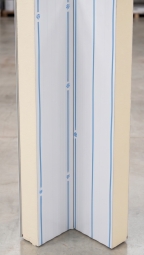
Airtightness starts at the corners. The right cold room corner panel helps reduce air leakage, maintain insulation continuity, and support cleaner, more durable room transitions.

Corner Panels That Tighten the Envelope

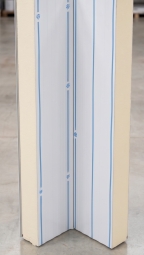
Cold room corner panels help tighten insulation by improving continuity at wall intersections, reducing sensitive transition points, and providing better control over air leakage, condensation risk, and long-term panel performance.

In many cold rooms, the weakness of the enclosure does not start from the center of the wall. This weakness manifests at joints, edges, and corners—where misalignment, leaks, and daily wear begin to damage the room. When corner conditions are properly planned, the room remains more stable, is easier to maintain, and becomes more reliable under actual operating pressure.

Common Areas Where Exterior Wall Issues First Emerge

Cold room buyers typically focus on panel thickness, door performance, and cooling capacity. While these are important, exterior reliability is often overlooked in small details that seem secondary during purchase but prove costly during operation.

Corners are one such detail.

At a corner, multiple pressures converge simultaneously. Panel alignment must be flawless. The sealing mechanism must be reliable. Cleaning routines are repeatedly applied to the same area. Traffic flows outward from the perimeter. Temperature differentials along the exterior wall stress weak transition points more than they appear at first glance. If that corner is poorly designed, inadequately protected, or treated merely as a cosmetic finishing point, the room may still function, but it begins to harbor hidden inefficiencies.

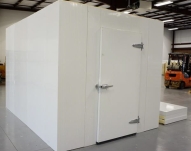
This is why corner panels are important. In a refrigerated room, a freezer room, or a refrigerated processing area, a corner is not merely where two walls meet. This is where the exterior facade proves whether it was designed for actual use.

Why Do Loose Corners Cause Operational Friction?

Even if a room is technically sealed, it can feel operationally weak.

This usually happens when corners provide too much opportunity for movement, too much inconsistency in cladding, or allow small air and moisture issues to grow over time. These aren’t always dramatic failures. More often, they manifest as recurring friction points:

  • Wall transitions that are harder to control.
  • Greater fragility at panel joints.
  • More noticeable wear along the perimeter.
  • Increased likelihood of sealing inconsistencies at intersections.
  • Increased maintenance needs at edges and joints.
  • A room that feels less tight, less clean, and less professionally finished.

In cold storage operations, this friction does more than just affect the appearance. As the panel transitions begin to loosen, operators start to notice side effects elsewhere: condensation in sensitive areas, uneven visual aging, more frequent touch-up work, and a general sense that the structure wasn’t fully coordinated from the start.

The Real Risk of Poor Corner Details

A poor corner detail may not hinder the room’s function, but it can still be a poor decision.

This is a risk that many facilities underestimate. Technically, a corner that closes off the wall line can leave the exterior facade more exposed than it should be. Over time, this can contribute to:

  • Unwanted air leakage.
  • Extra condensation pressure at transition points.
  • Reduced confidence in insulation continuity.
  • Premature wear of the cladding due to cleaning and traffic contact.
  • Increased maintenance burden at panel edges.
  • A weaker impression of hygiene during inspections or site visits.
  • Need for earlier replacement in areas exposed to repeated pressure.

This is particularly important in facilities where labor efficiency, hygiene consistency, and visible back-of-house standards are all critical. If corners are loose, inconsistent, or prone to damage, the room begins to incur operational costs in ways rarely apparent at first glance.

Tightening the Covering Isn’t Just About Insulation Thickness

A better exterior is built not just on the material specifications on paper, but on continuity.

This means the room performs at its best when insulated panels, joints, doors, thresholds, weatherproofing details, and corner conditions all work together. A thicker wall panel does not fully resolve the corner issue, which creates an unnecessary weakness at the intersection. Similarly, a clean-looking cladding does not mean the transition is sufficiently robust for daily refrigerated use.

A well-designed cold room corner panel helps maintain this continuity by providing better control at the junction. This helps the exterior facade behave as a system rather than a collection of separate surfaces.

In practice, a tighter corner design can support the following:

  • More stable transition performance.
  • Better control over leak-prone intersections.
  • Enhanced resistance to daily impacts and cleaning wear.
  • Smoother integration with insulated wall panels.
  • A more durable interior standard over time.

Key Comparison

Not every corner approach delivers the same cabinet quality. The decision typically hinges on whether the project is simply about enclosing walls or actually building a more robust refrigerated room cabinet.

ApproachMost AppropriateMain StrengthMain Disadvantage
Finished wall corner in the base areaService rooms with low trafficSimple initial installationWeaker long-term control at the intersection
Minimal decorative corner treatmentBudget-conscious renovation scenariosCloses transitions with limited adjustmentMay not provide reliable exterior durability under daily stress
Integrated cold room corner panelProfessional cold rooms, food processing facilities, high-traffic areasBetter continuity, cleaner surfaces, more robust insulation logicRequires better upfront planning

This comparison is not about aesthetics. It concerns how the panel responds to actual pressure at one of the room’s most stressed geometric points.

When Is a Corner Panel a Better Choice?

When the room needs to do more than just exist on paper, a specialized corner panel approach becomes more valuable.

This approach makes more sense when the facility has regular washing or rigorous cleaning routines, when operators prioritize keeping the room visually tidy, when the pressure of inspections is a normal part of operations, or when there is frequent foot traffic and contact in the area. Additionally, this approach becomes more important when energy efficiency and condensation control are significant factors in the total cost of ownership.

Under these conditions, the corner panel offers three practical benefits to the room.

First, it improves the transition pattern. The corner feels more intentional, more integrated, and less exposed to daily wear and tear.

Second, it supports the reliability of the exterior facade. A tighter, better-resolved junction point reduces the sense of fragility often found around improvised or poorly developed corner details.

Third, it preserves the room’s long-term quality. Corners are the most obvious indicators of whether the installation was done to a consistent standard. When corners remain clean and sturdy, the room ages better as a whole.

The Solution in True Cooled Room Design

The most reliable solution is to treat corners not as mere finishing touches, but as part of the exterior strategy.

In a well-coordinated cold room, the cold room corner panel system must align with the wall panel system, the sealing logic, the floor conditions, and the expected traffic profile around the room perimeter. This coordination is crucial because corners do not function in isolation; they work in conjunction with hardware, protective elements, door openings, and adjacent panel lines.

In high-traffic cold rooms, freezer rooms, food processing areas, and cold storage zones—where both durability and cleanliness are critical—a superior corner detail typically pays for itself through reduced friction. This minimizes the risk of loose edges, difficulty in maintaining cleanliness, or premature visible wear.

This system-based approach is where the Freezewize Cooling System comes into its own. Robust cold room performance stems from coordinated details that reinforce one another, and corner panels are an integral part of this structure—not an afterthought or decorative element.

Quick Decision Guide

Choose a corner panel strategy that reinforces the exterior in the following situations:

  • If the room is frequently subjected to cleaning pressure.
  • Condensation control is critical to performance.
  • If there is regular movement of hand trucks, shelves, or pallet jacks near the room’s walls.
  • Long-term coating quality is important for facility standards.
  • If the project requires greater reliance on joint continuity.
  • The property owner wishes to experience fewer maintenance issues over time.

A simpler corner application may be acceptable in the following situations:

  • Room traffic is low and focused on functionality.
  • When visual finish expectations are modest.
  • Cleaning frequency is limited.
  • If long-term ownership pressure is low.
  • If the project is temporary or of a nature where demand is low.

If the room needs to remain efficient, controlled, and easy to maintain in daily use, a stricter corner condition is generally a wiser choice.

Related Solutions

Projects that utilize better corner panels typically also require related exterior and interior protection solutions such as the following:

  • Insulated wall panels for cold rooms.
  • Ceiling panel systems for refrigerated areas.
  • Hygienic joint and sealing details.
  • Freezer and refrigeration door systems.
  • Stainless steel floor and wall protection options.
  • Impact protection for high-traffic areas.
  • Threshold and passage details for vehicles and pallet jacks.

These solutions are important because the performance of the container is rarely achieved with a single component.

FAQ

Do corner panels really affect cold room performance?

Yes. They affect how tightly the exterior is joined at wall intersections; this impacts durability, the risk of leaks, ease of cleaning, and long-term room quality.

Are corner panels primarily used to provide a cleaner appearance?

No. A cleaner appearance is a benefit, but the greater value lies in providing better transition control, enhanced protection at critical junctions, and a more robust exterior facade system overall.

When should a facility prioritize integrated corner panels?

Priority should be given when there are strict hygiene expectations for the room, frequent cleaning, high traffic, visible back-of-house standards, or a greater need for long-term cladding reliability.

Can weak corners increase maintenance requirements?

Yes. Weak corner conditions can lead to more visible wear, repeated touch-up work, and the need for greater attention to joints and edges that do not hold up under daily use.

Do freezer rooms require more robust corner planning than standard refrigeration rooms?

Generally, yes. Low-temperature environments place greater stress on the continuity of the cladding and humidity control, so minor weaknesses at intersections may become more pronounced over time.

Are corner panels worth planning for in the early stages of a project?

Yes. Corner panels deliver the best results when coordinated from the start with wall panels, floor interfaces, sealing details, and traffic conditions, rather than being added later as a cosmetic fix.

Result

A cold room with weak corners simply doesn’t feel airtight.

If the goal is a more durable, cleaner, and better-controlled cold room exterior, corner panels should be treated not as a finishing detail but as a performance decision.

If you are reviewing a new construction or renovation project, it is worth evaluating a corner panel strategy early on to ensure the room maintains its standard not only along the walls but also at the intersections where operational stress typically begins.

Fill the Form!

Write your needs and fill the form to contact us.

Freezewize | Industrial Cooling Systems & Custom Cold Room Solutions
Merhaba, Size yardımcı olabilir miyiz ?
Whatsapp Destek